- Home
- Pest Guides
- A month-by-month pest calendar for the Metro East
Planning ahead
A month-by-month pest calendar for the Metro East
Pest pressure around Belleville follows the calendar closely. Termites swarm in spring, mosquitoes and wasps peak in summer, and mice and fall invaders push indoors as the weather cools. Knowing what is coming next is the cheapest pest control there is.
Call (217) 207-0945 Browse our services
- Written by Darlene Pemberton
- Updated October 1, 2026
- 7 minute read
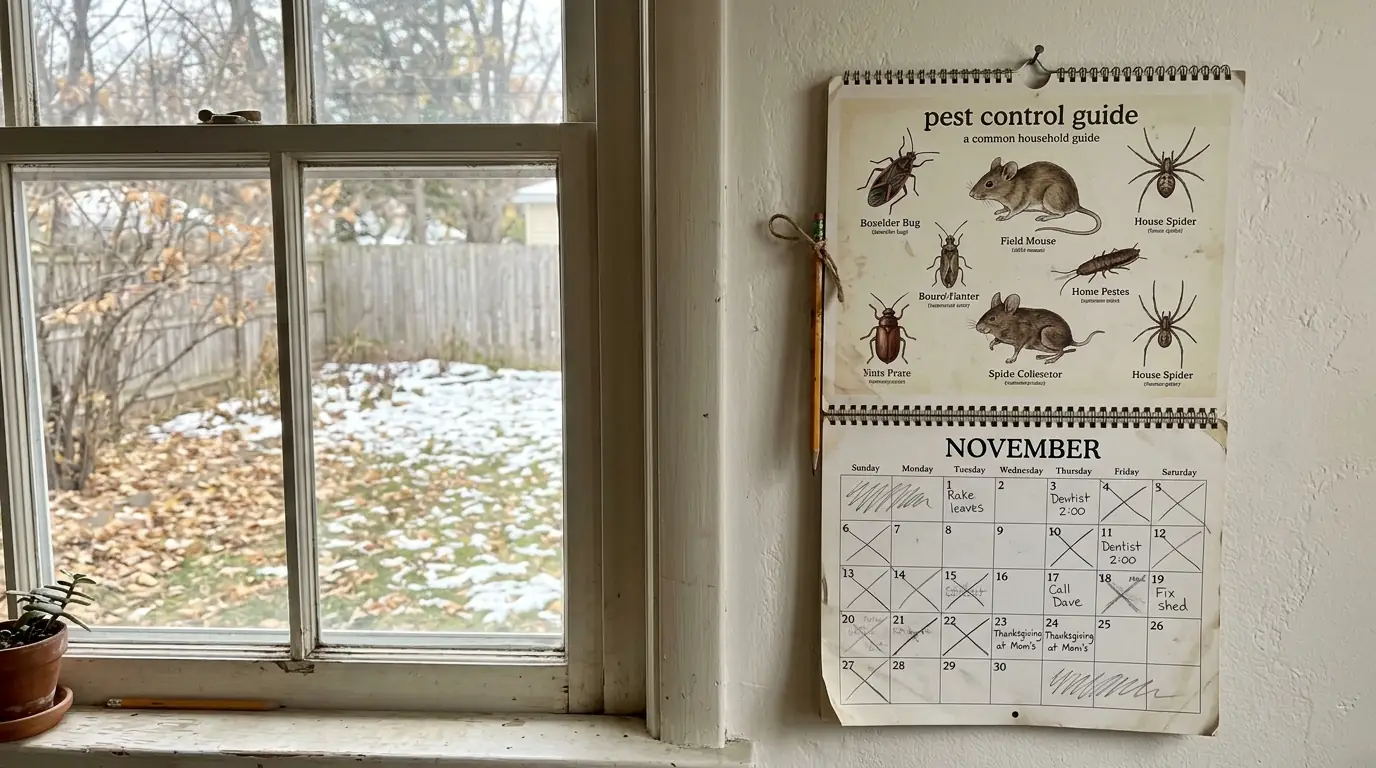
In the Metro East, winter brings mice and overwintering stink bugs and cluster flies; March through May brings termite swarms, ant surges, carpenter bees and the first wasp nests; June through August is peak season for mosquitoes, wasps, ticks and fleas; and September through November brings fall invaders, aggressive yellow jackets and the big push of mice indoors. Each season has a best time for prevention, usually a few weeks before the problem peaks.
Winter: December through February
Cold weather drives mice indoors, and winter is when their scratching in walls and ceilings is most noticeable. Stink bugs, boxelder bugs and cluster flies that got into wall voids in the fall wake on warm days and wander toward windows. Pantry pests often show up during holiday baking. Late winter is also when skunks and groundhogs start moving around, and it is a good time to fix the gaps that let mice in before spring.
- Mice and rats in walls and attics
- Overwintering stink bugs and cluster flies at windows
- Pantry moths and beetles
- Skunks and groundhogs on the move in February
Spring: March through May
Spring is the busiest stretch for many homeowners. Eastern subterranean termites swarm from March through May, often after a warm rain. Ant colonies send foragers into kitchens, carpenter bees start drilling fascia and decks, and wasp queens build their first small nests under eaves. Ticks become active, mosquitoes appear as nights warm, and raccoons and squirrels have young in attics.
- Termite swarms
- Kitchen ants
- Carpenter bees drilling
- Small early wasp nests
- Ticks and the first mosquitoes
- Wildlife babies in attics and chimneys
Summer: June through August
Summer heat and humidity push mosquitoes, wasps and flies to their peak. Wasp colonies grow large, ticks and fleas stay active in yards, and fruit flies thrive indoors. Bats raise pups in attics during this stretch, so bat exclusions wait until the young can fly. West Nile activity in Illinois typically builds in late summer.
- Mosquitoes at their peak
- Growing wasp and yellow jacket colonies
- Ticks and fleas
- Fruit and drain flies
- Bat maternity season: exclusions wait
Fall: September through November
As nights cool, stink bugs, boxelder bugs and Asian lady beetles cluster on sunny walls looking for a way in, and that is the window to treat and seal. Yellow jackets become aggressive around food as their colonies peak. Mice push in from fields and yards in large numbers, and bat exclusion season reopens once the young are flying. Late fall is the best time for rodent exclusion.
- Fall invaders clustering on sunny walls
- Aggressive yellow jackets
- The big fall push of mice
- Bat exclusions resume
- Best window for rodent proofing
The calendar at a glance
| Months | Main pests | Best move |
|---|---|---|
| Dec to Feb | Mice, overwintering invaders, pantry pests | Seal gaps, trap rodents |
| Mar to May | Termite swarms, ants, carpenter bees, early wasps | Termite inspection, spring perimeter treatment |
| Jun to Aug | Mosquitoes, wasps, ticks, fleas | Yard programs, remove nests early |
| Sep to Nov | Fall invaders, yellow jackets, mice | Seal and treat walls, rodent exclusion |
When to call
Services that fit this problem
Before you call
Common follow-up questions
Any time, but late winter or early spring sets you up for termite season and the spring ant surge.
Early fall, before the cold pushes mice indoors in large numbers.
Young bats cannot fly during the summer maternity season, and excluding the adults then would trap the young inside.
Darlene Pemberton is the pest control guides editor at Belleville Pest Control. She writes and maintains these homeowner guides from the field notes our technicians bring back from jobs across Belleville and the Metro East, and every guide is checked against what the crews actually see in local homes.
Keep reading
Related homeowner guides
One call does it
Rather just ask someone?
Call and describe what you found. A technician will tell you what it is and whether it needs a visit.
(217) 207-0945Answered 24/7, every day