- Home
- Pest Control
- Ant Control
Kitchen trails ended at the colony
Ant control that ends the colony, not just the trail
The trail on your counter is the symptom; the colony in the wall void or under the slab is the problem. Spray the trail and the colony reroutes by morning, or worse, splits. Real ant control identifies the species, baits what the colony is actually eating, and closes the routes they used to get in.
Call (217) 207-0945 Browse our services
- Species identified before treatment
- Colony-level baiting
- Entry points sealed, not just sprayed
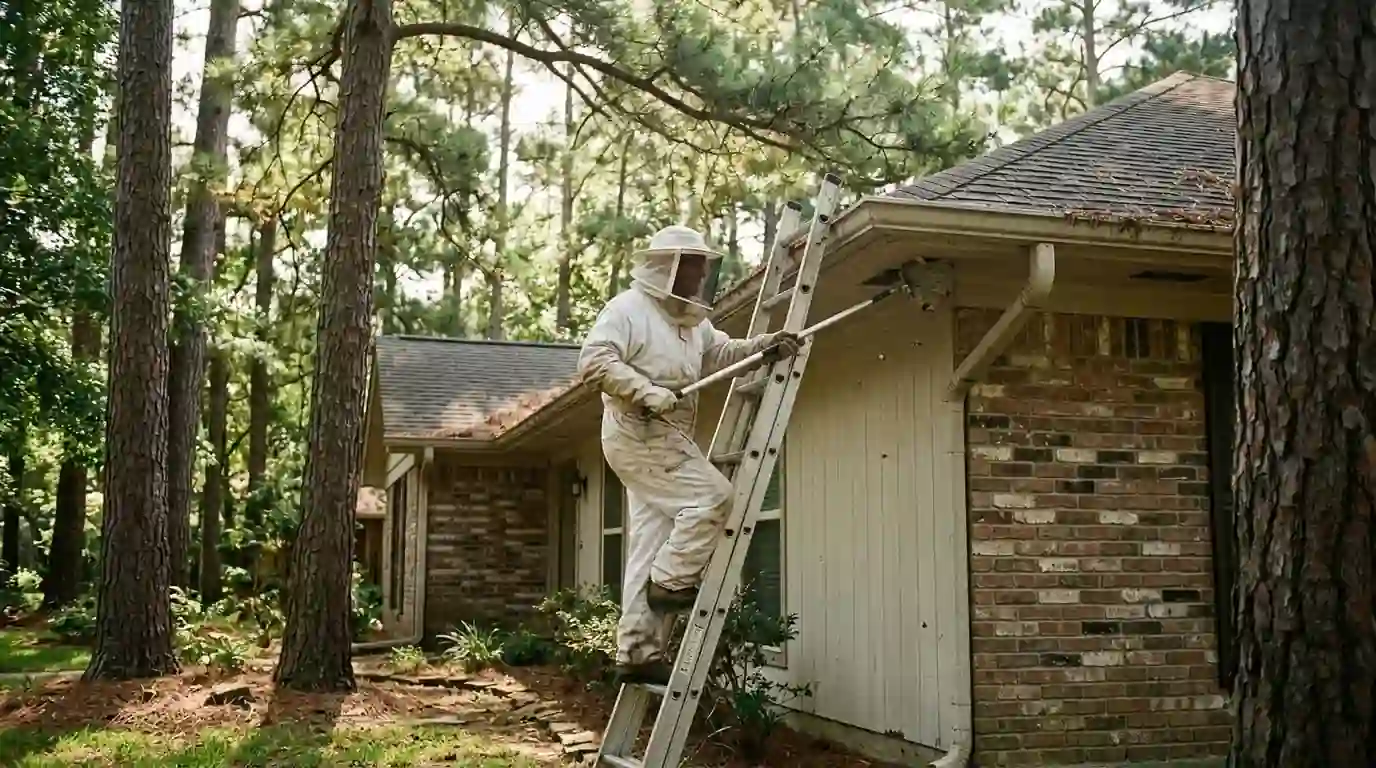
Ant control starts with identification, because Belleville's common invaders behave differently: odorous house ants nest in wall voids and split colonies when sprayed, pavement ants mine under slabs and driveways, and carpenter ants mean a wood-moisture problem wearing an ant costume. The treatment that works is baiting matched to the species and season, placed on the trails so workers carry it to queens, plus sealing of the entry routes. Expect the trail to continue for a few days while the bait does its job; that is the plan working.
What this covers
Identify, bait, seal
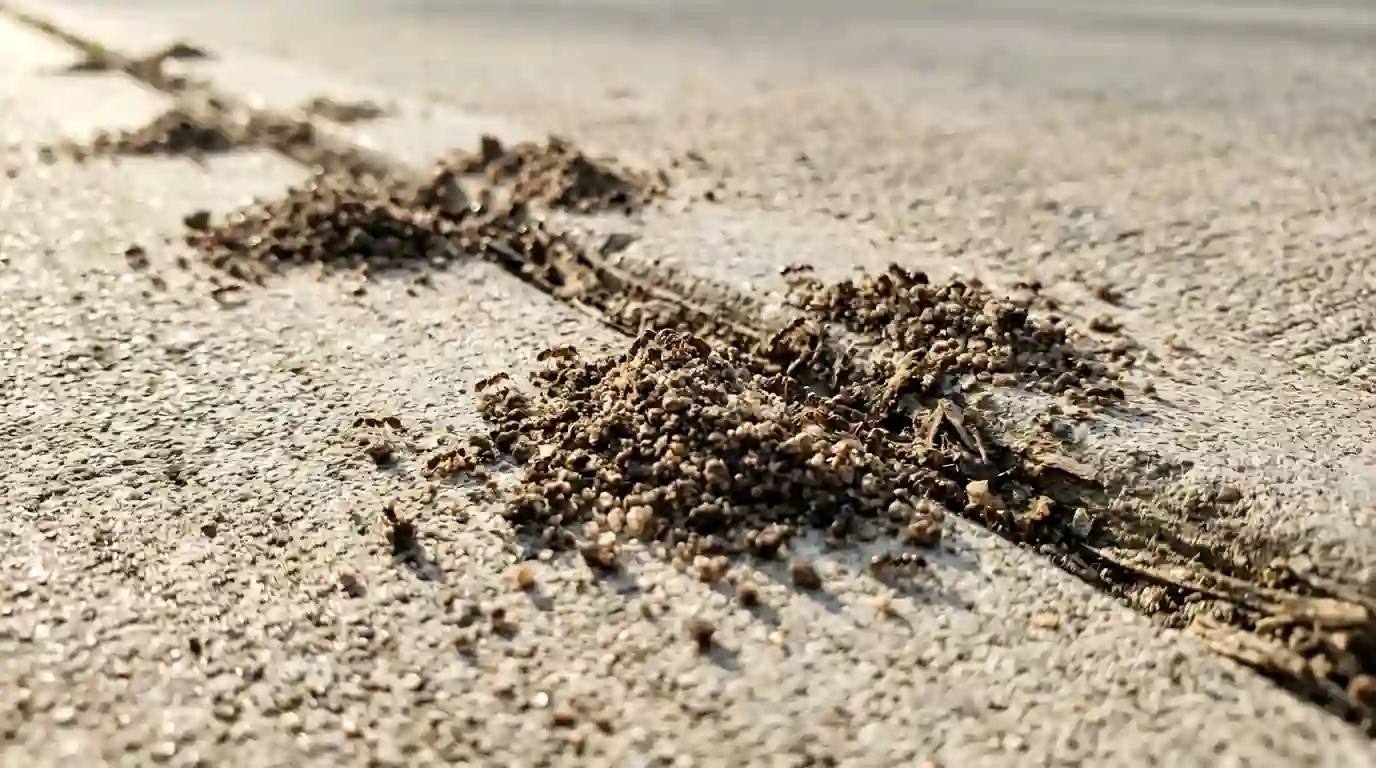
Species decides everything. Odorous house ants, the most common kitchen invader in Illinois homes, run large multi-queen colonies in wall voids and under mulch, love moisture, and respond to repellent spray by budding into several colonies. Pavement ants throw soil out of slab joints and sidewalk cracks. Each has a preferred food that shifts with the season, which is why our baiting is chosen on site, not from a one-size truck stock.
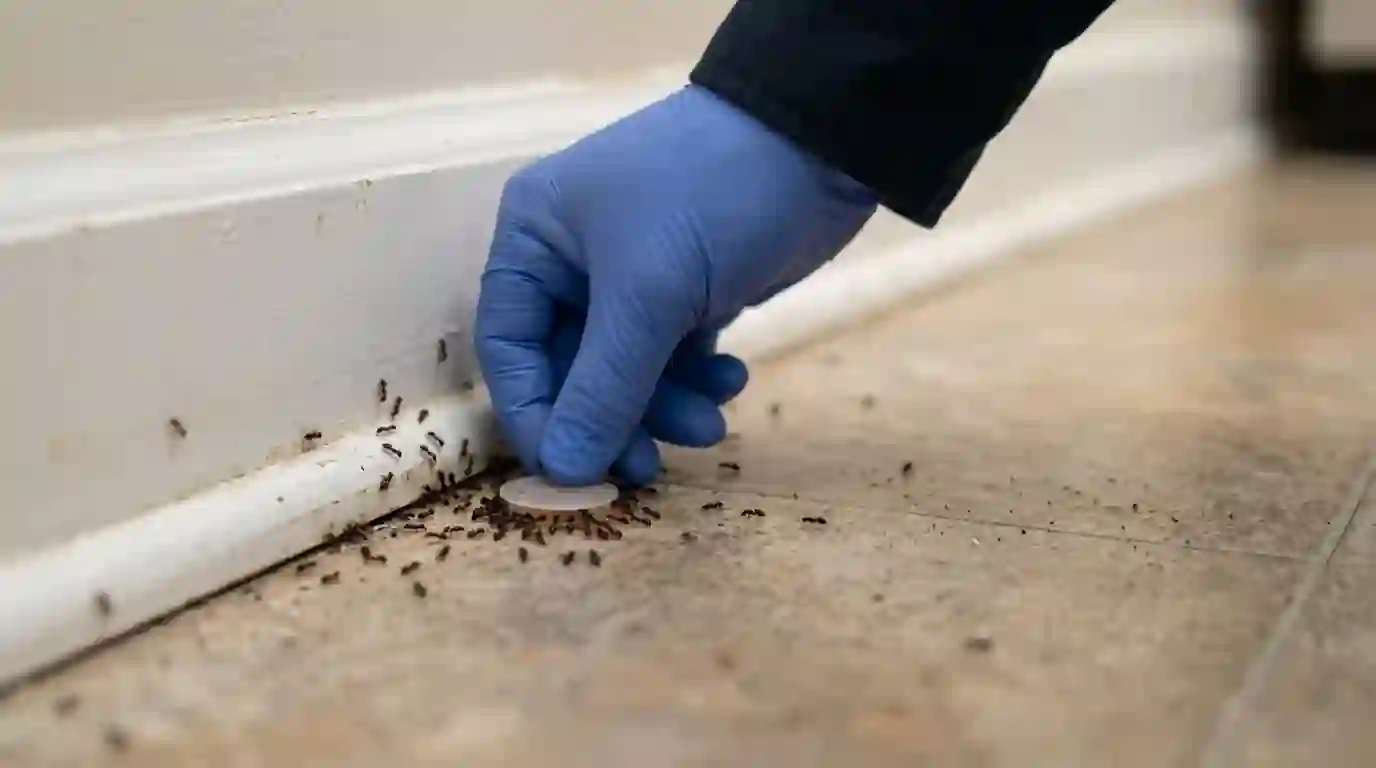
The visit works the whole route: baits placed directly on active trails indoors, exterior perimeter treatment with non-repellents the colony walks through and shares, granular baiting at nest zones in mulch and lawn edges, and the caulk-and-sweep list of entry points around plumbing, windows and door thresholds. You will be told to leave the trail alone for a few days; watching ants feed on bait feels wrong and is exactly right.
On your side
What helps the bait win
- Do not spray the trail before or after the visit; store sprays undo baiting
- Wipe counters of crumbs and spills so bait is the best food on offer
- Fix the dripping faucet; odorous house ants are chasing water as much as food
- Keep pet bowls up between feedings for the first week
- Note where trails enter: window corner, outlet, pipe gap, so we seal the right routes
- Pull mulch back a few inches from the foundation where you can
- Expect a messy few days of feeding at the bait, and let it happen
How we match the job
The ants Belleville kitchens actually get
- 01
Odorous house ants
The crushed-coconut-smell ant and the region's top kitchen invader: moisture-loving, wall-void nesting, bait-only by any honest method.
- 02
Pavement ants
Soil volcanoes at slab joints, patios and driveways; granular baiting and joint treatment where they mine.
- 03
Little black and small honey ants
Small sugar-feeding invaders on counters and in baths, usually traced to mulch lines and foundation plantings.
- 04
Pharaoh ants
The multi-site indoor colony that absolutely must not be sprayed; bait-only protocols across every site, common in multifamily buildings.
- 05
Larger yellow ants
The basement swarmer that terrifies homeowners in late summer and is mostly a soil-nester announcing itself; identified and settled quickly.
Local conditions
Why this matters in Belleville
Odorous house ants are among the most common ant invaders in Illinois homes, and Belleville's housing suits them: moisture-holding brick, stone foundations with a century of hairline routes, and mature-tree yards deep in mulch. The standard structure-infesting lineup here, per state extension guidance, runs odorous house, pavement, small honey, carpenter, large yellow and pharaoh ants, and the spring surge into kitchens tracks the same warm wet weeks as termite swarm season. Older blocks around downtown see wall-void colonies; newer subdivisions fight the mulch-line nests their landscaping feeds.
How a visit runs
How the visit runs
- Trail reading
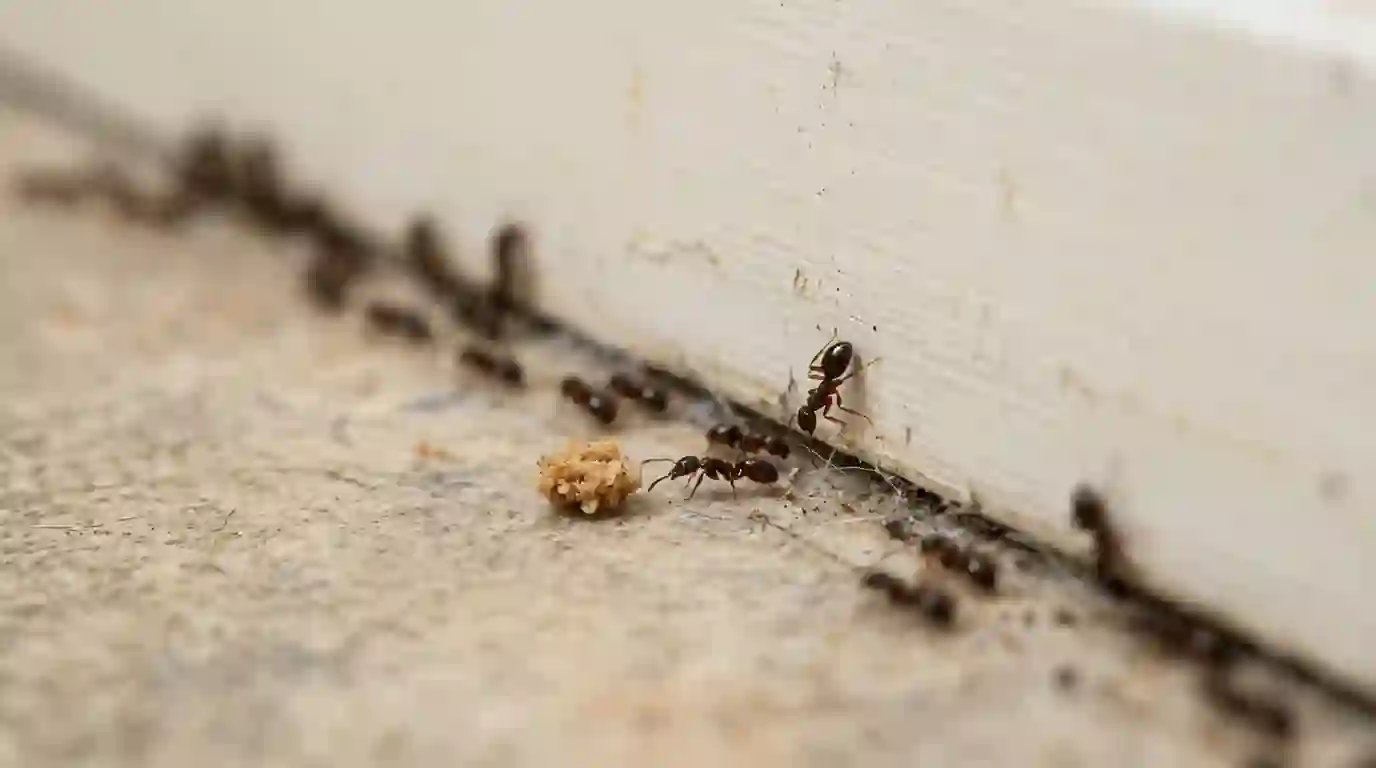
Active trails followed both directions: to the food, and back to the entry and nest.
- Species identification
The ant is named before anything is opened, because the method hangs on it.
- Matched baiting
Sugar or protein bait by species and season, placed on the trails and at nest zones.
- Perimeter and nest treatment
Non-repellent exterior work and granular baiting where the colonies live.
- Seal and verify
Entry routes closed, and a follow-up window stands in case a satellite colony persists.
Pricing, plainly
What moves the price
Published national pricing for professional ant service typically falls inside the general one-time visit range of $100 to $300. Your quote moves with:
- Species, since pharaoh and odorous house ant protocols take more visits than pavement ants
- How established the colony network is before the first visit
- Interior and exterior scope together against exterior-only service
- Entry sealing you fold into the job
- Nest accessibility in voids, slabs or landscaping
- One-time corrective against keeping ants inside a quarterly plan
- Multifamily spread where colonies cross unit lines
Figures referenced are published national ranges for context, not our quote. We price your job on the phone and confirm on site before any work starts.
Choosing between them
Baiting against spraying, plainly
| Colony baiting | Repellent spraying | |
|---|---|---|
| What dies | Workers, brood and queens as bait is shared | Foragers on the surface that day |
| Odorous house ants | The correct method | Causes colony budding, worsens the problem |
| Visible speed | Trail persists days, then collapses | Trail vanishes, reroutes within days |
| Long-term result | Colony gone, reinvasion slowed by sealing | Repeat sightings and repeat invoices |
Before you call
Questions we hear about this work
Bait draws foragers before it collapses the colony; the surge in the first days is recruitment, and the silence that follows is the colony failing. It is the one treatment where early enthusiasm is the proof it works.
Like rotten coconut: odorous house ants, the region's most common kitchen invader, and the clearest possible instruction not to use spray.
Skip them during our program; mismatched baits compete and dilute the dose reaching queens. If a station of ours runs dry, call and we refresh it.
Exterior colonies in mulch and soil re-invade annually along the same routes. Sealing plus a spring perimeter treatment, or a quarterly plan, is what breaks the calendar pattern.
Placements go on trails and into cracks, stations and voids rather than open floor, and the active amounts are small. We walk you through each placement before we leave.
Moisture. Bath traps and slab penetrations are highways, and sugar ants drink as much as they eat. Same method: identify, bait, seal the route.
Big ants, sawdust piles or activity in winter move the job to our carpenter ant service, which hunts nests in wood rather than baiting kitchen trails. We will tell you on the phone from your description.
Nearby problems
Jobs that often ride along
Carpenter Ant Control
Residential Pest Control
Quarterly Protection Plans
Spider Control
Cockroach Control
Read first: Why ants keep coming back after you spray.
Booked most weeks in: St. Clair County, Madison County, Monroe County, Clinton County, and the rest of our six-county area.
One call does it
Tell us about the trail
Where it runs, what the ants look like, and how long it has been there; the right method is usually clear from the call.
(217) 207-0945Answered 24/7, every day