- Home
- Pest Guides
- Why ants keep coming back after you spray
Insects & spiders
Why ants keep coming back after you spray
The trail you sprayed was a few dozen workers from a colony of thousands. The queens never left the nest, and some ants respond to a spray attack by splitting into more colonies. Understanding what the colony does next explains why the kitchen fills up again by the weekend.
Call (217) 207-0945 Browse our services
- Written by Darlene Pemberton
- Updated October 1, 2026
- 6 minute read
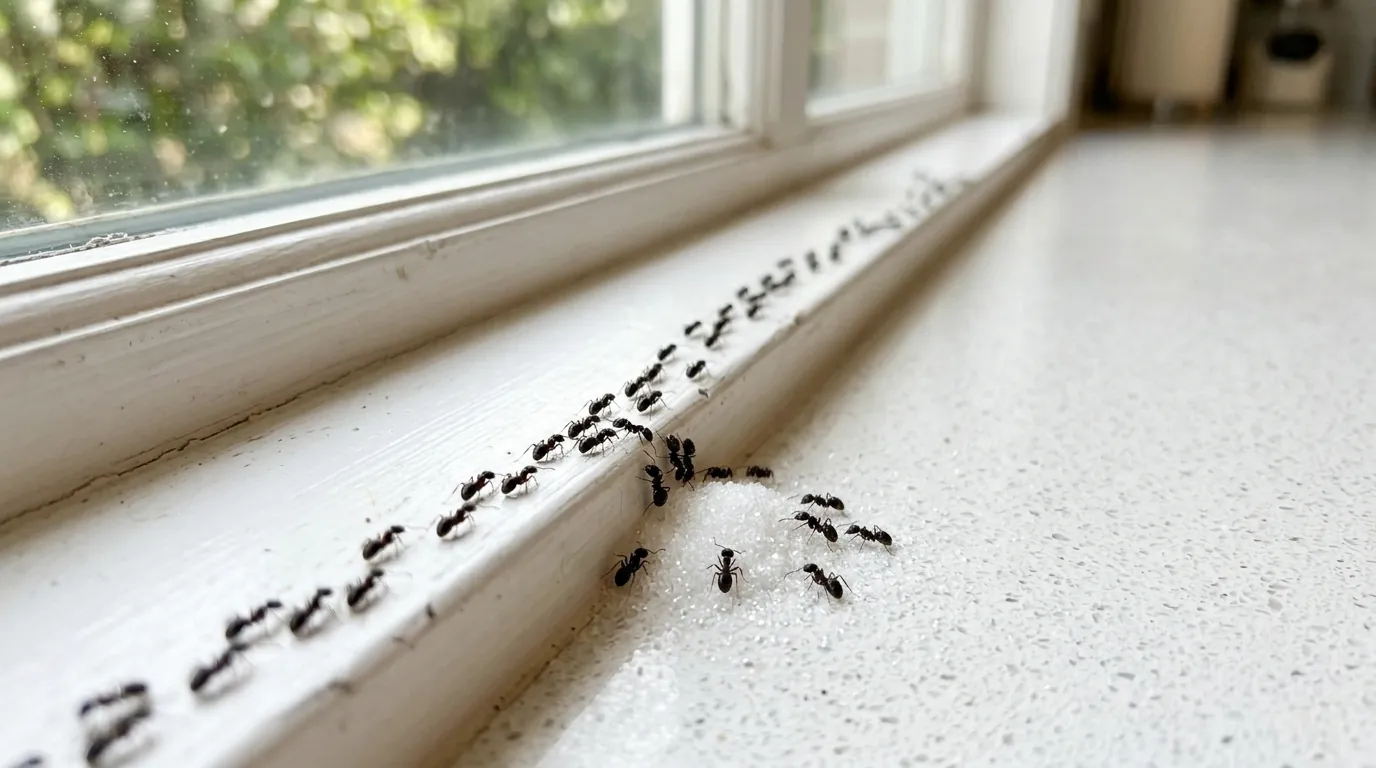
Ants come back because spray kills only the foragers you can see while the queens, eggs and most of the colony stay safe in a wall void, under the slab or in the mulch outside. Some species, especially odorous house ants, respond to repellent sprays by budding into several new colonies. What works is slow-acting bait the workers carry home and share, matched to what that species is eating, plus sealing the entry the trail uses.
You are only seeing the delivery drivers
In most ant species, the workers on your counter are a small fraction of the colony, and they are the most expendable members of it. The queens, which produce every new ant, stay deep in the nest. Kill the foragers and the colony simply sends more along the scent trail, which the spray did not erase. That is why a sprayed trail often looks worse two days later.
Some colonies split when attacked
Odorous house ants, among the most common kitchen invaders in Illinois homes, run colonies with many queens spread across several nest sites. When a repellent spray makes a nest site unpleasant, the colony does not die; it buds, moving queens and brood to new spots in nearby voids. One trail becomes three. Pharaoh ants do the same thing indoors, which is why spraying them is one of the classic ways to make an ant problem worse.
Why bait works and why it is slower
Bait turns the colony's own food sharing against it. Workers carry it home, feed it to larvae and other workers, and the active ingredient reaches the queens over several days. During that time you may see more ants, not fewer, as the colony recruits to a good food source. That is the treatment working. Spraying near the bait during this stretch contaminates it and resets the clock.
- Bait must be what the colony wants right now: sugar or protein preference shifts with season
- Placements go on the active trail, not randomly
- Leave the trail alone for several days
- Expect a surge, then a collapse
The other half: where they get in
Even a successful bait program invites the next colony if the entry stays open. Watch where the trail enters the room: a window corner, a gap behind the faucet, an outlet, a pipe penetration under the sink. Those points get sealed once activity stops. Outside, mulch piled against the foundation and shrubs touching the siding give colonies bridges straight to the house.
- Find the entry point the trail uses
- Seal it after the colony collapses
- Pull mulch a few inches back from the foundation
- Trim plants off the siding
- Fix drips; ants are chasing water too
When to call
Services that fit this problem
Before you call
Common follow-up questions
Outdoor colonies reinvade along the same routes as soon as the weather warms. Sealing plus a spring perimeter treatment breaks the yearly pattern.
Placements go into cracks, stations and along trails rather than open floors, and the amounts are small. Keep pets from licking placements, and ask on the call about your specific animals.
No. Large ants indoors in winter suggest carpenter ants nesting in the structure, which calls for nest tracing rather than kitchen baiting.
Darlene Pemberton is the pest control guides editor at Belleville Pest Control. She writes and maintains these homeowner guides from the field notes our technicians bring back from jobs across Belleville and the Metro East, and every guide is checked against what the crews actually see in local homes.
Keep reading
Related homeowner guides
One call does it
Rather just ask someone?
Call and describe what you found. A technician will tell you what it is and whether it needs a visit.
(217) 207-0945Answered 24/7, every day