- Home
- Pest Control
- Groundhog Removal
The woodchuck under the shed, handled properly
Groundhog removal before the burrow undermines the slab
A groundhog burrow is an excavation project with a tenant. The den under your shed or stoop moves a wheelbarrow's worth of soil, undermines slabs and footings over time, and the garden damage is just the visible part. Removal is cage trapping at the burrow, exclusion so the next one cannot move in, and closure once the den reads empty.
Call (217) 207-0945 Browse our services
- Cage trapping at active entrances
- Deck and shed barriers installed
- Burrows verified empty before closure

Groundhog removal is burrow-focused: cage traps set at the active entrances with the baits and placement the species actually responds to, daily checks while the trap line runs, then exclusion, buried hardware-cloth barriers around decks, sheds and stoops, and burrow closure after the den is verified empty. Illinois wildlife rules shape what happens with a trapped animal, and we handle the job within them. Spring and late summer are the active windows, and a fresh burrow is always the cheaper one.
What this covers
Trap the resident, bar the real estate
Groundhogs are daytime feeders anchored to a burrow system with a main entrance, a dirt porch of excavated soil, and one or more hidden spy holes. Trapping succeeds on placement: cages set directly in the travel path at the active entrance, baited and shaded correctly, checked daily. The animal's schedule does the rest within days when the set is right, which is why guesswork sets scattered around a yard underperform so reliably.
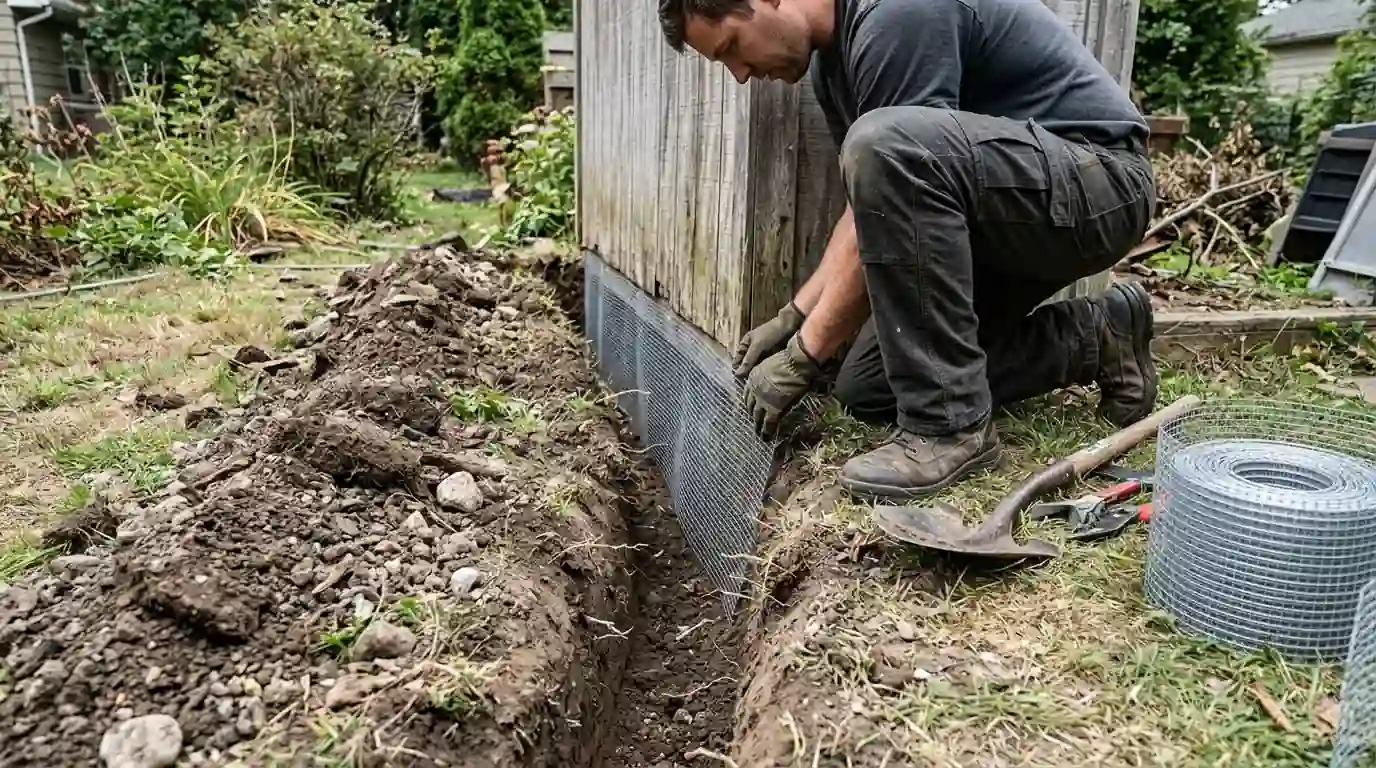
The permanent half is exclusion, because a vacant burrow under a shed is a vacancy listing. Buried barriers, hardware cloth trenched down and flared outward in an L, deny the digging route around deck and shed perimeters, and burrow entrances are closed only after verification that nothing is home. Skipping the verification step is how animals get entombed under slabs, and how closures get excavated back open within a week.
Pricing, plainly
What moves the price
Burrow jobs quote from your description and firm up on site. The drivers:
- Burrow count and whether the system runs under structures
- Trap-line length and the daily-check window
- Exclusion footage for deck, shed and stoop barriers
- Closure work once dens verify empty
- Access and digging conditions for the trenched barrier
- Repeat-pressure lots backing habitat
- Timing, since a new burrow is a smaller job than a branched one
Figures referenced are published national ranges for context, not our quote. We price your job on the phone and confirm on site before any work starts.
How we match the job
Where the burrows turn up
- 01
Under sheds and decks
The classic den site, trapped at the entrance and barred with a trenched barrier after.
- 02
Stoop and slab burrows
The structural version, where excavation under concrete makes timing matter most.
- 03
Garden raiders
Feeding damage traced back to the den, which is always nearby, and solved there.
- 04
Fence-line and bank dens
Yard-edge burrows on larger lots, managed before the system branches.
- 05
Multi-animal properties
Properties backing habitat, run as a trap line with exclusion on the structures that matter.
Local conditions
Why this matters in Belleville
Groundhogs are everywhere the Metro East keeps an edge: the creek corridors, rail embankments and field margins threading through and around Belleville feed a steady supply of dispersing juveniles every summer, and a shed on a quiet lot is premium housing. The older neighborhoods' detached garages and raised stoops offer classic den sites, while garden culture provides the menu. Late winter brings the other local moment: males wandering in February, which is usually the sighting that starts the phone call.
How a visit runs
How the job runs
- Burrow survey
Entrances, porches and spy holes mapped; fresh digging separates active from abandoned.
- Trap placement
Cages set in the travel path at active entrances, baited and positioned for the species.
- Daily-check line
The trap line run until the resident count reaches zero.
- Exclusion barrier
Trenched hardware cloth in an L around the structures worth protecting.
- Verified closure
Dens confirmed empty, then filled and closed so the listing comes down.
Timeline
How the timeline runs
A well-set trap at an active entrance typically produces within two to five days; multi-animal properties run longer as the line works through residents. Barrier installation follows trapping, usually a single visit of trenching and hardware cloth, and closure happens after the verification period confirms the den is empty. Spring jobs catch the year early, before the summer litter turns one burrow into a teaching hospital.

Before you call
Questions we hear about this work
Burrow systems vent through spy holes, so flooding mostly makes mud and fumigants have legal limits near structures. Trapping at the entrance is duller and it is the method that ends with a solved problem.
Illinois regulates what may be done with trapped wildlife, including relocation, and we handle the animal within those rules; we will walk you through it plainly on the call rather than print promises here.
Without closure and barriers, often within the season; vacant dens are advertised real estate. The exclusion step is what you are buying alongside the trapping.
Over time, yes: the soil volume moved undermines bearing at edges and corners. A fresh den is a nuisance; a three-year system under a stoop is a repair estimate.
Any mammal can, though groundhogs rank low as vectors; the practical risks are structural and the occasional bold animal. Treat any wildlife acting wrong as a keep-away-and-call situation.
Cornered groundhogs defend themselves capably, and dog-versus-groundhog vet bills are a real genre. Keeping the dog clear of the burrow until the line finishes is part of the plan.
Early spring, before the litter, or late summer after juveniles disperse. February wanderers and fresh porch dirt are both fine reasons to call this week.
Nearby problems
Jobs that often ride along
Booked most weeks in: Mascoutah, Waterloo, Highland, St. Clair County, and the rest of our six-county area.
One call does it
Describe the burrow and what it sits under
Where the hole is, how fresh the dirt looks, what structure is above it; the plan and price come from those three.
(217) 207-0945Answered 24/7, every day