- Home
- Pest Control
- Apartment & Multifamily Pest Control
Apartments, duplexes and multifamily buildings
Multifamily pest control that treats the building, not one unit at a time
In a multifamily building, a single-unit treatment is a half measure. Roaches, mice and bed bugs move through wall voids, chases and shared basements, so the unit that called is rarely the only unit involved. We service buildings the way they are actually built: as one connected structure with many doors.
Call (217) 207-0945 Browse our services
- Building-wide inspection logic
- Unit-by-unit service records
- Tenant scheduling handled
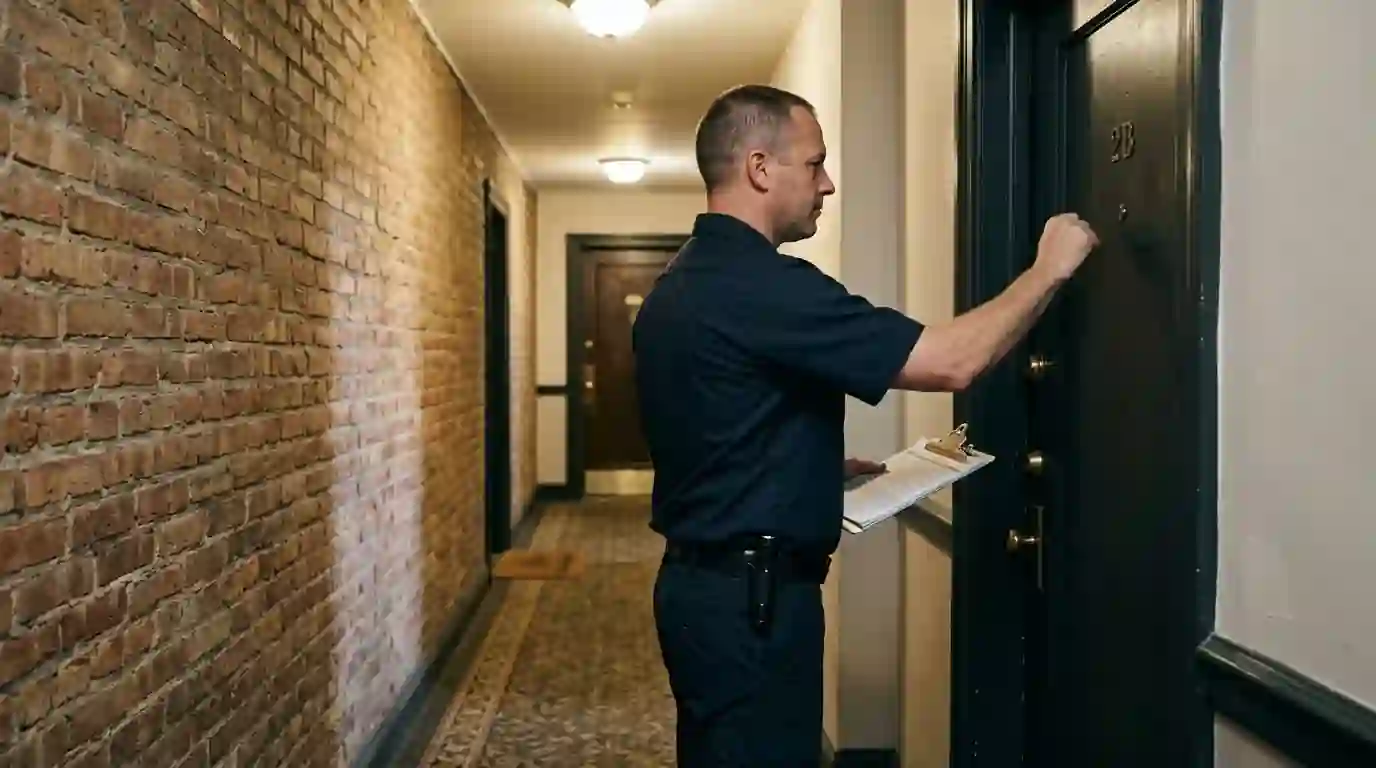
Multifamily pest control covers the whole structure: the reported unit, the units around it, and the shared spaces that connect them. We handle tenant notice and scheduling, keep per-unit service records a property manager can produce on demand, and price by building and scope rather than by panic. Active complaints get a response on the 24/7 line.
What this covers
Why the building is the unit of treatment
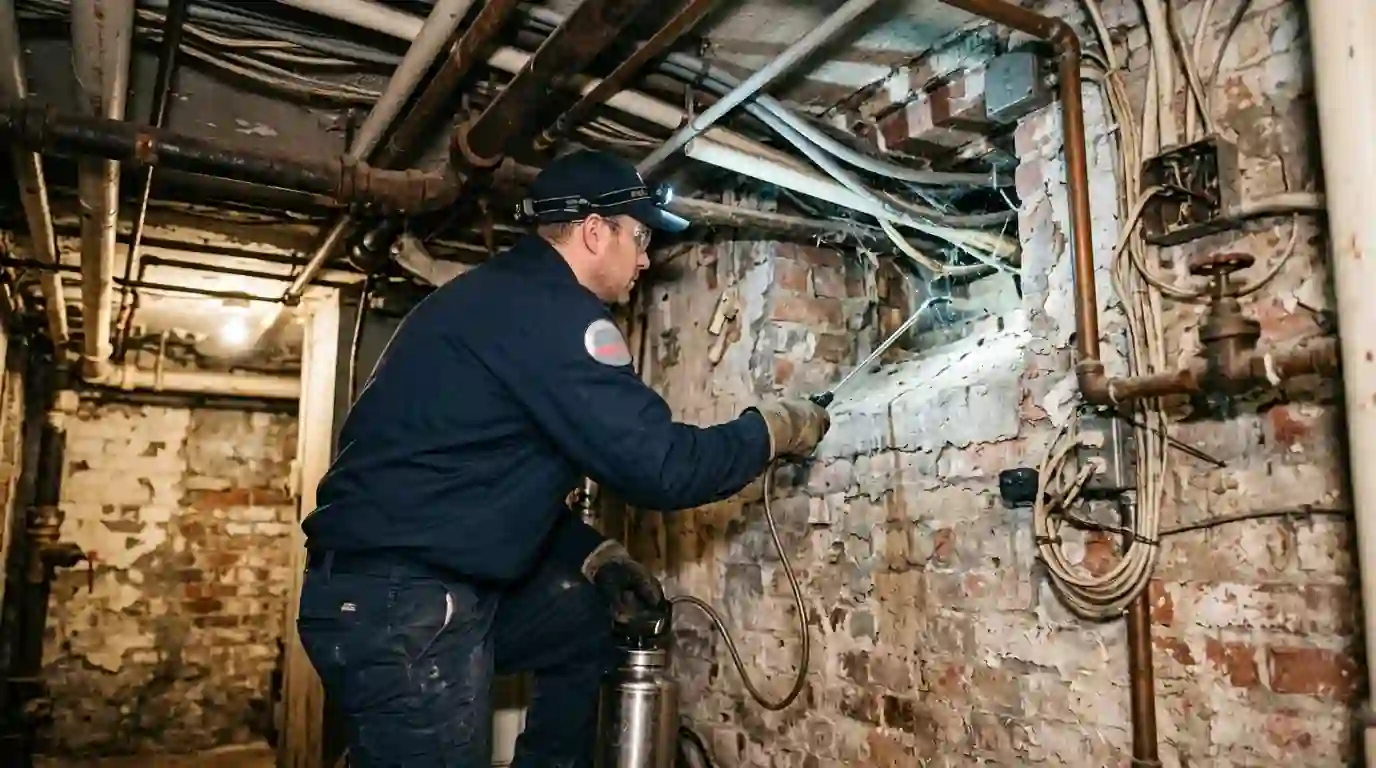
Pests in multifamily housing follow the plumbing and the voids. A German roach population in one kitchen forages through the wall into the kitchens stacked above and beside it; mice travel the basement and the chases to every floor. Treating only the complaining unit pushes the problem next door and guarantees a repeat visit. Our standard for an active infestation is the reported unit plus adjacent units in every direction, then the shared spaces.
For owners and managers, the operational load matters as much as the treatment: proper tenant notice, prep instructions residents can actually follow, access coordination, and a paper trail per unit. We run that process so a two-building portfolio does not become a second job for whoever manages it.
Pricing, plainly
What moves the price
Multifamily work is quoted per building and scope. What sets the number:
- Unit count in the treatment block, since adjacency drives real coverage
- Construction era: converted older houses need more void and exclusion work than slab-built complexes
- Complaint response against building-wide knockdown scope
- Common-area cadence if a recurring program is attached
- Access logistics and how much tenant coordination we handle
- Pest type, with bed bug work priced as its own program
- Turnover volume for portfolios that want vacant-unit service standing
Figures referenced are published national ranges for context, not our quote. We price your job on the phone and confirm on site before any work starts.
How we match the job
The work multifamily buildings need
- 01
Complaint response
A reported problem inspected and treated across the affected block of units, with findings reported per unit.
- 02
Building-wide knockdown
An established roach or mouse population serviced across every unit on a schedule, the only approach that actually clears a building.
- 03
Recurring common-area program
Basements, laundry rooms, trash rooms, mail areas and exteriors on a monthly or quarterly cadence.
- 04
Turnover service
Vacant units treated and sealed between tenants, the cheapest moment to do exclusion work right.
- 05
Bed bug protocols
Inspection-driven bed bug response with adjacent-unit checks and written prep; priced and planned as its own program.
Local conditions
Why this matters in Belleville
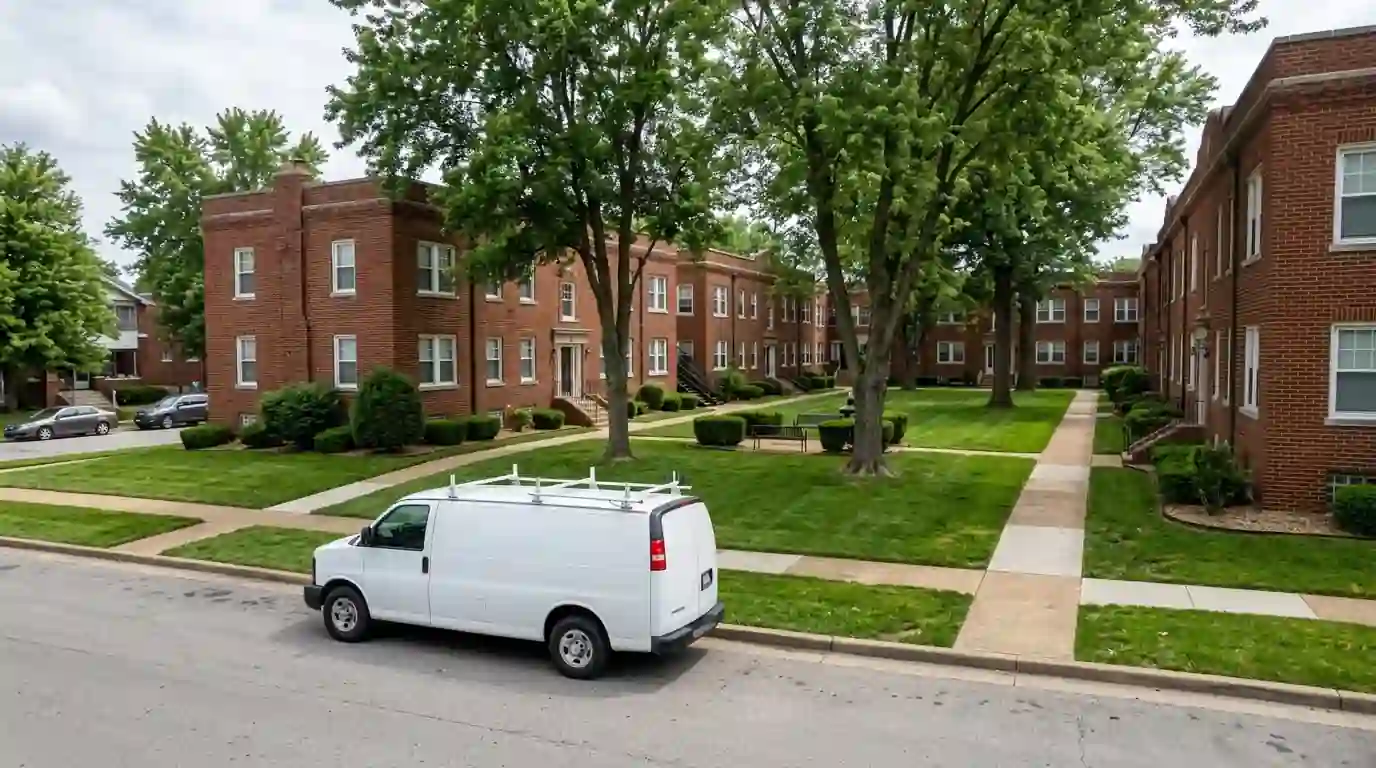
Belleville rents more than people assume: about 40 percent of homes here are renter-occupied, spread across converted brick houses near downtown, garden complexes off West Main and Carlyle Avenue, and newer buildings toward Shiloh and Scott Air Force Base, where military rotations keep units turning over. The converted pre-war houses are the hard cases, with balloon framing and old chases that let mice climb a building unseen. Turnover season every summer is when problems either get sealed out or move in.
How a visit runs
How a building engagement runs
- Scope call
Owner or manager describes the building and the complaints; we map the likely spread before anyone rolls.
- Inspection block
Reported unit plus adjacent units inspected; findings reported per unit, not as one vague summary.
- Notice and prep
We supply the tenant notices and realistic prep sheets, and schedule access in blocks.
- Treatment sweep
Units serviced in connected order so the population has nowhere clean to shift.
- Records and follow-up
Per-unit records delivered, follow-up visits scheduled where findings warrant them.
Worth catching early
Signs one unit is already several
Complaints from stacked units
The same pest reported on two floors of the same stack means the void between them is the highway.
Roaches in a clean unit
When a well-kept unit has roaches, they are migrating from a neighbor; treating the clean unit alone fixes nothing.
Mice on upper floors
Mice above the ground floor mean the chases are open top to bottom.
Activity in laundry or trash rooms
Shared-space sightings are the building's population showing itself, not a one-off.
Repeat retreatments on one unit
A unit treated three times is a building problem being billed as a unit problem.
Tenant turnover spikes
Unexplained move-outs cluster around pest problems tenants stopped reporting.
Before you call
Questions we hear about this work
As much or as little as you want. Standard practice: you authorize, we handle notice, prep instructions and scheduling, and you get the per-unit record.
We can, and we will tell you plainly when that is likely to fail. For established roach or rodent activity, the adjacent-unit block is the honest minimum.
Per-unit service records with findings, products and dates, suitable for files, disputes and municipal inquiries.
As its own inspection-driven program: confirmation first, adjacent units checked, written prep, then treatment matched to the finding. It is never folded silently into general pest pricing.
Yes, and they are some of the most effective jobs we do, since a four-unit sweep genuinely clears the structure in one pass.
That split is our most common multifamily arrangement: recurring common-area service with unit response as complaints arise.
Documented treatment and exclusion records answer housing-inspection findings; tell us what the inspector wrote and we build the response to it.
Nearby problems
Jobs that often ride along
Read first: Early signs of bed bugs most people miss.
Booked most weeks in: O'Fallon, Fairview Heights, Swansea, Collinsville, and the rest of our six-county area.
One call does it
Describe the building and the complaints
Unit count, construction age and what tenants are reporting; from that we scope the honest treatment block and quote it.
(217) 207-0945Answered 24/7, every day