- Home
- Pest Control
- Raccoon Removal
The thump upstairs that weighs fifteen pounds
Raccoon removal for attics, chimneys and the den under the deck
When the attic noise is heavy and slow, it is a raccoon, and in spring it is usually a mother. Raccoons tear in through roof vents and soffits to den, and the right removal depends on who is up there. Trap-and-repair for solo animals; the kit-aware protocol for families, because sealing a mother out of her young is how attics get destroyed twice.
Call (217) 207-0945 Browse our services
- Heavy-animal calls triaged fast
- Mother-and-kit protocol in season
- Entry torn points repaired properly
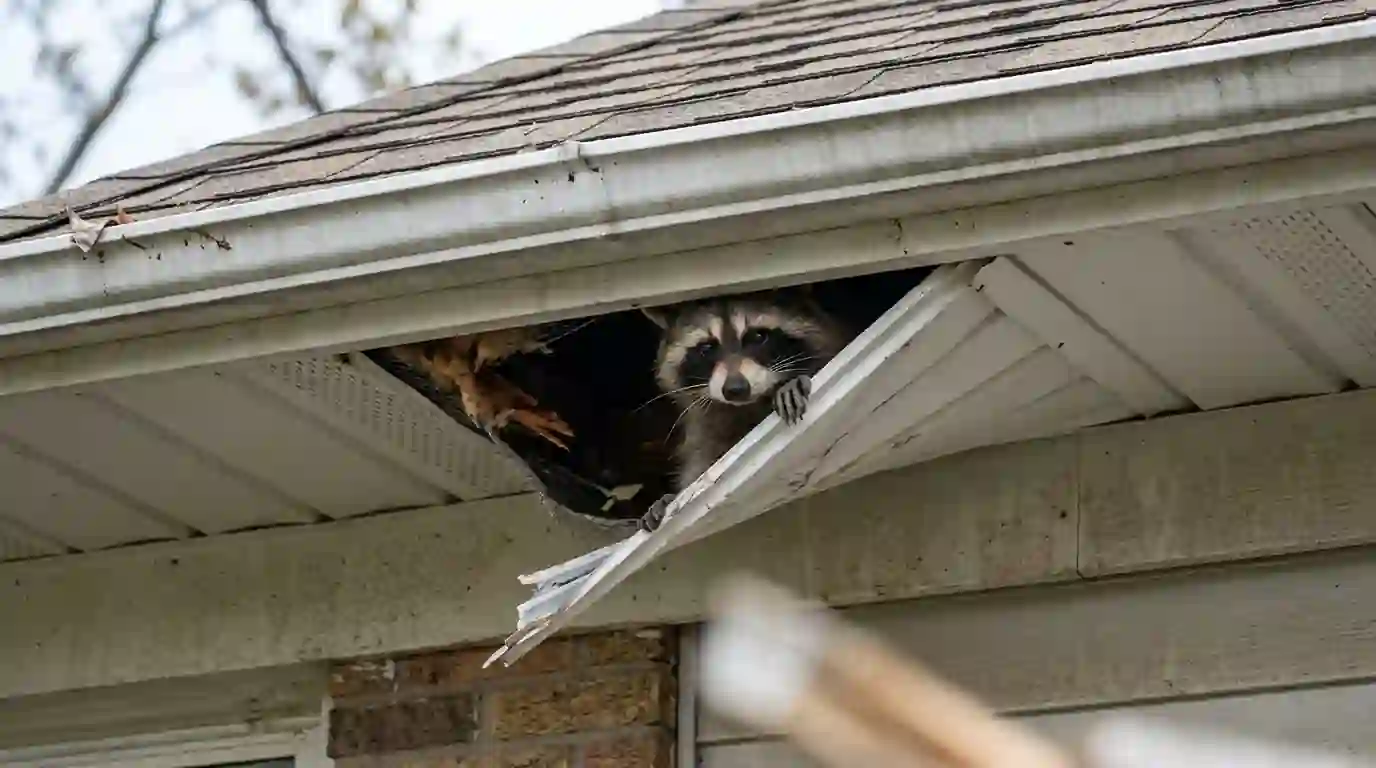
Raccoon removal pairs humane capture with repair. The inspection confirms the animal and, in spring and early summer, checks for kits before anything else, because the protocol differs completely: solo animals get cage trapping or one-way doors at the entry, while families get the mother-and-kit process that moves everyone out together. Entry points, usually torn roof vents, soffit returns and uncapped chimneys, get repaired in the same job, and contaminated attic zones get cleaned with the care raccoon waste genuinely requires. Illinois wildlife rules govern handling, and active animal-in-structure calls get priority scheduling on the 24/7 line.
What this covers
Who is up there decides everything
A raccoon in the structure announces itself: heavy footfalls and thumps at night, chittering from kits in season, torn vents visible from the yard, and a chimney that suddenly has eyes. The inspection confirms species, locates the den zone, and in the March-through-June window searches for kits first, since a mother barred from her young will peel back shingles, tear new openings and work at your roof with a determination no seal survives.
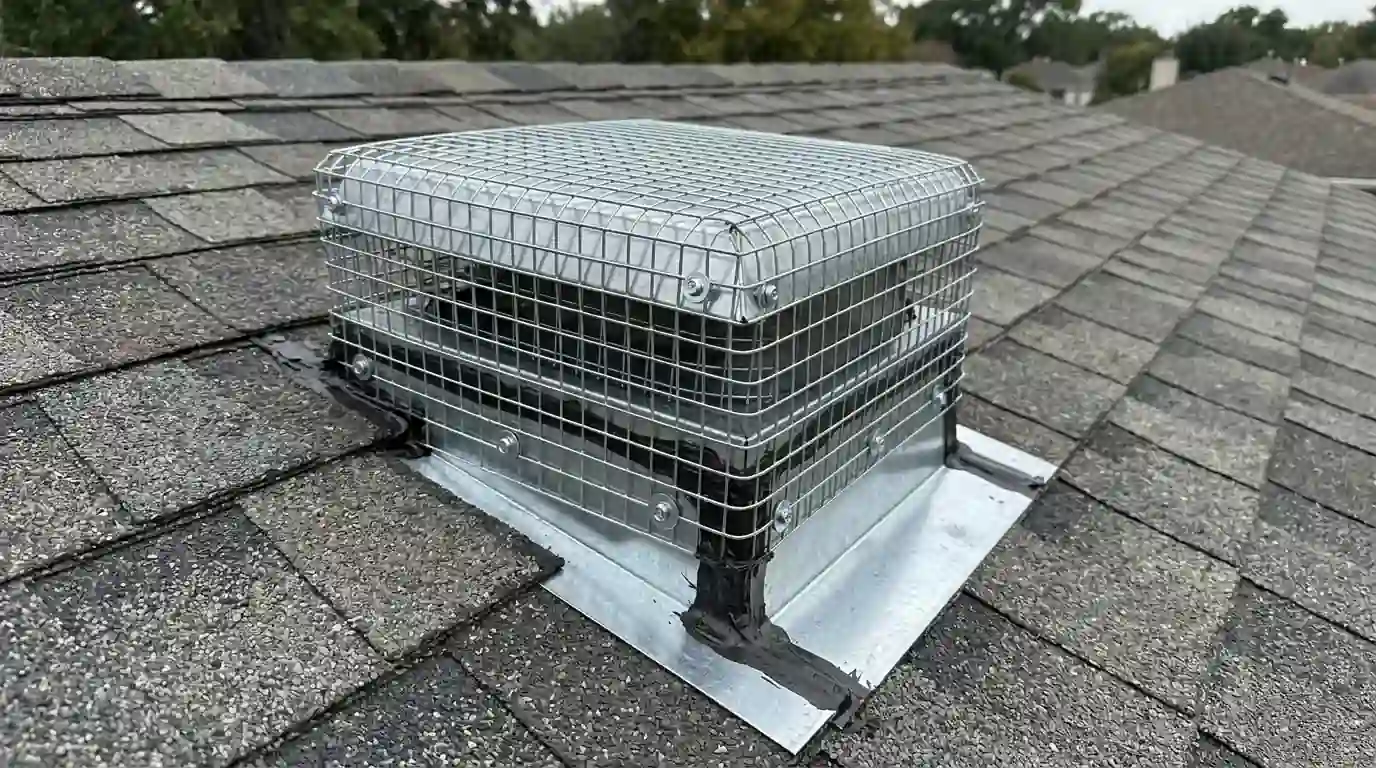
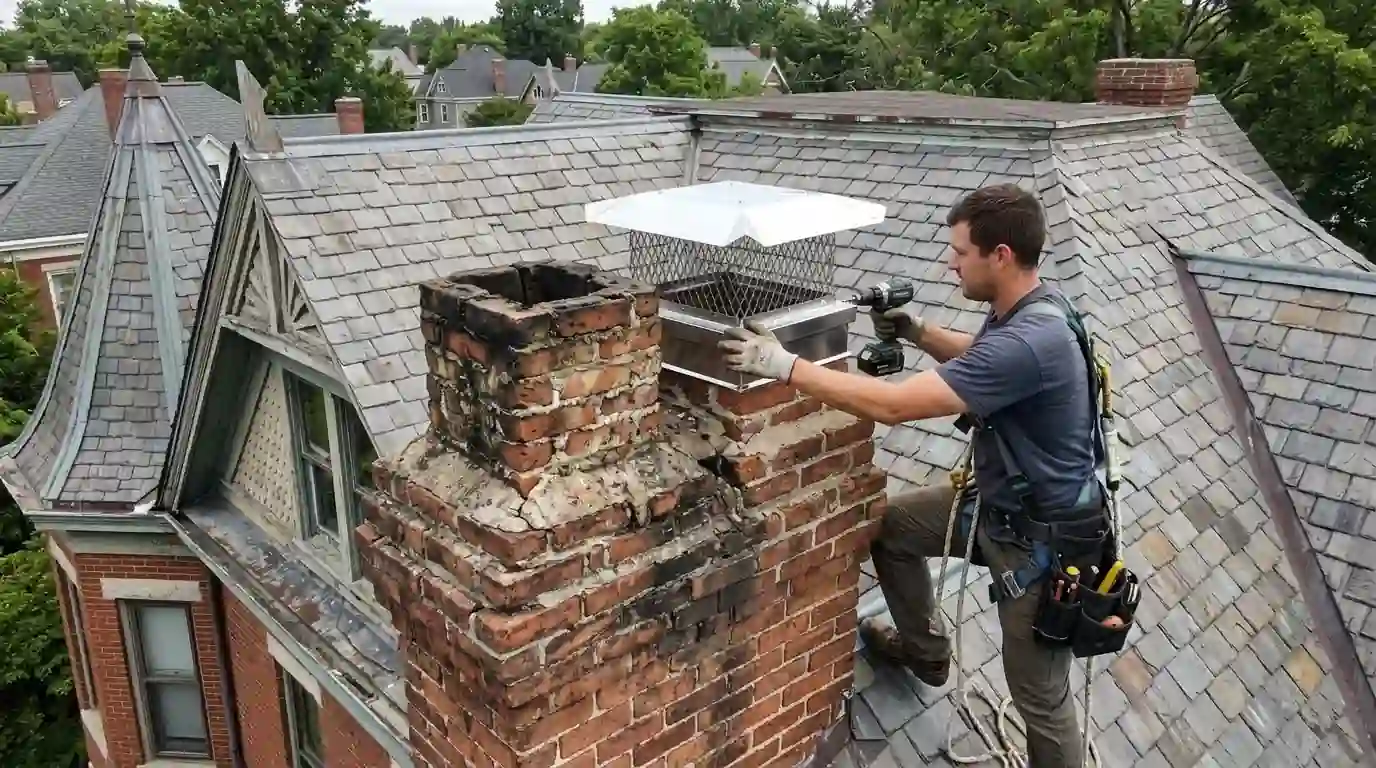
Solo animals are straightforward: cage sets at the entry or travel path, or a one-way door on the opening so the animal exits and cannot return, followed by repair. Families run the kit protocol: the young are located and used to move the mother, everyone leaves together, and only then does the entry close. Repairs are part of the job, not an upsell, heavy-gauge screening on vents, rebuilt soffit sections, chimney caps, because a raccoon-opened hole is a listed vacancy for the next one. Cleanup finishes it: raccoon latrines carry roundworm eggs that make this the one attic mess where protection protocols are non-negotiable.
Worth catching early
Signs it is raccoon-sized
Heavy night thumping
Slow, weighty movement over the ceiling, nothing like mouse scatter.
A torn vent or soffit
Bent louvers and peeled soffit panels are raccoon-strength damage.
Chimney noises and eyes
Churring from the flue, or a face at the top, means a denned chimney.
Kit chatter in spring
High trilling from the attic in April and May is a family, and it changes the plan.
Latrine discovery
Concentrated droppings in one attic or deck corner is a raccoon latrine; stop and call before disturbing it.
Dusk departures
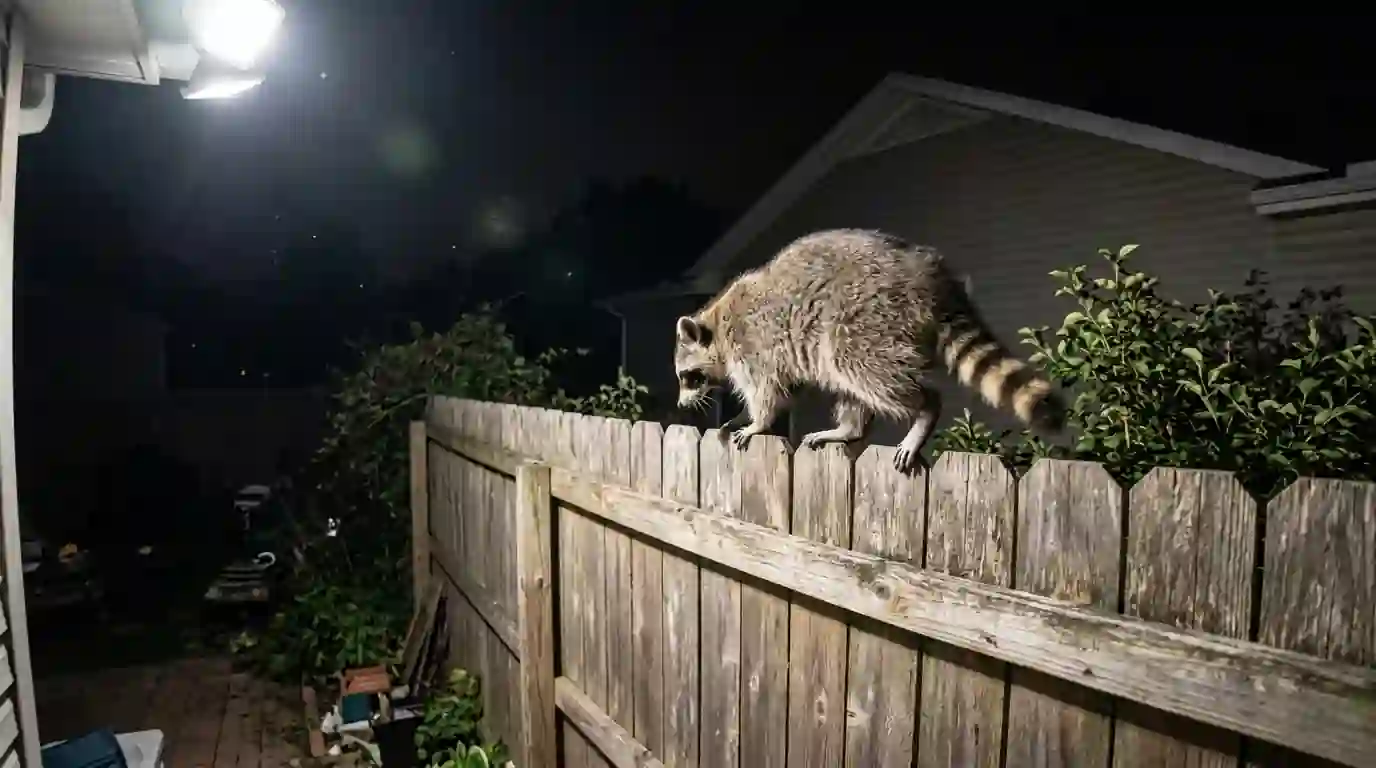
A large animal exiting the roofline at dusk settles the identification from the lawn.
How we match the job
The raccoon work we run
- 01
Attic den removal
The main event: capture or one-way exit, kit protocol in season, then repairs and cleanup.
- 02
Chimney families
Uncapped flues as den sites, resolved without fires, smoke or improvisation, then capped.
- 03
Under-deck and shed dens
Ground-level denning trapped at the entry and barred with trenched exclusion after.
- 04
Pet-door and garage intruders
The bold visitor habituated to pet food, removed and the attractant conversation had plainly.
- 05
Latrine cleanup service
Roundworm-safe removal and sanitizing of latrines in attics, decks and play areas.
How a visit runs
How the job runs
- Confirm and kit-check
Species verified and, in season, the family question answered before any device is set.
- Removal method set
Cage trapping, one-way door, or the kit protocol, matched to who is denned.
- Capture and exit
The line run with daily checks until the structure reads empty.
- Same-week repairs
Torn entries rebuilt in heavy-gauge materials, chimney capped.
- Protected cleanup
Latrines and soiled zones removed under roundworm-safe protocol, space sanitized.
Timeline
How the clock runs
Active structure calls get priority, typically same-day or next-day. Solo trapping usually produces within one to four nights at a correct set; one-way door exits run similar. The kit protocol moves at the family's pace, generally days rather than weeks, and repairs follow immediately behind the removal so the opening never sits available. Cleanup schedules with the repair visit, and the whole arc for a typical attic job fits inside one to two weeks.
Local conditions
Why this matters in Belleville
Metro East raccoons live well: creek corridors and storm drains for travel, mature oaks for highways, and Belleville's older housing for denning, with uncapped brick chimneys and aging soffits on block after block of the historic neighborhoods. Alley trash culture downtown and bird feeders everywhere keep food steady, so the population is dense and confident. Spring fills attics with families here as reliably as fall fills walls with mice, and the chimney den call spikes every April when mothers choose flues over hollow trees.
Pricing, plainly
What moves the price
Raccoon jobs quote after inspection because damage and family status drive scope. The movers:
- Solo removal against the mother-and-kit protocol
- Entry damage and the repair scope: vents, soffit sections, chimney caps
- Roof height and access
- Den location, since chimneys and deep attics add handling
- Latrine cleanup and any insulation replacement
- Exclusion barriers for ground-level dens
- Attractant corrections folded into the visit
Figures referenced are published national ranges for context, not our quote. We price your job on the phone and confirm on site before any work starts.
Before you call
Questions we hear about this work
If kits are up there, you have created a demolition event; the mother will tear through roofing to return. Even for solo animals, verification before sealing is the difference between a repair and a bigger one.
Mostly it is dangerous to itself and your flue, but keep the damper closed, do not light a fire, and keep pets clear. The removal is routine for us and genuinely not a DIY category.
Raccoon latrines can carry roundworm eggs that are hazardous if disturbed dry, which is why discovery means stop-and-call. Cleanup under protection is part of our service, and it is the strongest argument against the shop-vac plan.
Illinois regulates the handling and relocation of trapped wildlife, and we operate within those rules; we will explain the specifics for your situation on the phone plainly.
Raccoons are a recognized vector species, which is reason for distance and professionalism, not panic. Any raccoon acting disoriented, aggressive or sick in daylight is a keep-away-and-call-us situation.
Not through the repairs: screened vents, rebuilt soffits and a capped chimney close the listing. The repair step is why our removals do not become annual appointments.
Same logic at ground level: trap or one-way at the entry, kit check in season, then a trenched barrier so the den does not re-let. Deck jobs often pair with the latrine cleanup.
Nearby problems
Jobs that often ride along
Read first: Noises in the attic: a homeowner's guide to figuring out what moved in.
Booked most weeks in: Old Belleville, Signal Hill, Belleville West, East Belleville, and the rest of our six-county area.
One call does it
Describe the noise, the hole, or the face in the chimney
When you hear it, where the damage is, and whether it is spring; those three set the protocol and the slot.
(217) 207-0945Answered 24/7, every day