- Home
- Pest Control
- Rodent Control
Mice in the walls, rats at the foundation
Rodent control that ends with a sealed house, not a bait bill
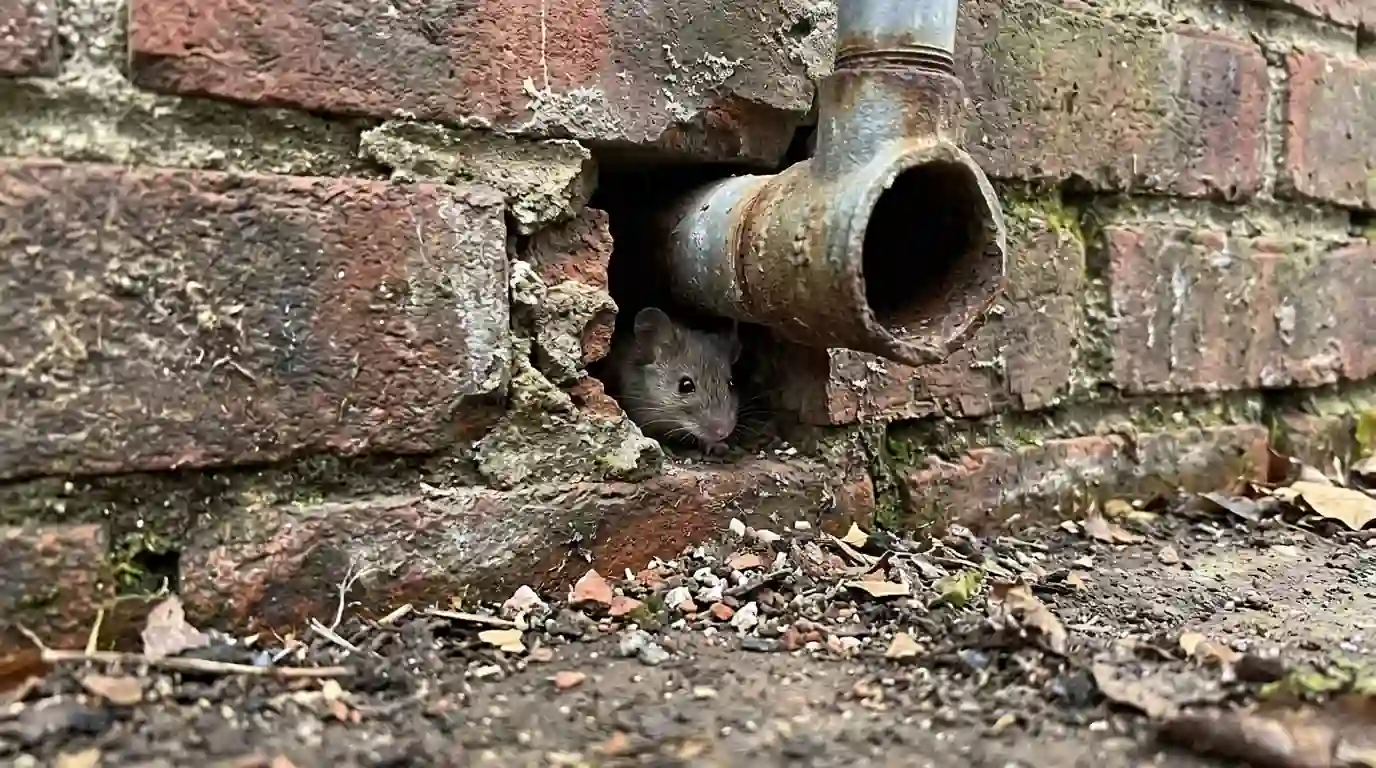
The scratching over the ceiling has a route, and the route has a door. Mice follow the same runways nightly and enter through gaps the width of a dime; rats need a quarter. Real rodent control traps the population at those runways and seals the doors, because bait alone just feeds the next family through the same hole.
Call (217) 207-0945 Browse our services
- Trapping on the actual runways
- Entry points found and sealed
- Priority scheduling on active calls
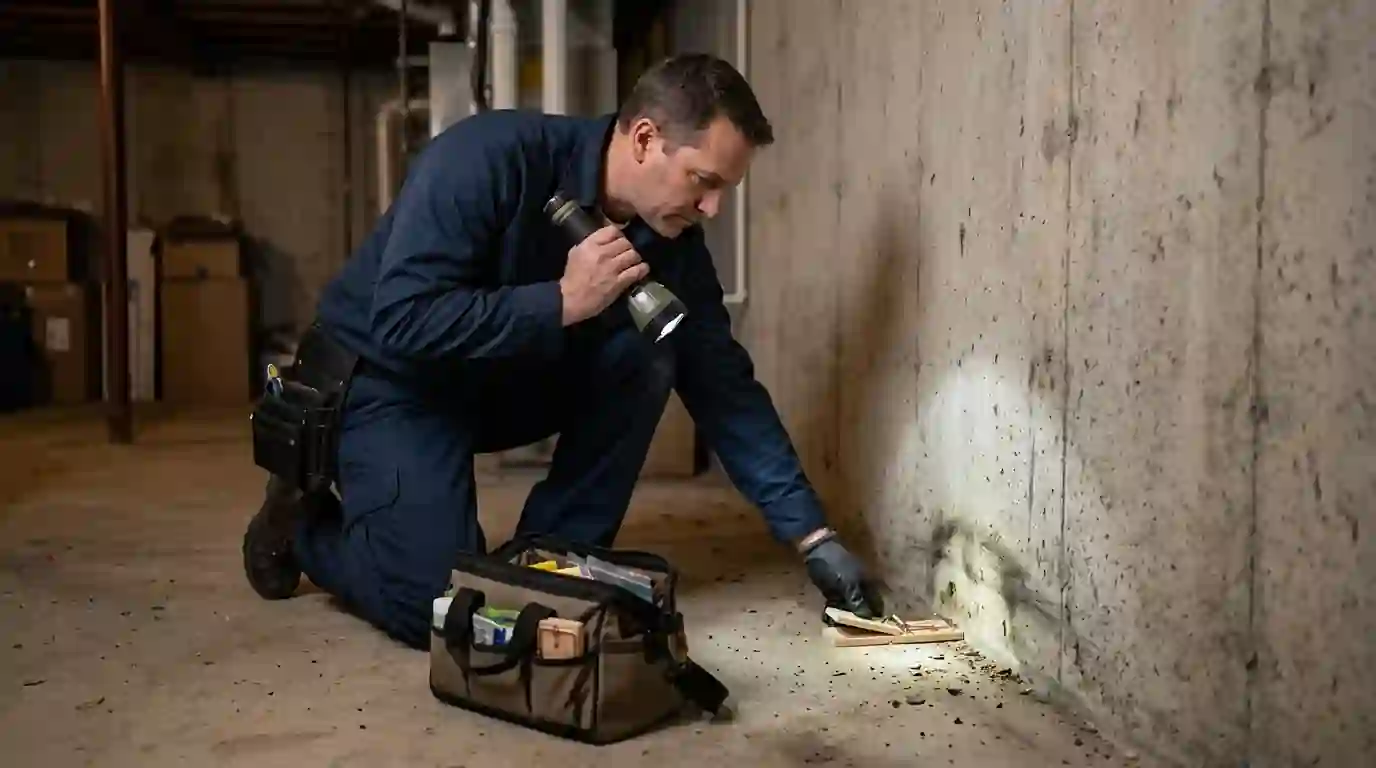
Rodent control is a trap-and-seal program: the inspection reads droppings, rub marks and gnawing to map the runways; traps and secured stations go on those routes; exclusion closes the entry points so the house stops restocking; and contaminated areas get cleaned safely. House mice are the standard Belleville call, with Norway rats along alleys and older foundations. Published national pricing for a full rodent program runs roughly $200 to $600; your number is quoted from the inspection, and active infestations get priority slots.
What this covers
Trap the routes, close the doors, clean the mess
Rodents are creatures of edge and habit, running wall lines and leaving a readable record: droppings concentrated where they feed and nest, dark rub marks where fur drags the same corner nightly, gnawing at the gaps they widened. The inspection turns that record into a trap map, because a trap on the runway outperforms a dozen placed on guesswork, and tamper-resistant bait stations supplement where trapping alone cannot keep pace.
The half that lasts is exclusion. Gaps at utility penetrations, garage door corners, foundation vents, dryer ducts and the junction where siding meets sill all get sealed with gnaw-proof materials, which is its own full service for homes that need the deep version. Cleanup matters too: rodent droppings and urine are a contamination issue handled with wet-method cleaning and proper protection, never a shop vacuum, and we leave the affected zones sanitized rather than just empty.
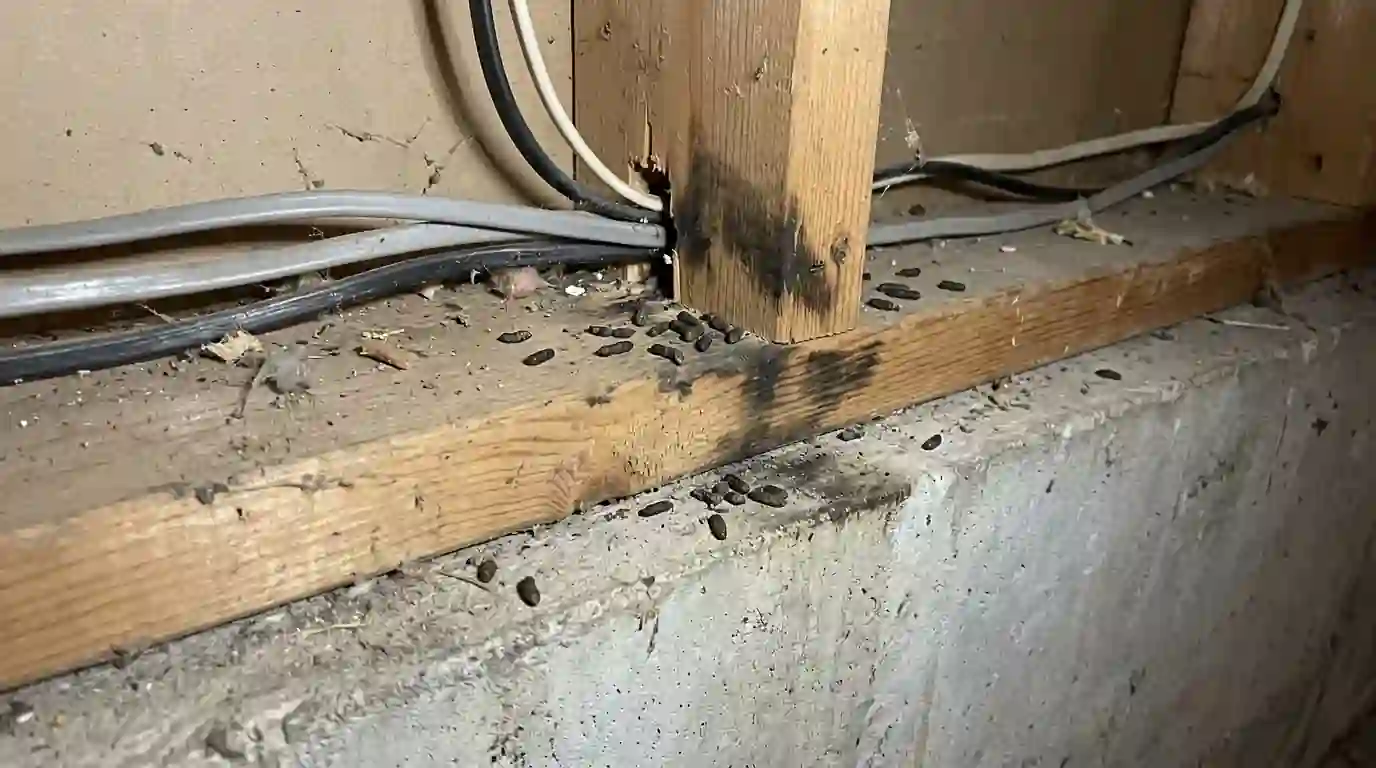
Worth catching early
Evidence worth a call this week
Scratching at night
Ceiling and wall sounds after dark are rodents commuting; squirrels run the same routes by day.
Droppings in the kitchen
Pellets in drawers, under sinks and along toe-kicks mean feeding territory, not passing traffic.
Gnawed food packaging
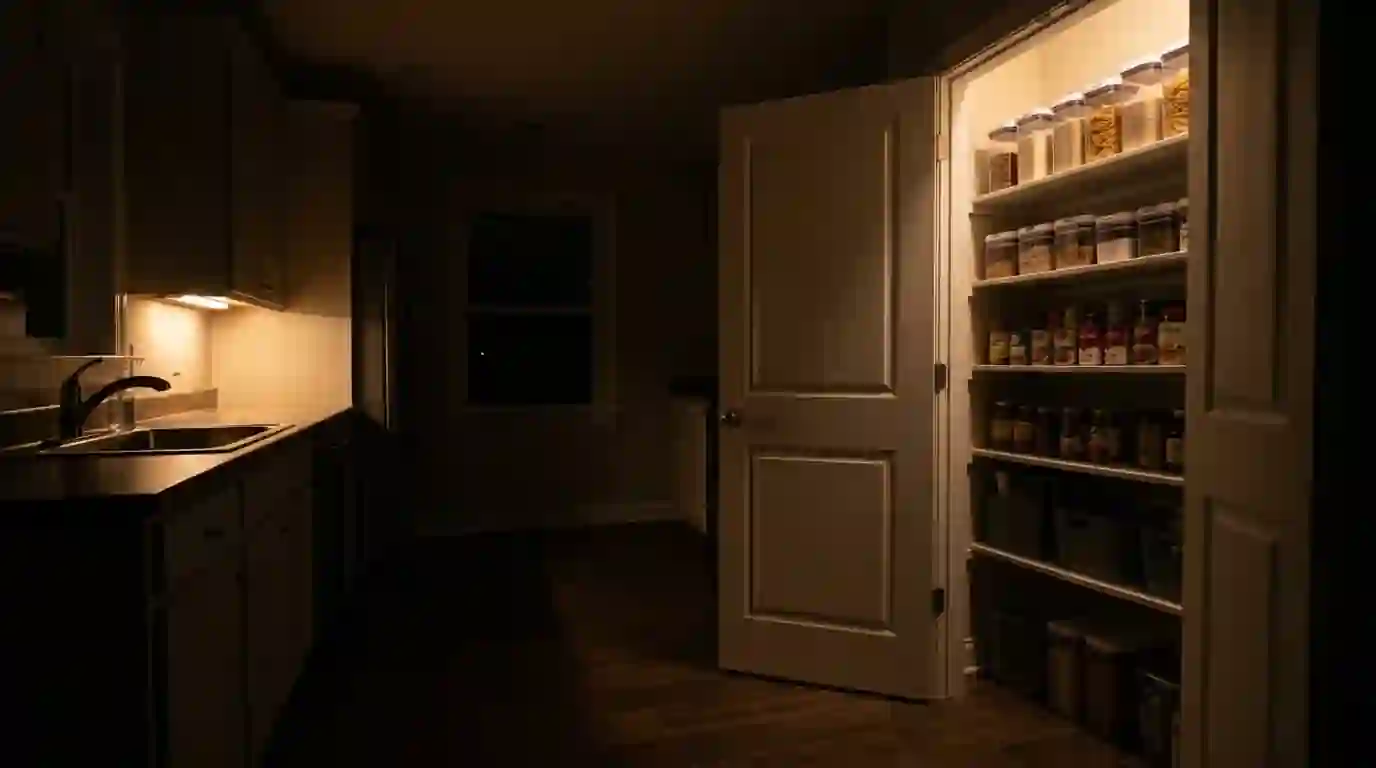
Chewed corners in the pantry are both contamination and a map of the route in.
Rub marks and burrow holes
Greasy wall-line smudges indoors, or burrows along the foundation outside, mark established traffic.
Chewed wiring
Gnawed insulation in the attic or basement is the fire-risk version of this problem and moves it up the schedule.
Pets fixating on one spot
A dog or cat staring at a cabinet base or wall corner is usually right.
How we match the job
The rodent jobs we run
- 01
House mouse programs
The classic wall-and-kitchen infestation: runway trapping, sealing and sanitation across the affected zones.
- 02
Norway rat response
Burrow and foundation work for the heavier animal, with exterior stations and the structural gaps rats exploit.
- 03
Attic populations
Trapping and exclusion upstairs, with insulation contamination assessed honestly.
- 04
Garage and outbuilding service
Detached structures cleared and sealed before they feed the main house.
- 05
Seasonal pressure programs
Fall-entry prevention for homes that restock every October, run as the cold-weather visit of a plan.
How a visit runs
How the program runs
- Evidence inspection
Droppings, rubs and gnawing mapped into runways and entry points.
- Runway trapping
Traps and secured stations placed on the routes, not the rumors.
- Managed knockdown
Visits timed to the catch curve until activity reads zero.
- Exclusion sealing
The dime-and-quarter gaps closed with gnaw-proof materials.
- Sanitation
Droppings and nesting removed with wet-method cleaning, zones sanitized.
Timeline
How fast it gets quiet
Trap activity peaks in the first three to five nights and falls off sharply as the resident population clears; most house-mouse jobs are quiet within two weeks, with a check visit confirming it. Rat work runs longer because the animal is warier, typically two to four weeks of managed trapping. Sealing happens as trapping winds down so nobody is sealed in, and the cleanup closes the job. Active infestations book priority, usually same-day or next-day in the Belleville area.
Local conditions
Why this matters in Belleville
Fall is rodent season in Belleville: the first cold snaps each October push mice out of field edges and alleys into the nearest warm structure, and the pre-1940 housing stock offers more doors than most towns. Stone foundations, original garage framing, and a century of utility penetrations give mice their dime-wide gaps, while the alleys and aging sewers downtown support Norway rats at the foundation line. The practical local rule: a house that had mice last winter will have them again this winter unless the entry points, not just the mice, were dealt with.
Pricing, plainly
What moves the price
Published national figures put full rodent programs around $200 to $600. Your quote moves with:
- Species, since rat work runs longer than mouse work
- Infestation scale read from the evidence map
- Zones involved: kitchen, attic, basement, garage, outbuildings
- Entry-point count and the sealing scope you fold in
- Contamination cleanup and any insulation damage
- Check visits across the program
- Standing exterior stations for high-pressure properties
Figures referenced are published national ranges for context, not our quote. We price your job on the phone and confirm on site before any work starts.
Before you call
Questions we hear about this work
Bait without sealing is a subscription: new rodents inherit the same holes, and poisoned mice dying in walls create odor and fly problems you will like even less. Trapping on runways plus exclusion ends it instead of managing it forever.
Interior traps go behind appliances, in voids and inside stations; exterior bait lives in locked tamper-resistant boxes. Placement is walked with you before we leave.
Usually yes, politely. Mice are social and nocturnal, so a daylight sighting means pressure on the population. An inspection settles it either way for less than guessing does.
Droppings tell us: rice-grain pellets are mice, raisin-sized means rat. Gnaw size and burrows confirm it, and the program differs enough that the answer matters.
Yes, and it should not be a broom-and-shop-vac job; dried rodent waste should never be aerosolized. Wet-method cleaning with proper protection is part of the service.
Through sealed entries, no. Fall pressure is real here, but it only becomes an infestation where a gap lets it; the exclusion work is what you are actually buying.
With trapping-led programs it is rare; when a carcass does land in a void, locating and removing it is a service we run routinely, usually resolved in one visit.
Nearby problems
Jobs that often ride along
Rodent Exclusion & Proofing
Dead Animal Removal
Squirrel Removal
Residential Pest Control
Groundhog Removal
Read first: What mouse droppings tell you about the size of the problem; Pest entry points in pre-1940 brick homes.
Booked most weeks in: Collinsville, Edwardsville, Granite City, Columbia, and the rest of our six-county area.
One call does it
Describe the sounds, the droppings, the sightings
Where and when you hear or see them tells us species and scale; active rodent calls get the priority slots.
(217) 207-0945Answered 24/7, every day