- Home
- Pest Control
- Carpenter Bee Control
The half-inch holes in your fascia boards
Carpenter bee control for drilled fascia, decks and porch beams
That perfectly round half-inch hole in the fascia was drilled by a bee. Carpenter bees bore into bare and weathered softwood to nest, the galleries run far deeper than the entrance, and the same boards get re-drilled every spring until the cycle is broken. Treating the holes is step one; sealing and surface work is what ends it.
Call (217) 207-0945 Browse our services
- Gallery treatment and sealing
- Spring prevention timing
- Woodpecker-damage cycle broken
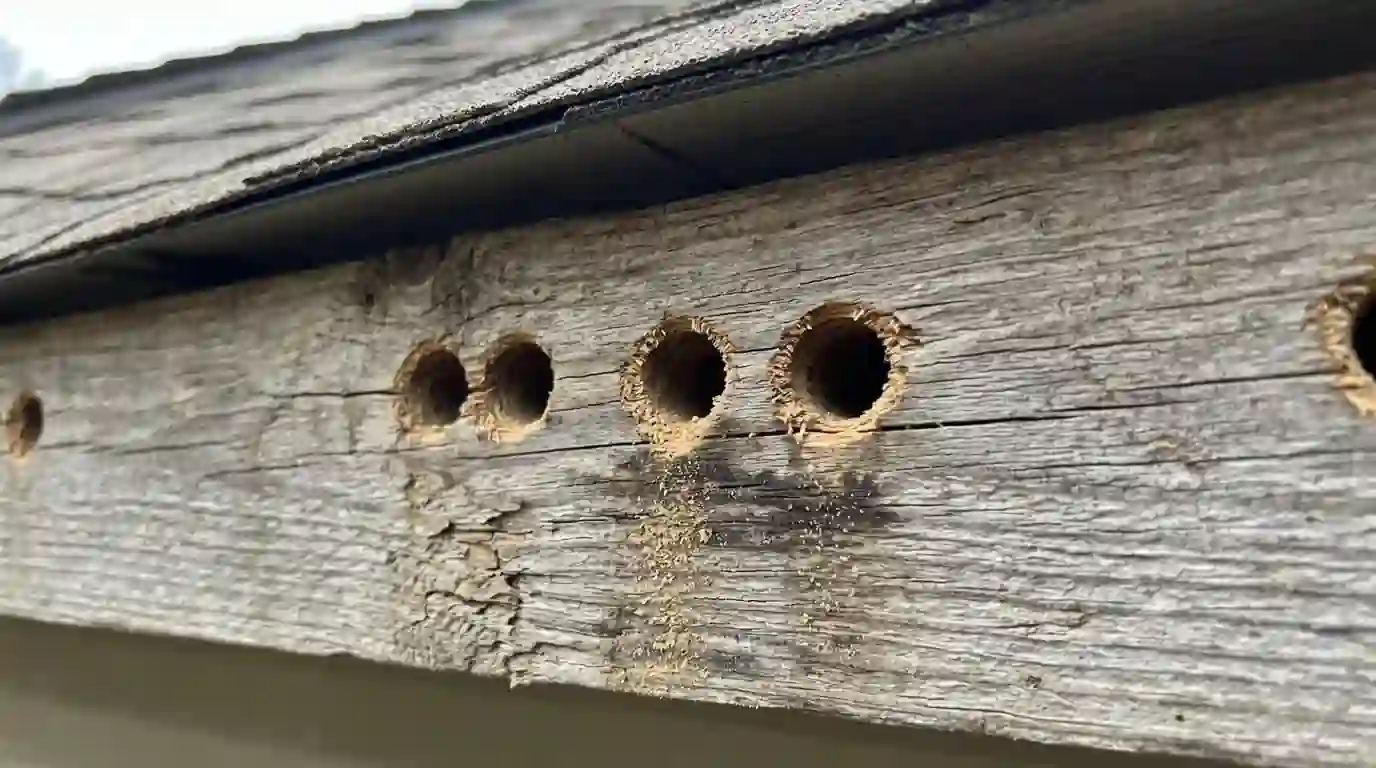
Carpenter bee control treats the galleries the bees have bored into fascia, deck rails, porch beams and siding, then seals the entrances after the treatment has done its work so the wood stops being reusable housing. Spring is when females drill and summer is when the next generation emerges, so timing the treatment and the sealing to that cycle is most of the craft. Prevention afterward is about surfaces: painted and sealed wood gets drilled far less than bare and weathered wood.
What this covers
The drilling cycle, interrupted
Female carpenter bees bore a round entrance straight in, then turn and tunnel with the grain, laying eggs in chambered cells. The males hovering aggressively at your porch cannot sting and the females rarely do; the problem is the wood. Each gallery weakens the board, each spring adds new tunnels and extensions of old ones, and woodpeckers tearing into the wood after the larvae often do more visible damage than the bees themselves.
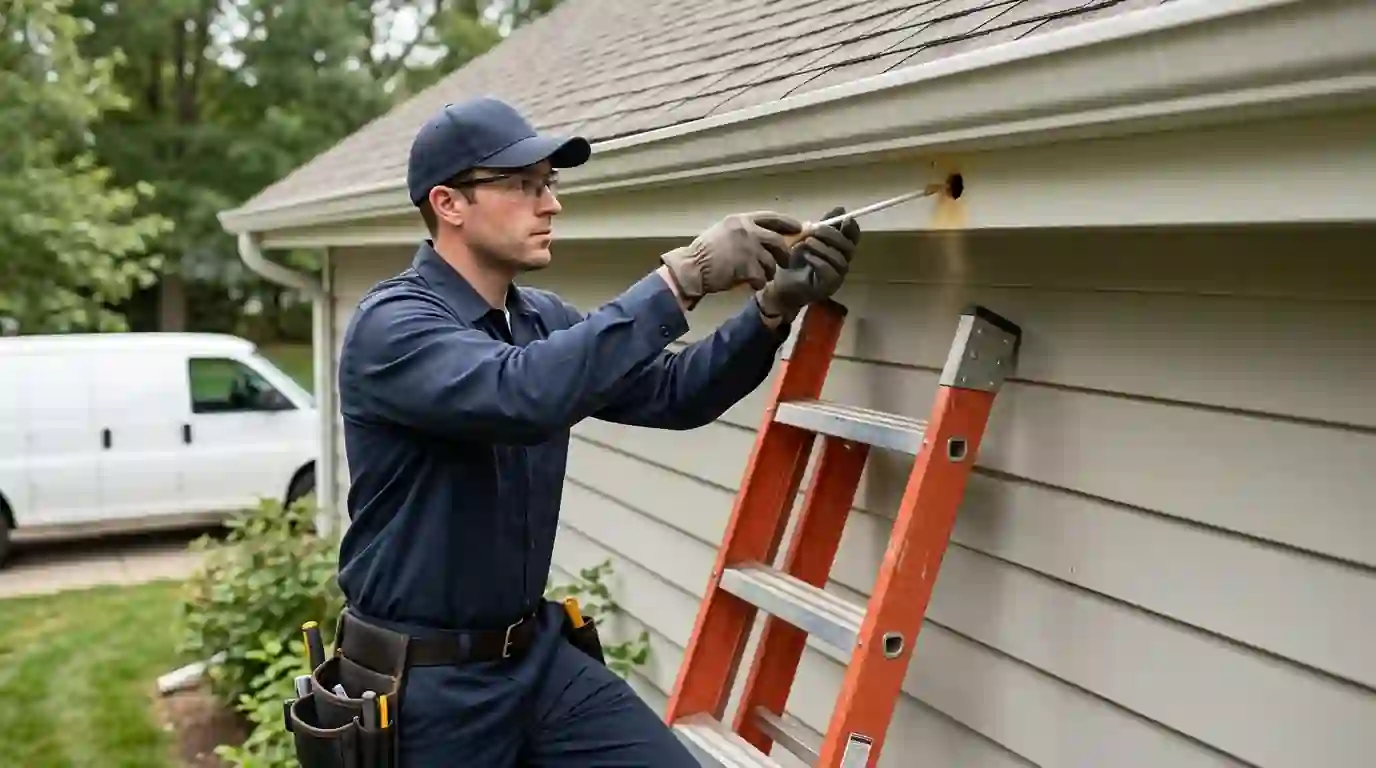
Our treatment places dust into each gallery where emerging and returning bees contact it, timed so the season's brood is covered. The holes then get sealed, but only after the treatment interval, because sealing too early traps untreated larvae behind the plug to chew fresh exits. The visit ends with a surface prescription: which boards need paint or stain, and which are far enough gone that replacement beats another season of patching.
Pricing, plainly
What moves the price
Jobs are quoted by scope after you describe the damage. What sets the number:
- Count and spread of active holes across the structure
- Height and access, since fascia work is ladder work
- Sealing and plugging included after the treatment interval
- Woodpecker damage that changes the repair conversation
- Outbuildings and detached structures added to the scope
- Preventive surface treatment for high-pressure elevations
- A return visit where emergence timing requires two touches
Figures referenced are published national ranges for context, not our quote. We price your job on the phone and confirm on site before any work starts.
How we match the job
Where the damage shows up
- 01
Fascia and soffit lines
The classic site: long runs of softwood trim at the roof edge, drilled year after year on the sunny sides.
- 02
Decks and railings
Rail undersides and joist edges, where bare pressure-treated lumber weathers into drillable territory.
- 03
Porch beams and columns
Structural members on older Belleville porches, where repeated galleries become a genuine repair question.
- 04
Sheds and outbuildings
Unpainted outbuilding trim that quietly hosts the population reinfesting the house.
- 05
Cedar and log construction
Whole-surface pressure on cedar homes, handled with treatment plus a sealing schedule rather than hole-chasing.
Local conditions
Why this matters in Belleville
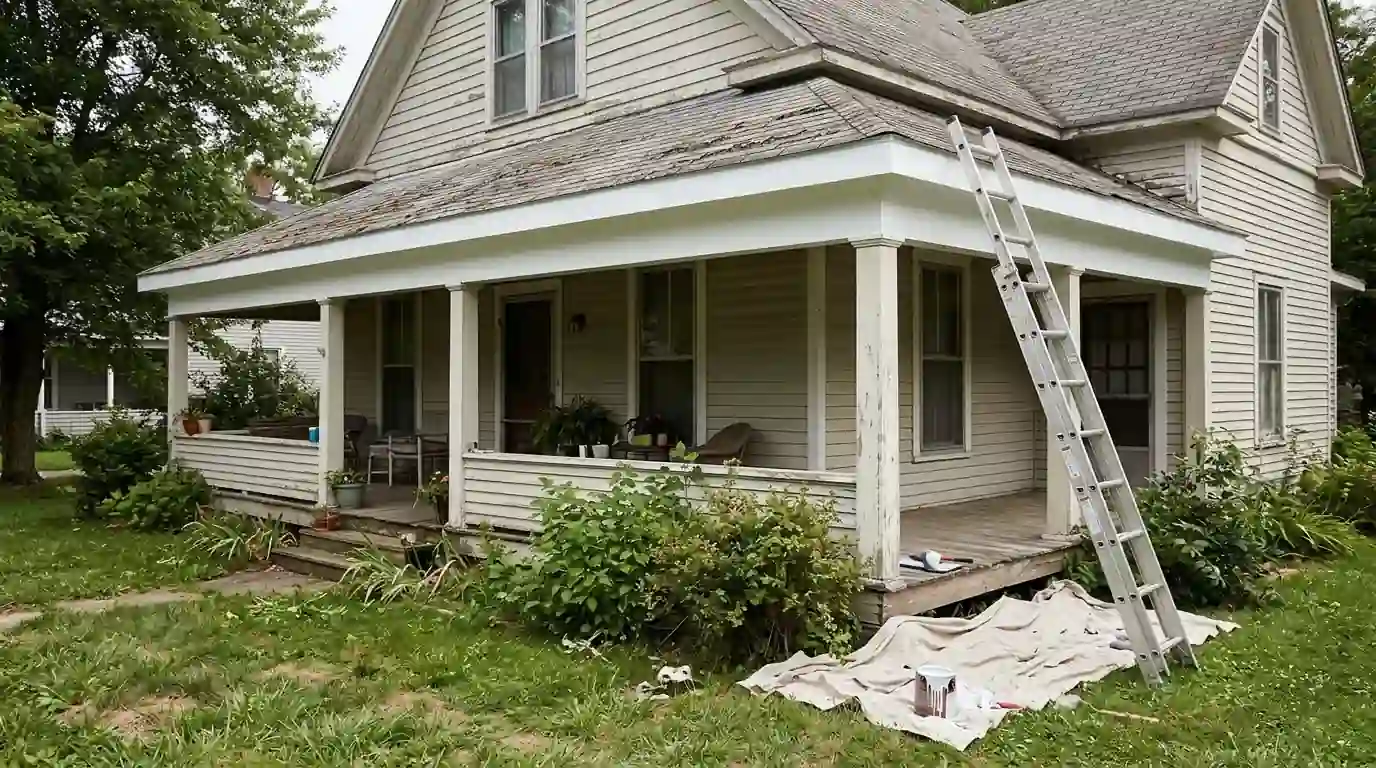
Belleville's older neighborhoods are carpenter bee habitat by construction: original softwood fascia and porch framing on pre-war homes, much of it high, sun-warmed and overdue for paint. The wide porches around Old Belleville and the Oakland district were built in exactly the lumber these bees prefer, and decades of weathering has opened the grain. Spring drilling here starts as the redbuds bloom, and by June the woodpeckers are already working the galleries. Boards kept painted on these streets simply do not get drilled at the rate bare ones do.
How a visit runs
How the job runs
- Damage survey
Every elevation checked; active holes mapped against old sealed ones and woodpecker tear-outs.
- Gallery treatment
Dust placed into each entrance to work through the tunnel system and the season's brood.
- Emergence interval
The galleries stay open while treatment covers returning and emerging bees.
- Seal and plug
Entrances plugged and sealed so the boards stop advertising vacancies.
- Surface prescription
The paint, stain or replacement list that keeps next spring's females moving on.
Timeline
Timing through the season
Treated galleries stop traffic within days. The sealing visit follows after the treatment interval so emerging bees are covered rather than trapped behind plugs, typically a few weeks later, and both visits are in the original quote. Spring treatments catch drilling females; late-summer treatments catch the year's emergence before it overwinters in the galleries. Either window works, and the wrong move is only waiting for next spring's new holes.
Before you call
Questions we hear about this work
The hovering males cannot; females can but almost never do unless handled. Treat the wood confidently and leave the dive-bombing males to their theater.
They do pollinate, and populations away from your structure are worth leaving be. Control here targets the galleries in your lumber, not bees at large, and prevention is mostly paint, which harms nothing.
Plugging untreated holes traps larvae that chew new exits and often drives returning females to drill fresh entrances beside the plug. Treat first, seal second.
Scent-marked galleries and weathered grain make old sites the preferred real estate; daughters return to where they emerged. Breaking the cycle takes treatment plus sealing plus surface work together.
Woodpeckers, opening galleries to reach larvae. The ragged trenching along a fascia line is them, and it stops when the galleries no longer hold brood.
Dramatically. Carpenter bees strongly prefer bare, weathered softwood; sound paint or solid stain is the cheapest long-term control there is.
On boards carrying years of galleries plus woodpecker damage, yes, and we will say so rather than bill you to treat lace. Replace, prime, paint, and that board retires from the cycle.
Nearby problems
Jobs that often ride along
Carpenter Ant Control
Wasp & Hornet Removal
Termite Inspection
Residential Pest Control
Stink Bug & Boxelder Bug Control
Read first: A wasp nest in the soffit: what to do and what to skip.
Booked most weeks in: Mascoutah, Waterloo, Highland, St. Clair County, and the rest of our six-county area.
One call does it
Describe the holes and where they are
How many, how high and which boards; from that we can quote the treatment and the sealing visit together.
(217) 207-0945Answered 24/7, every day