- Home
- Pest Control
- Stink Bug & Boxelder Bug Control
The sunny-wall swarms of September and October
Stink bug and boxelder bug control before they overwinter in your walls
The bugs sunning on your south wall in October are shopping for a winter home. Brown marmorated stink bugs and boxelder bugs overwinter inside wall voids and attics, squeezing through gaps the width of a credit card. The window to stop them is the few fall weeks before they go in; after that, the job changes.
Call (217) 207-0945 Browse our services
- Fall barrier timed to the swarm
- Entry gaps sealed where they cluster
- Spring emergence explained honestly
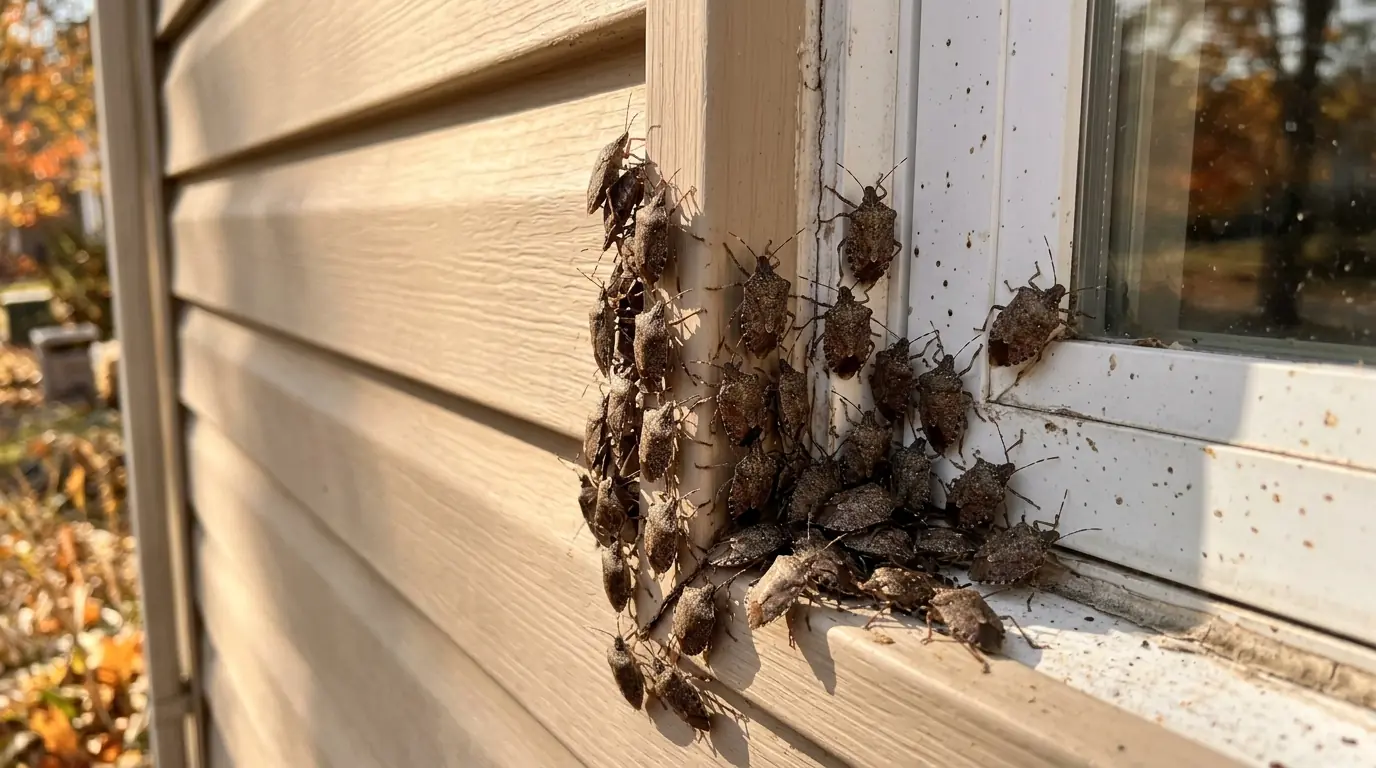
Stink bug and boxelder bug control is seasonal exclusion work: an exterior barrier treatment applied to the sunny walls, eaves and window surrounds where they cluster in September and October, plus sealing of the gaps they funnel through. Done before they enter, it cuts the winter houseguest count dramatically. Bugs that already overwintered in your walls will still emerge on warm days through spring, and the honest version of this service tells you that upfront rather than selling winter sprays that cannot reach them.
What this covers
Timing is most of this job
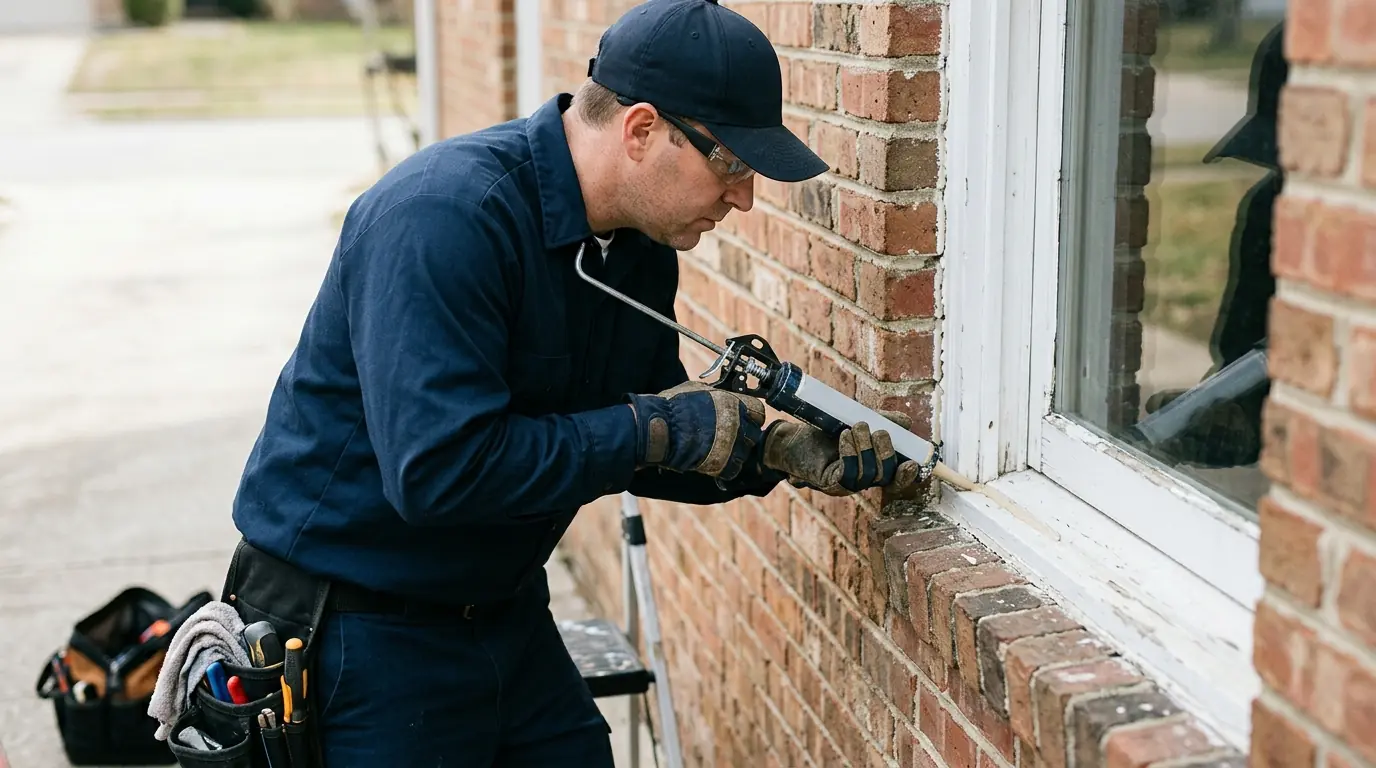
Both species run the same autumn playbook: congregate on warm, light-colored, sun-facing walls on the first cool sunny days, then work upward into gaps at window frames, soffit vents, utility penetrations and siding edges. The effective response is a residual exterior treatment on those staging surfaces as the clustering begins, paired with physical sealing of the entry gaps, screening of vents, and door sweep fixes.
Once they are inside the voids, chemistry mostly loses to architecture. Wall-void treatments for overwintering clusters risk carpet beetle problems feeding on the die-off, so winter work focuses on interior exclusion, sealing the interior-side gaps around trim and fixtures so emerging bugs exit outside rather than into your living room, plus honest guidance: the vacuum is the right indoor tool, and spring emergence is finite.
How we match the job
How the season splits the work
- 01
Fall barrier service
The core: staging walls, eaves and surrounds treated as clustering starts, with the entry gaps sealed the same visit.
- 02
Boxelder-specific response
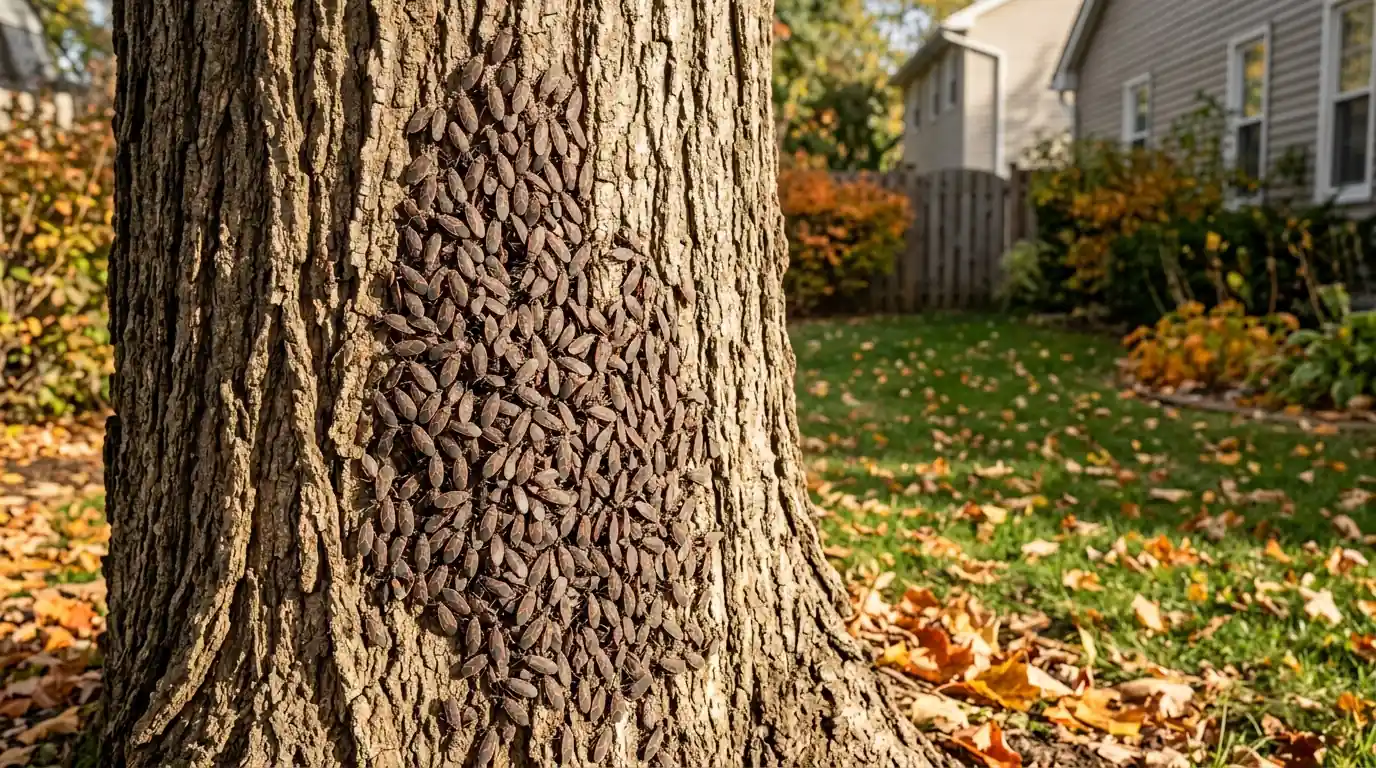
Clusters tied to a nearby female boxelder tree, treated at the host-tree side and the staging walls together.
- 03
Spring emergence support
Interior-side sealing and realistic guidance when last fall's guests start appearing at your windows.
- 04
Asian lady beetle add-on
The orange look-alike running the same calendar, covered by the same barrier when it is part of your swarm.
- 05
Plan-based fall coverage
The fall visit of a quarterly plan carries this work by design, which is how most of our customers handle it.
Local conditions
Why this matters in Belleville
Metro East autumns build these swarms reliably: warm late Septembers, mature boxelder and maple trees through the older neighborhoods, and blocks of light brick and siding facing full southern sun. The pre-war housing adds the entry points, with original wood windows, settled siding junctions and unscreened attic vents giving clusters their routes. Homes backing onto the wooded edges toward the bluffs and creek corridors see the heaviest pressure, and on those lots the fall barrier visit is the difference between dozens indoors and hundreds.
How a visit runs
How the fall visit runs
- Staging-wall survey
The sunny elevations and cluster points mapped while the bugs show them to us.
- Barrier application
Residual treatment on the staging surfaces, surrounds and eaves they cross.
- Gap sealing
Credit-card gaps at frames, penetrations and siding edges closed.
- Vent screening check
Soffit and gable vents verified screened, the attic route shut.
- Spring expectations set
What emergence will look like and what to do, in writing, so February brings no surprise.
Pricing, plainly
What moves the price
Fall invader work quotes flat for most homes. The drivers:
- Wall area on the sun-facing elevations that stage the swarm
- Height and access for eave and upper-window treatment
- Sealing scope: gaps, vents and sweeps folded into the visit
- Host trees on or beside the lot for boxelder jobs
- One-time fall service against the fall visit of a quarterly plan
- Severity history, since heavy prior winters justify a wider barrier
- Detached garages and outbuildings sharing the swarm
Figures referenced are published national ranges for context, not our quote. We price your job on the phone and confirm on site before any work starts.
Before you call
Questions we hear about this work
Neither; they are garden and orchard pests outdoors and purely a nuisance indoors. The offense is numbers and the smell when crushed, which is also the argument for the vacuum.
Warm spells wake overwintering bugs inside your walls and they move toward light. It means last fall they got in, not that they are breeding indoors; they cannot reproduce inside.
We can, and we usually advise against it: die-off in voids feeds dermestid beetles and creates a second pest problem. Interior-side sealing plus patience beats it; the emergence is finite.
When clustering starts on the warm walls, typically mid-September into October here. Call when you first notice them sunning; that week is the window.
Removing a female tree helps a lot on-lot, though bugs fly in from neighborhood trees regardless. The barrier works with or without the removal; the tree is your call.
Crushed or frightened stink bugs release it, yes. Vacuum rather than swat, empty the canister outside, and the house stays neutral.
The fall barrier covers the entry season, which is what matters; nothing enters in January. Re-treatment next fall is the cycle, and plan customers get it automatically.
Nearby problems
Jobs that often ride along
Silverfish & Occasional Invader Control
Rodent Exclusion & Proofing
Quarterly Protection Plans
Spider Control
Residential Pest Control
Read first: Pest entry points in pre-1940 brick homes.
Booked most weeks in: Collinsville, Edwardsville, Granite City, Columbia, and the rest of our six-county area.
One call does it
Call when they start sunning on the wall
Tell us which walls they are gathering on; that same week is when the barrier earns its keep.
(217) 207-0945Answered 24/7, every day