- Home
- Pest Control
- Residential Pest Control
Homes across Belleville and the Metro East
Residential pest control built around your house, not a route sheet
Every house here has its own weak points. A 1920s brick cottage near the square and a 1990s ranch out by Frank Scott Parkway do not get the same pests, so they should not get the same treatment. We start at your foundation line and build the plan from what we actually find.
Call (217) 207-0945 Browse our services
- One-time visits or standing plans
- Interior work only where it earns its place
- Quotes given before work starts
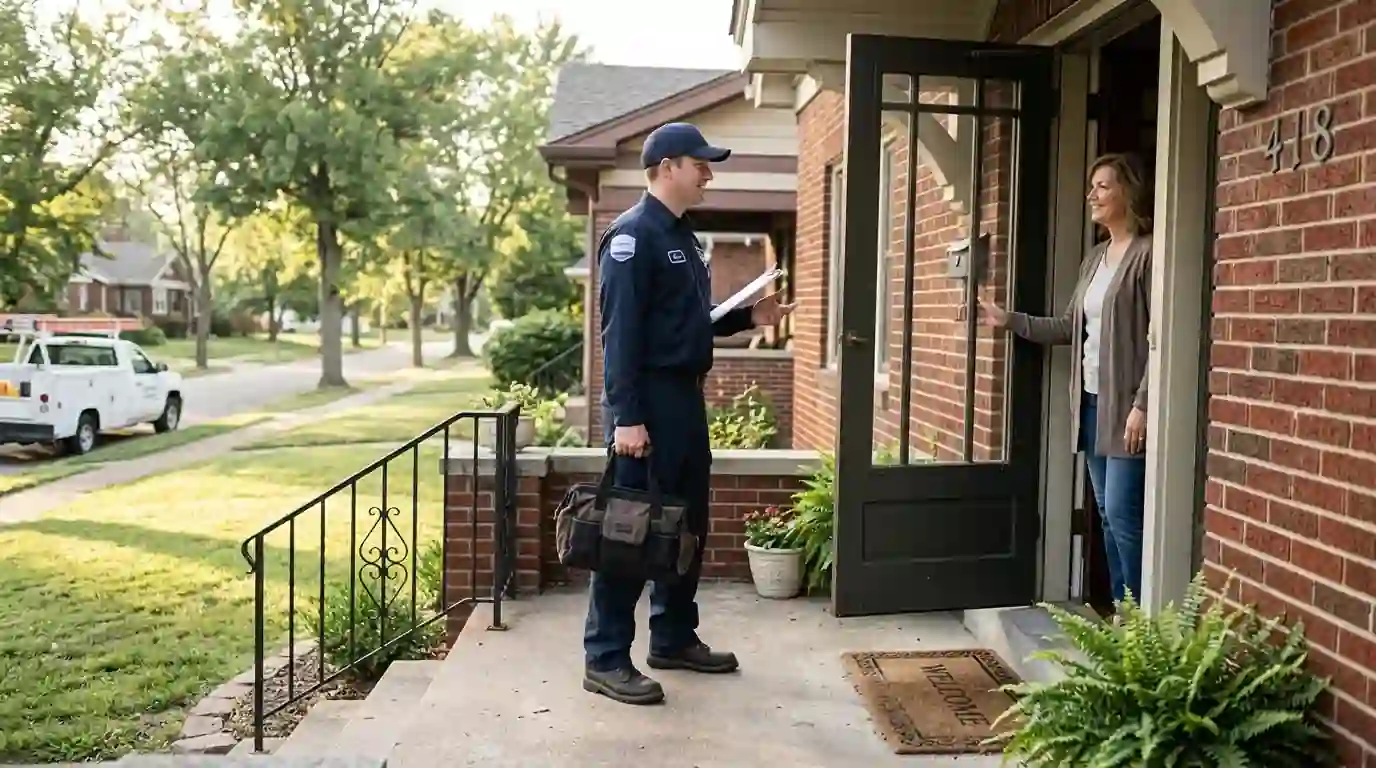
Residential pest control covers the pests that actually bother Belleville houses: ants, spiders, mice, wasps, roaches and the seasonal invaders. You can book a single corrective visit for an active problem or a recurring plan that keeps the perimeter treated year round. Either way the first step is the same walk around your foundation, and you get the price before anyone opens a product case.
What this covers
One house, one plan
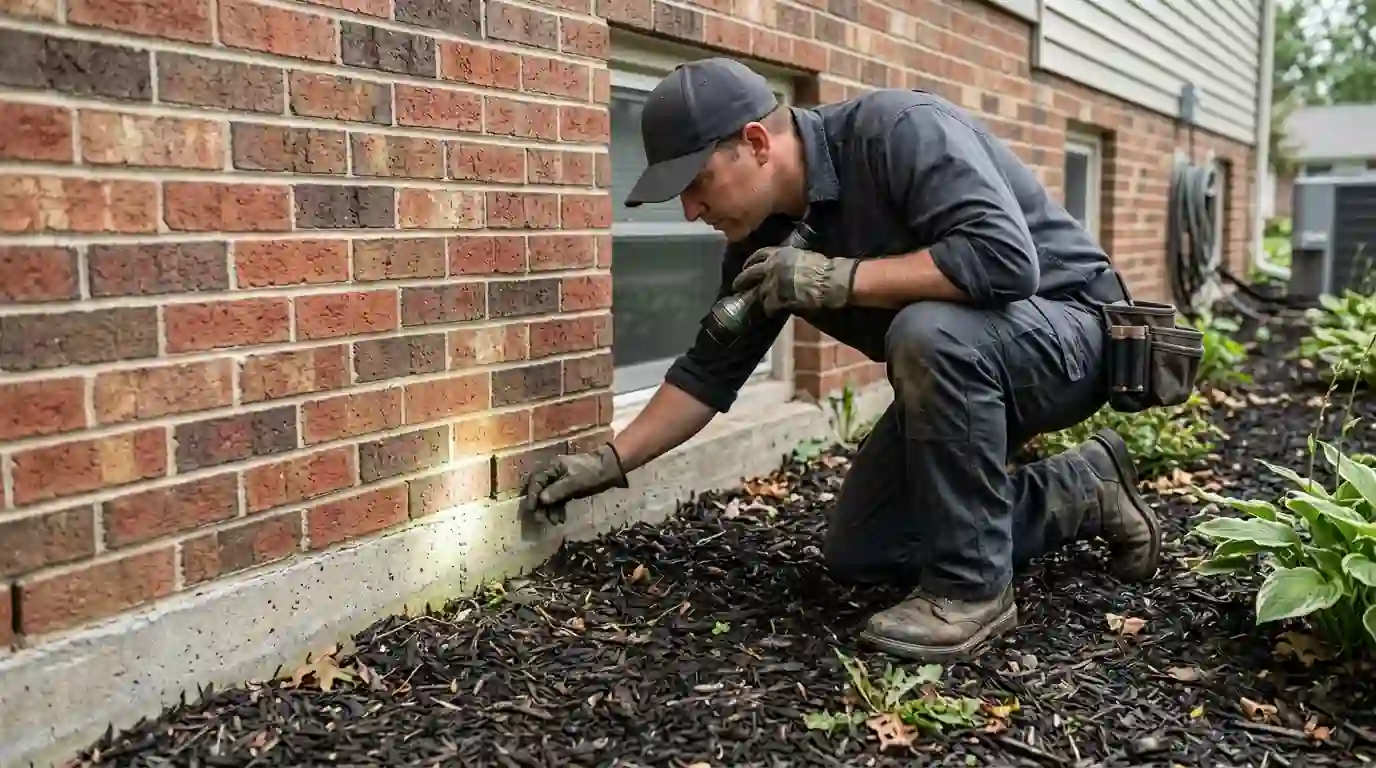
A residential visit begins outside, because that is where nearly every infestation begins. The technician walks the full foundation line, checks the grade and mulch depth, the weep holes in the brick, the gaps under doors and around utility penetrations, and the usual harborage spots like woodpiles and dense shrubs against the siding. What turns up on that walk decides what gets treated.
Inside, we treat where the evidence is, not everywhere. Baseboard spraying through an entire house is mostly theater; targeted work in kitchens, baths, basements and wall voids where pests actually travel does more with less product. You will know what was applied, where, and why before we leave.
On your side
What helps before we arrive
- Note where and when you see activity; photos on your phone help more than you would think
- Pull bins and stored boxes a foot off garage and basement walls so the technician can see the base
- Trim shrubs touching the siding if you can; pests use them as bridges
- Keep pet food picked up the morning of the visit
- Plan to point out anything you have already sprayed, so we do not stack products
- List the rooms where you want interior attention
- Have a rough idea of your home's age; it genuinely changes the plan
How we match the job
The shapes a residential job takes
- 01
Corrective one-time visit
An active problem, treated and resolved: an ant trail, a wasp nest, mice in the garage. Includes a follow-up window in case activity continues.
- 02
Seasonal perimeter treatment
A spring or fall exterior treatment that heads off the big seasonal waves of ants, spiders and fall invaders before they reach the door.
- 03
Quarterly protection plan
Four scheduled visits a year covering the common household pests, with free retreats between visits if anything breaks through.
- 04
Pre-sale and move-in service
A full inspection and corrective treatment when a home changes hands, so problems do not move in with the furniture.
- 05
Older-home program
For pre-war brick homes with stone foundations: more exclusion work, more attention to voids, and products chosen for long-lived structures.
Local conditions
Why this matters in Belleville
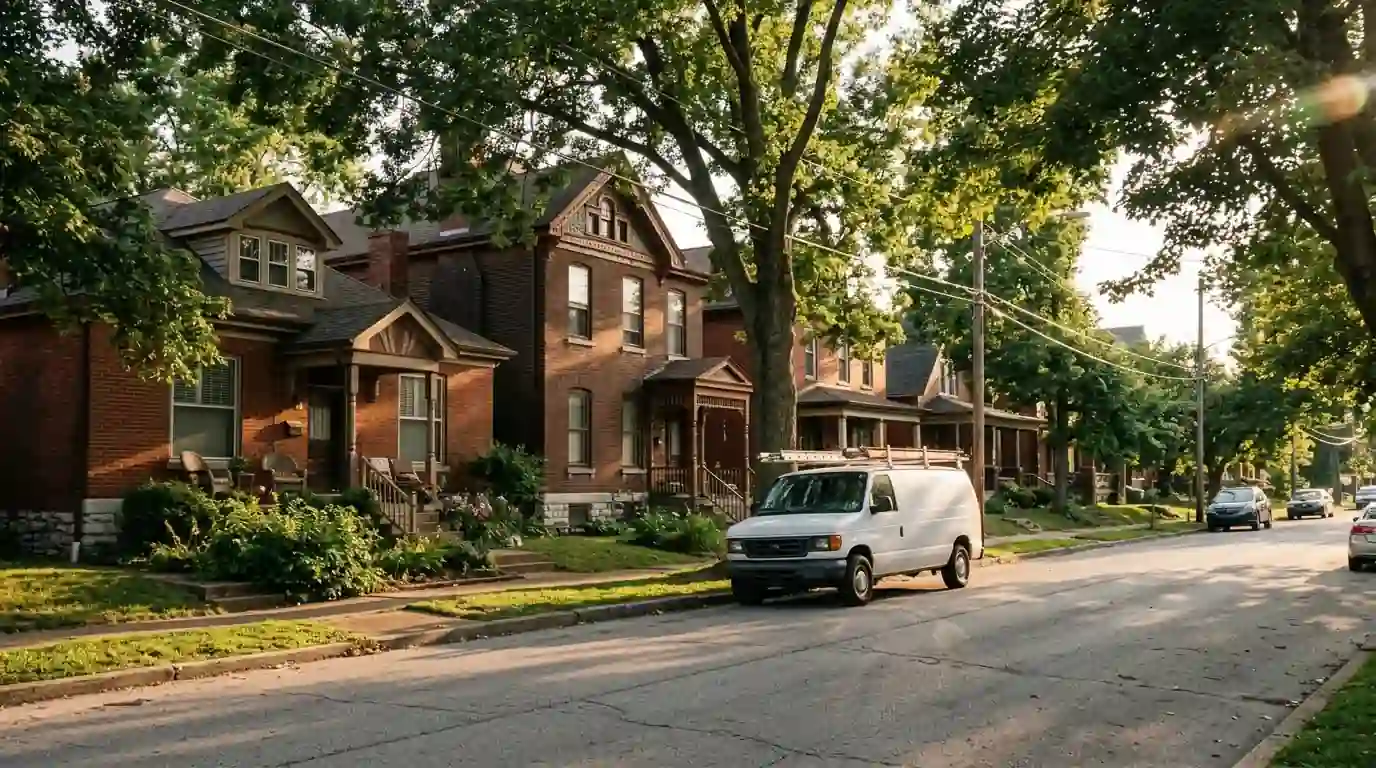
Belleville is an old-housing town: 26.4 percent of homes here predate 1940 and the median house went up in 1962. The brick street houses around Old Belleville, Hexenbukel and the Oakland district sit on stone and early concrete foundations full of settled gaps, and odorous house ants, mice and brown recluse spiders all use them. Newer subdivisions out toward Shiloh and Swansea trade those entry points for landscaping-driven ant and spider pressure instead. The plan changes with the street, which is why the walk comes first.
How a visit runs
What the first visit looks like
- Phone walkthrough
You describe what you are seeing and where; we tell you what the visit involves and quote it.
- Perimeter walk
The technician circles the house, documenting entry points, conducive conditions and evidence.
- Identification
We name the species, because the right product and placement depend on it.
- Targeted treatment
Exterior perimeter first, interior only where the evidence says it earns its place.
- Report and retreat window
You get what we found, what we applied, and what to watch for, with a follow-up if needed.
Pricing, plainly
What moves the price
Published national figures put a one-time pest visit between $100 and $300 with an average around $171, and ongoing plans between roughly $300 and $900 a year depending on visit frequency. Where your home lands inside ranges like those depends on a few things:
- Home size and foot-print, since the perimeter is what gets walked and treated
- Age and construction, because stone foundations and brick veneer need more exclusion work
- The pest mix: a straightforward ant job prices differently than roaches or mice
- Whether it is a single corrective visit or a recurring plan, which lowers the per-visit cost
- How established the problem is before the first visit
- Crawl spaces, additions and detached structures that extend the treatment line
- Any sealing or proofing work you want bundled into the visit
Figures referenced are published national ranges for context, not our quote. We price your job on the phone and confirm on site before any work starts.
Choosing between them
One-time visit or a standing plan
| One-time visit | Quarterly plan | |
|---|---|---|
| Best for | A single active problem | Year-round prevention |
| Pricing | One flat quoted price | Lower per-visit rate, four visits |
| Retreats | Follow-up window included | Free between scheduled visits |
| Coverage | The pest you called about | The common household pest set |
| Commitment | None | Seasonal schedule, cancel anytime |
Before you call
Questions we hear about this work
No. One-time corrective visits are a normal part of our week. Plans exist because most households find four scheduled visits cheaper and easier than calling three separate times a year, but nothing obligates you.
The products we use are applied at labeled rates in the places pests travel, not broadcast through living space. We will tell you any re-entry time before we start; for most visits it is simply letting treated surfaces dry.
Only where there is a reason. Exterior perimeter work prevents most interior problems, and over-treating inside wastes your money. If you want interior attention in specific rooms, say so and it is done.
Ant and spider activity usually drops within days. Baits are deliberately slower because the foragers have to carry them back to the colony; that lag is the treatment working, not failing.
Termites, bed bugs and wildlife each need their own program and their own pricing, and we will say so plainly on the phone rather than fold them into a general visit that cannot fix them.
Yes, including coordination with tenants for access. Multifamily buildings have their own page and their own unit-by-unit approach.
Light rain rarely matters; exterior products are chosen for it. A real downpour and we reschedule within the week at no change to your price.
Nearby problems
Jobs that often ride along
Read first: Pest entry points in pre-1940 brick homes; A month-by-month pest calendar for the Metro East.
Booked most weeks in: St. Clair County, Madison County, Monroe County, Clinton County, and the rest of our six-county area.
One call does it
Tell us about the house and what you are seeing
Two minutes on the phone and you will know what the visit involves, what it costs, and when we can be at your door.
(217) 207-0945Answered 24/7, every day