- Home
- Pest Control
- Termite Inspection
Inspections for homeowners, buyers and sellers
A termite inspection that reads the whole structure
St. Clair County sits in a moderate-to-heavy termite zone, and the colony never announces itself. Eastern subterranean termites work from the soil up through hairline gaps, and by the time wood sounds hollow they have been feeding for a long while. An inspection reads the signs before the repair bill writes itself.
Call (217) 207-0945 Browse our services
- Same-week scheduling for most of Belleville
- Written findings you can act on
- Honest no-activity reports when the house is clean
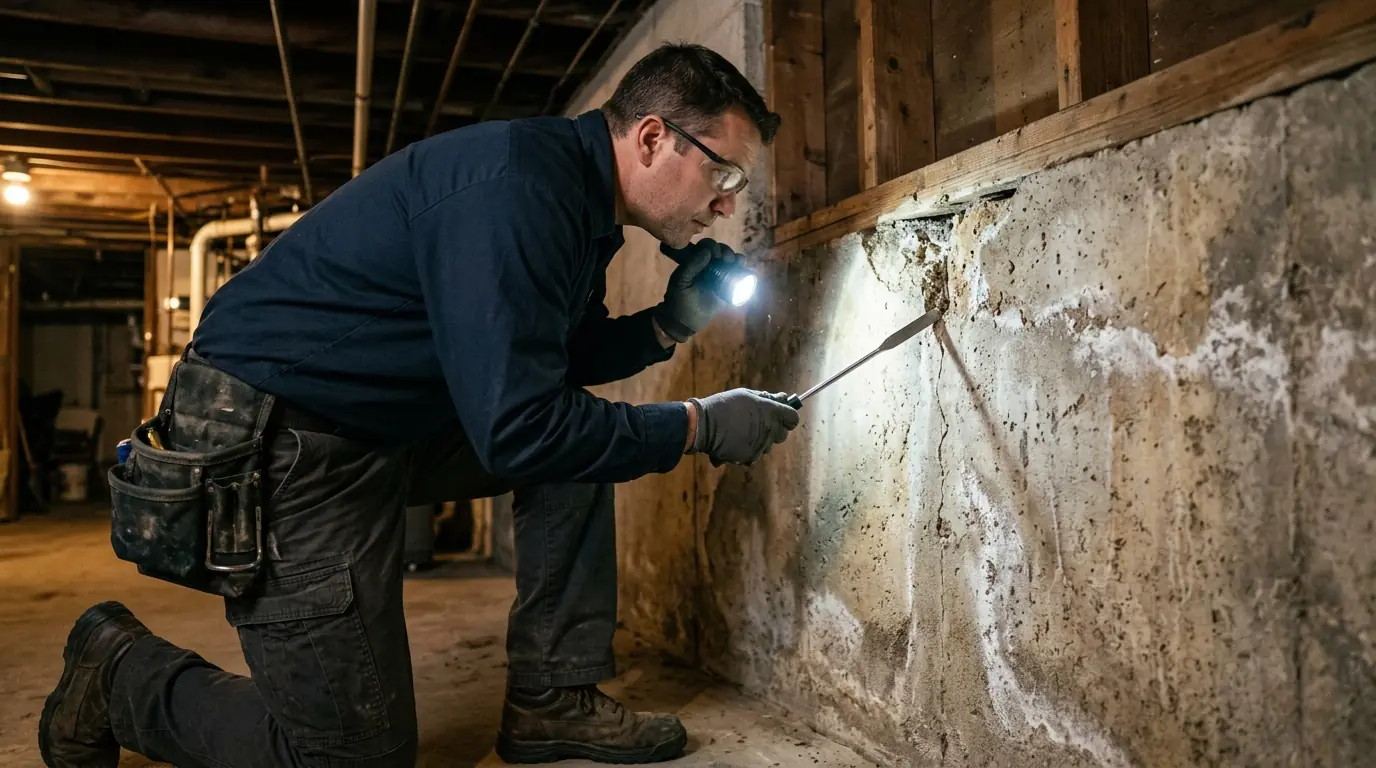
A termite inspection is a trained, tool-assisted read of your foundation, basement or crawl space, sill plates, and exterior grade for the four kinds of evidence subterranean termites leave: mud tubes, damaged wood, swarmers and their shed wings, and the conducive conditions that invite them. You get a written finding either way; if the house is clean, the report says so and what to watch, and nobody sells you a treatment for an empty wall.
What this covers
What a real inspection covers
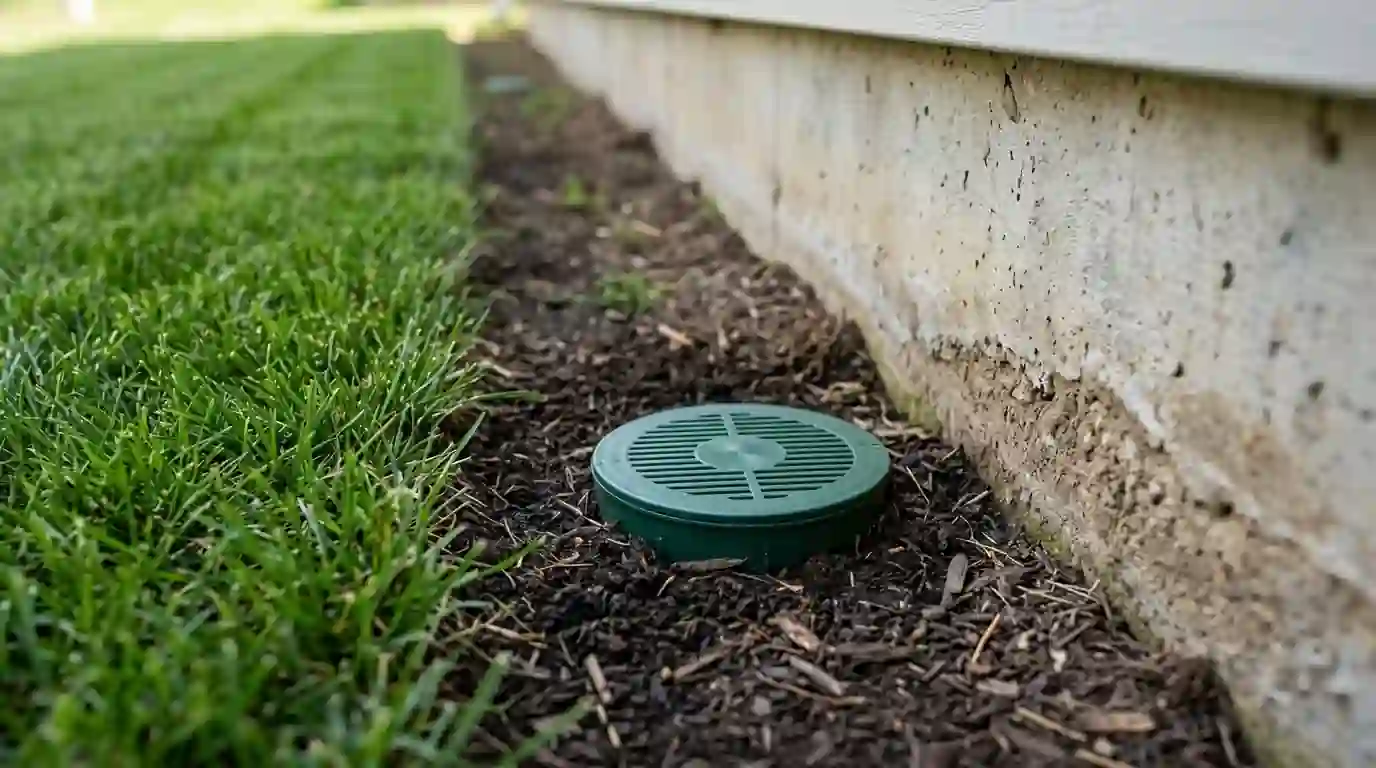
The exterior pass walks the full foundation line: grade height against the brick or siding, mulch depth, wood-to-soil contact at porches, deck posts and fence lines, expansion joints, and plumbing penetrations. Subterranean termites need contact with soil moisture, so the places where earth meets structure are where the story starts.
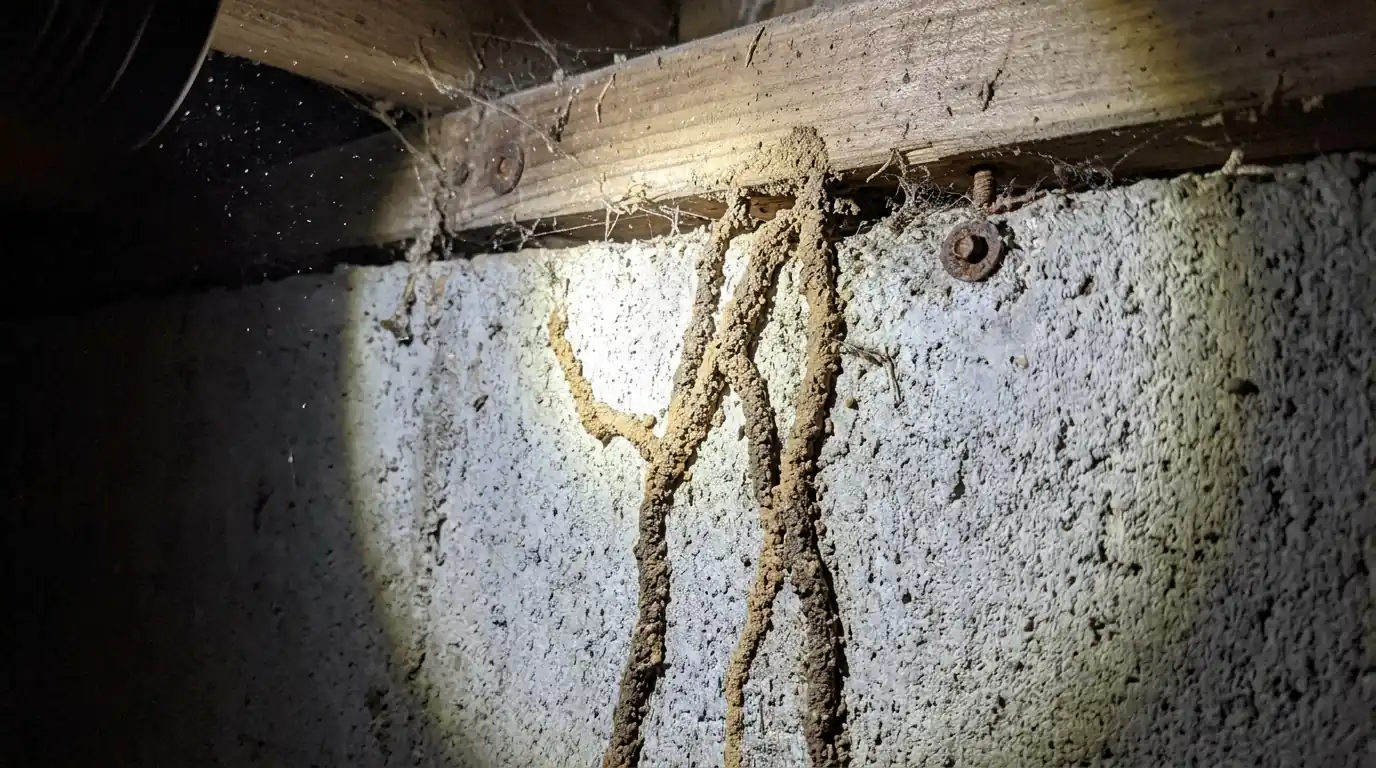
Inside, the basement or crawl space gets the flashlight-and-probe treatment: sill plates, rim joists, the tops of foundation walls where tubes climb, bath traps, and any wood that sounds wrong under a tap. Where we find tubes, we break a small section and check for live workers, because an active tube and an abandoned one call for different conversations.
Pricing, plainly
What moves the price
Inspection pricing is quoted flat on the phone and depends on little more than:
- Foundation type: basement, crawl space, slab, or the mix many older homes carry
- Total footprint and any additions with their own foundations
- Crawl space access, since tight or blocked crawls take longer to read honestly
- Detached garages and outbuildings you want included
- Whether a written real-estate form is needed for a transaction
- Scheduling urgency when a closing date is driving the calendar
- Nothing else; an inspection is not a loss-leader for a treatment pitch
Figures referenced are published national ranges for context, not our quote. We price your job on the phone and confirm on site before any work starts.
How we match the job
Inspections for different situations
- 01
Homeowner concern check
You saw wings on a sill, dirt lines on a wall, or soft wood, and want an answer this week rather than a guess.
- 02
Annual monitoring inspection
A scheduled yearly read of a home in a heavy-pressure area, or a home with a treatment history, catching new activity at the tube stage.
- 03
Pre-purchase inspection
A buyer-side inspection before closing on a Belleville home, with findings written plainly enough to negotiate from.
- 04
Pre-listing inspection
Sellers in older neighborhoods clearing the question before buyers ask it.
- 05
Post-treatment verification
An independent read of a previously treated home to confirm the barrier or bait program is holding.
Local conditions
Why this matters in Belleville
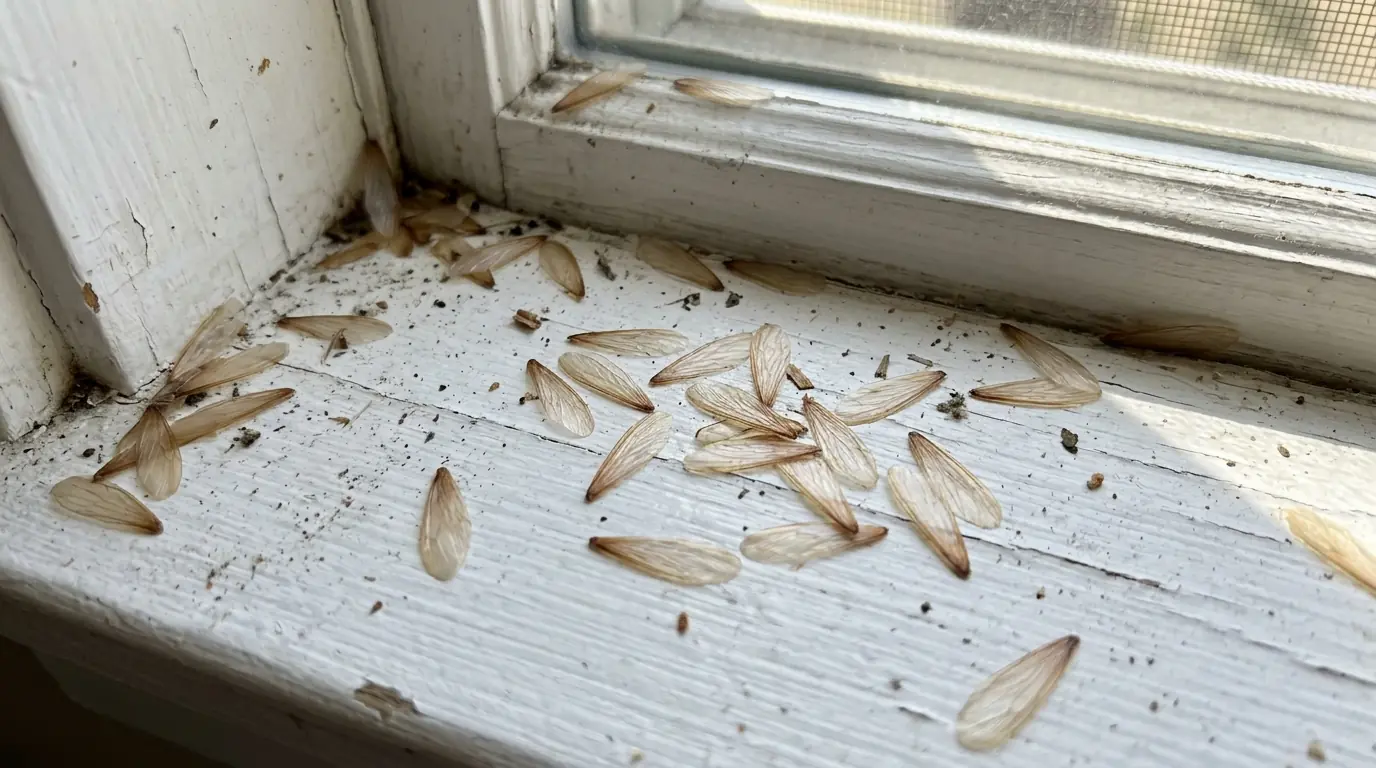
Belleville is exactly the housing termites favor. More than a quarter of the homes predate 1940, the median build year is 1962, and the historic district alone covers roughly 700 structures around Old Belleville, Hexenbukel and Oakland. Those houses sit on stone and early concrete foundations with decades of settled cracks, and eastern subterranean termites, the dominant species in this zone, swarm March through May, usually after a warm rain. The most common first sign locally is a pencil-width mud tube on a basement wall, and the second most common is wings on a windowsill in April.
How a visit runs
How the inspection runs
- Exterior perimeter read
Grade, wood-to-soil contact, tubes on the visible foundation, moisture conditions.
- Interior structure pass
Basement or crawl: sill plates, rim joists, bath traps, probing where wood reads wrong.
- Evidence verification
Tubes opened to check for live workers; swarmer evidence identified to species.
- Written finding
What was found, where, photographed, with conducive conditions listed either way.
- Options if active
Soil treatment and bait system paths explained with pricing, decided by you, not pressure.
Worth catching early
Evidence worth calling about this week
Mud tubes on foundation walls
Pencil-width soil tunnels climbing block or concrete are the signature of subterranean termites commuting between soil and wood.
Wings on sills and in webs
Swarmers shed their wings after flight; piles of uniform wings indoors in spring usually mean the colony is in or against the house.
Hollow-sounding wood
Termites eat along the grain and leave a thin shell; a screwdriver handle tap finds galleries paint still hides.
Blistered or rippled paint
Moisture from gallery activity bubbles paint and makes drywall surfaces ripple in ways water leaks are usually blamed for.
Doors and windows suddenly tight
Frames feeding damage distorts can bind seasonally in ways that get dismissed as humidity.
A neighbor's treatment rig
When the house two doors down gets trenched and treated in your soil conditions, an inspection on yours is cheap insurance.
Timeline
Scheduling and time on site
Most Belleville addresses get a same-week slot, and spring swarm season is the one stretch where calling a day earlier matters. On site, a thorough single-family inspection runs roughly 45 minutes to an hour and a half depending on foundation type and access. The written finding is in your hands the same day, and if we found live activity, treatment options and real numbers come with it, with no obligation attached.
Before you call
Questions we hear about this work
No, and that is deliberate. Free inspections are sales calls; a paid inspection is allowed to tell you the house is clean. The fee is quoted flat on the phone and credited toward treatment if you choose us for active findings.
Rot follows moisture and crumbles; termite galleries follow the grain, carry soil traces, and leave a layered, excavated look. The inspection distinguishes them on site, and the difference decides whether you need a plumber or a treatment.
Often they are just ants, and the difference is visible: termite swarmers have straight antennae, equal wings and thick waists. Bring us the insect or a clear photo and we will tell you which problem you have before anyone books anything.
In this pressure zone, annually is the defensible answer for older homes and any home with a treatment history; newer slab construction can reasonably stretch longer if conditions stay dry.
Yes, with the written documentation the transaction needs, scheduled to the closing date. Say the date on the phone and we work backward from it.
Then the report says so, lists the conducive conditions worth fixing, and you keep it as your baseline. A clean finding is a real finding.
You get photographed evidence, a plain explanation of extent, and both treatment paths priced. The decision stays yours; active colonies move slowly enough that a week of thinking costs nothing.
Nearby problems
Jobs that often ride along
Termite Treatment
Carpenter Ant Control
Residential Pest Control
Rodent Exclusion & Proofing
Quarterly Protection Plans
Read first: Termite swarm season in southern Illinois: what March through May means; Termite damage or wood rot? How to tell the difference.
Booked most weeks in: Collinsville, Edwardsville, Granite City, Columbia, and the rest of our six-county area.
One call does it
Get eyes on the foundation this week
Tell us the age of the house and what you have seen, and we will put the inspection on the calendar with the fee quoted flat.
(217) 207-0945Answered 24/7, every day