- Home
- Pest Control
- Commercial Pest Control
Offices, retail, warehouses and facilities
Commercial pest control that protects the business, not just the building
A pest sighting costs a business more than a house. One roach in front of a customer, one mouse in a stockroom photo, and the damage is reputational. Commercial service here means documented, scheduled, discreet work that holds up when a landlord, auditor or customer asks questions.
Call (217) 207-0945 Browse our services
- Documented service with site logbook
- After-hours and weekend scheduling
- One line answered 24/7
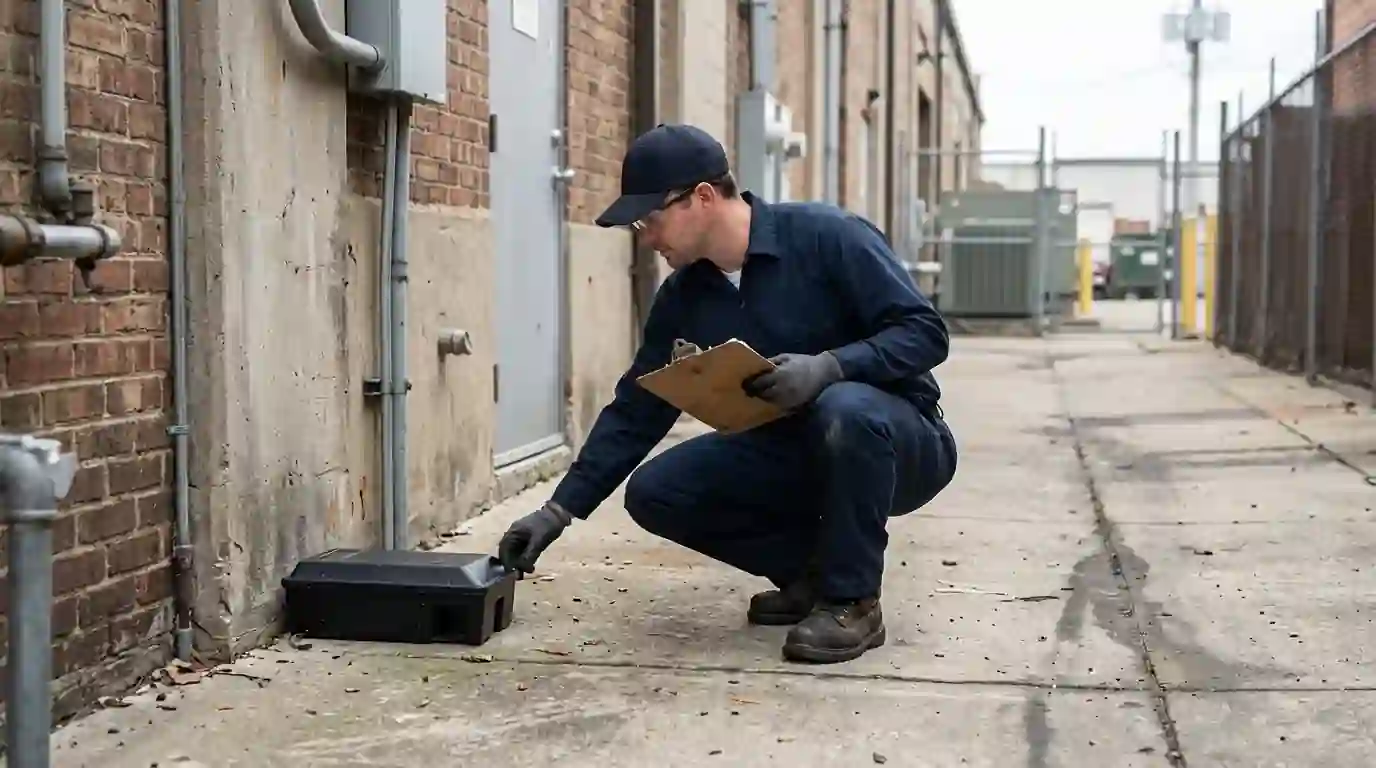
Commercial pest control is recurring, documented service for business premises: exterior and interior monitoring stations, scheduled treatments, and a site logbook recording every visit, finding and product applied. Frequency is matched to the risk of the space, from monthly for food-adjacent businesses to quarterly for offices. We schedule around your hours, including nights and weekends, and quotes come after a walkthrough, not before.
What this covers
Service built for premises that answer to others
Every commercial account starts with a walkthrough: receiving doors, dumpster pads, drop ceilings, utility chases, break rooms, storage, and the exterior perimeter. That survey becomes your service map, with monitoring stations placed where evidence or risk justifies them and a frequency recommendation we can defend line by line.
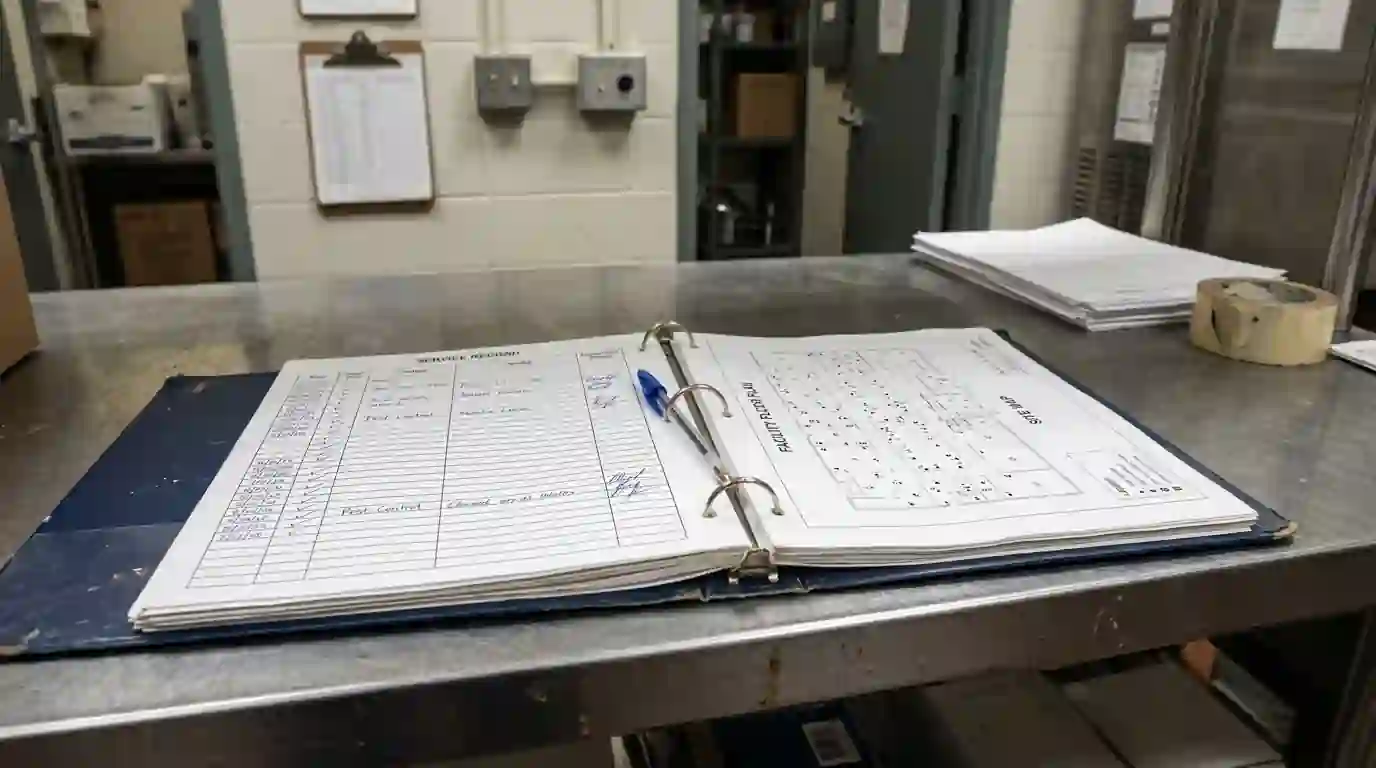
Documentation is half the product. Each visit leaves a signed service record in the site logbook covering what was inspected, what was found, what was applied and where. When a landlord, insurer, franchisor or health inspector asks for your pest program, you hand them the book instead of an explanation.
Pricing, plainly
What moves the price
Commercial pricing is quoted per site after a walkthrough, because square footage alone says little. What moves the number:
- Risk category of the business, which sets inspection depth and frequency
- Monthly, bimonthly or quarterly service cadence
- Number of monitoring and bait stations the site plan calls for
- Shared walls and multi-tenant structures that widen the inspection scope
- Dock doors, receiving volume and dumpster pad condition
- After-hours scheduling requirements
- Whether corrective work is needed before the maintenance program starts
Figures referenced are published national ranges for context, not our quote. We price your job on the phone and confirm on site before any work starts.
How we match the job
Spaces we run routes for
- 01
Offices and professional suites
Low-visibility quarterly or bimonthly service, scheduled before open or after close, with discreet interior monitoring.
- 02
Retail and storefronts
Stockroom and receiving-door focus, because inventory and cardboard are how pests arrive; sales floor kept spotless of visible devices.
- 03
Warehouses and light industrial
Rodent-forward programs: perimeter station grids, dock door exclusion, and racking inspections on a set rotation.
- 04
Property managers and landlords
Multi-tenant coverage under one account, one invoice and one logbook per property, with unit-level records.
- 05
Churches, schools and childcare
Product selection and timing built around occupancy, with written application records for administrators.
Local conditions
Why this matters in Belleville
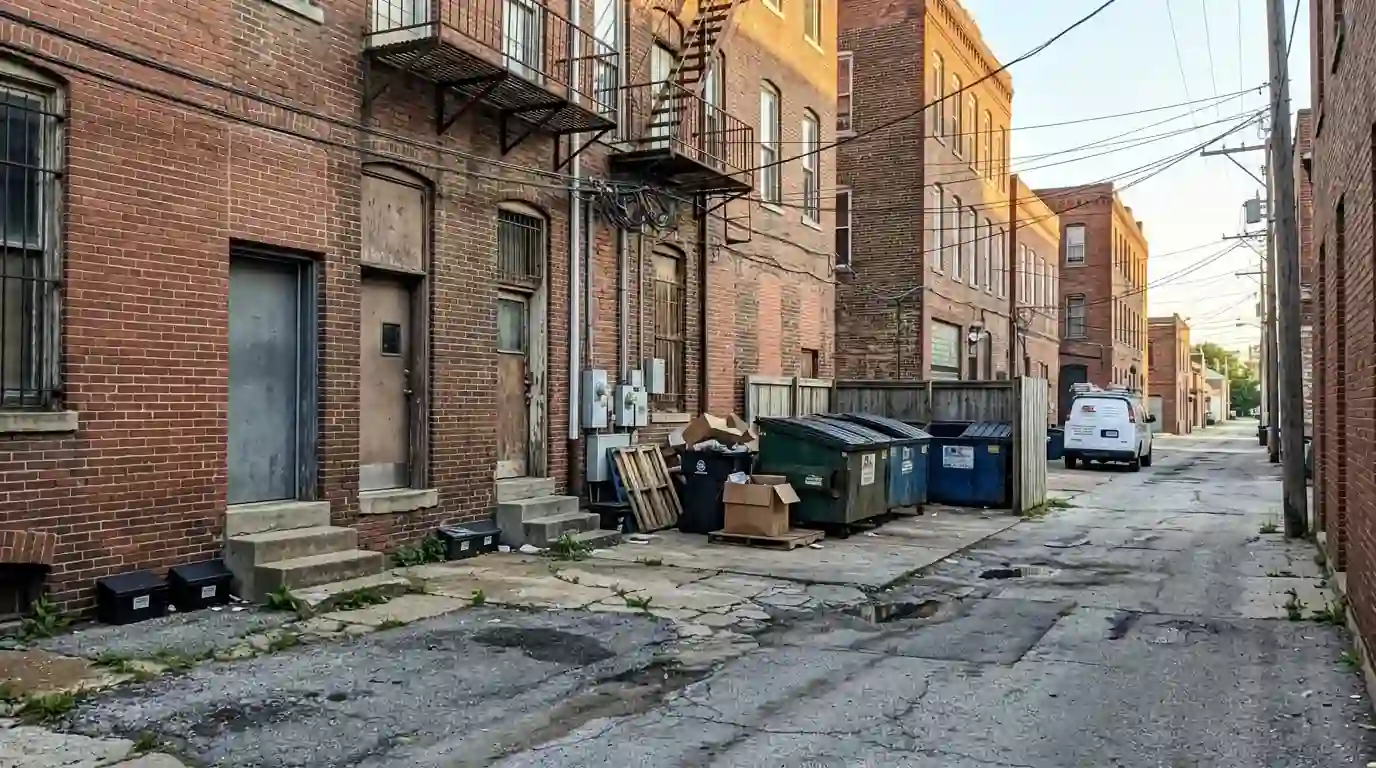
Belleville's commercial stock mirrors its housing: a lot of it is old. The storefronts along Main Street and the square share walls, basements and utility chases that date back a century, which means one tenant's problem travels. Out by Frank Scott Parkway and the Route 15 corridor the buildings are newer but back onto retention ponds and field edges that feed steady rodent pressure. County-seat foot traffic, courthouse crowds and 270,000 residents keep downstairs doors opening all day. Programs here get built around shared structures and busy entries.
How a visit runs
From walkthrough to running program
- Site walkthrough
Every entry, chase, drain and dock inspected; current evidence documented with photos.
- Written program
Frequency, station map and pricing in writing, defensible to whoever you answer to.
- Corrective start
Anything active is knocked down first so the maintenance program maintains a clean site.
- Scheduled service
Same technician where possible, same logbook every visit, scheduled around your hours.
- Review and adjust
Trend data from the stations drives changes; service scales with the findings, not the invoice.
Worth catching early
Signs a site needs a program, not a one-off
Droppings along walls
Rodent droppings in stockrooms or utility rooms mean an established runway, and one treatment will not hold a commercial site.
Night sightings at open
Roaches seen at morning open were feeding all night; populations like that rebuild without scheduled follow-up.
Gnawed packaging
Damaged inventory is both a loss and an inspection finding; it dates the problem further back than the first sighting.
Neighbor tenant activity
In shared structures, a neighboring unit's infestation is your two-week warning.
Flies at the dumpster pad
Heavy fly pressure at the pad reaches the back door within days in summer.
A failed inspection already
If a landlord, auditor or inspector has flagged pests once, the cure is a documented program, not a receipt for one spray.
Timeline
How fast a program starts
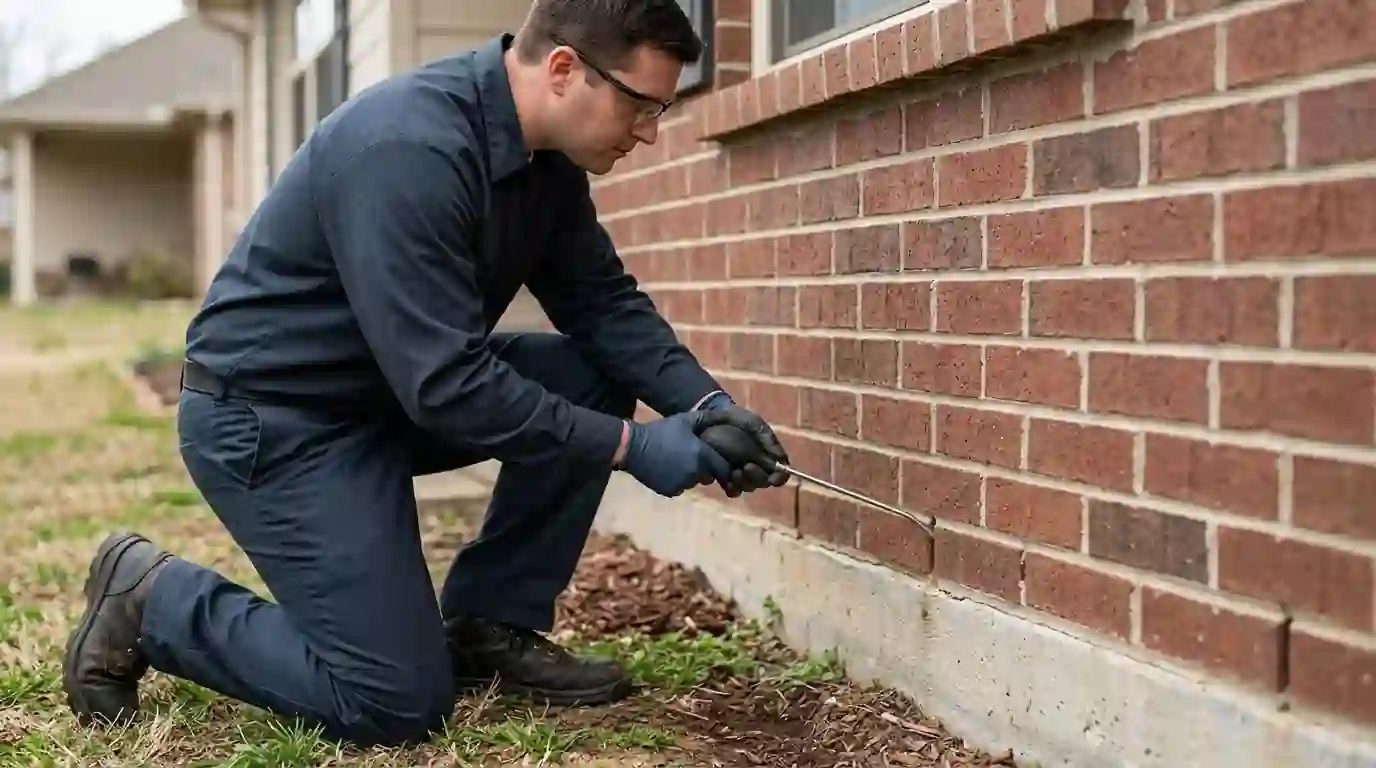
The walkthrough takes under an hour for most sites and the written proposal follows within a business day. First service, including station placement and any corrective treatment, is usually on the calendar within the same week, and the logbook starts with visit one. Emergency sightings at an account get same-day response on the 24/7 line.
Before you call
Questions we hear about this work
Yes, and most accounts prefer it. Nights, early mornings and weekends are normal route time for commercial work, at the same program pricing.
Not in public areas. Devices live in service corridors, utility spaces and exteriors; anything front-of-house is low-profile and placed with your walkthrough input.
Every account keeps a site logbook with service records, station maps and product documentation. Third-party audit prep is routine for our food-adjacent accounts.
Food handling trends monthly, retail and warehousing bimonthly, offices quarterly, but the walkthrough decides it. We put the reasoning in the proposal so you can challenge it.
Yes. Active sightings get corrective service first on the 24/7 line; the program proposal follows once the fire is out.
One account, one contact, one consolidated invoice across locations in our Metro East coverage, with per-site logbooks.
Food service runs under its own audit-ready program with drain, fly and heat-zone work; it has its own page and its own pricing.
Nearby problems
Jobs that often ride along
Restaurant & Food Service Pest Control
Apartment & Multifamily Pest Control
Rodent Control
Cockroach Control
Fly Control
Read first: What mouse droppings tell you about the size of the problem.
Booked most weeks in: Old Belleville, Signal Hill, Belleville West, East Belleville, and the rest of our six-county area.
One call does it
Book the walkthrough
Under an hour on site, a written program within a business day, and a number you can hand to whoever signs off.
(217) 207-0945Answered 24/7, every day