- Home
- Pest Guides
- What mouse droppings tell you about the size of the problem
Rodents & wildlife
What mouse droppings tell you about the size of the problem
Droppings are the most useful evidence a rodent leaves behind. Their size tells you the species, their condition tells you how recent the activity is, and where they cluster tells you where the animals feed, travel and nest. Read them before you clean them.
Call (217) 207-0945 Browse our services
- Written by Darlene Pemberton
- Updated October 1, 2026
- 6 minute read
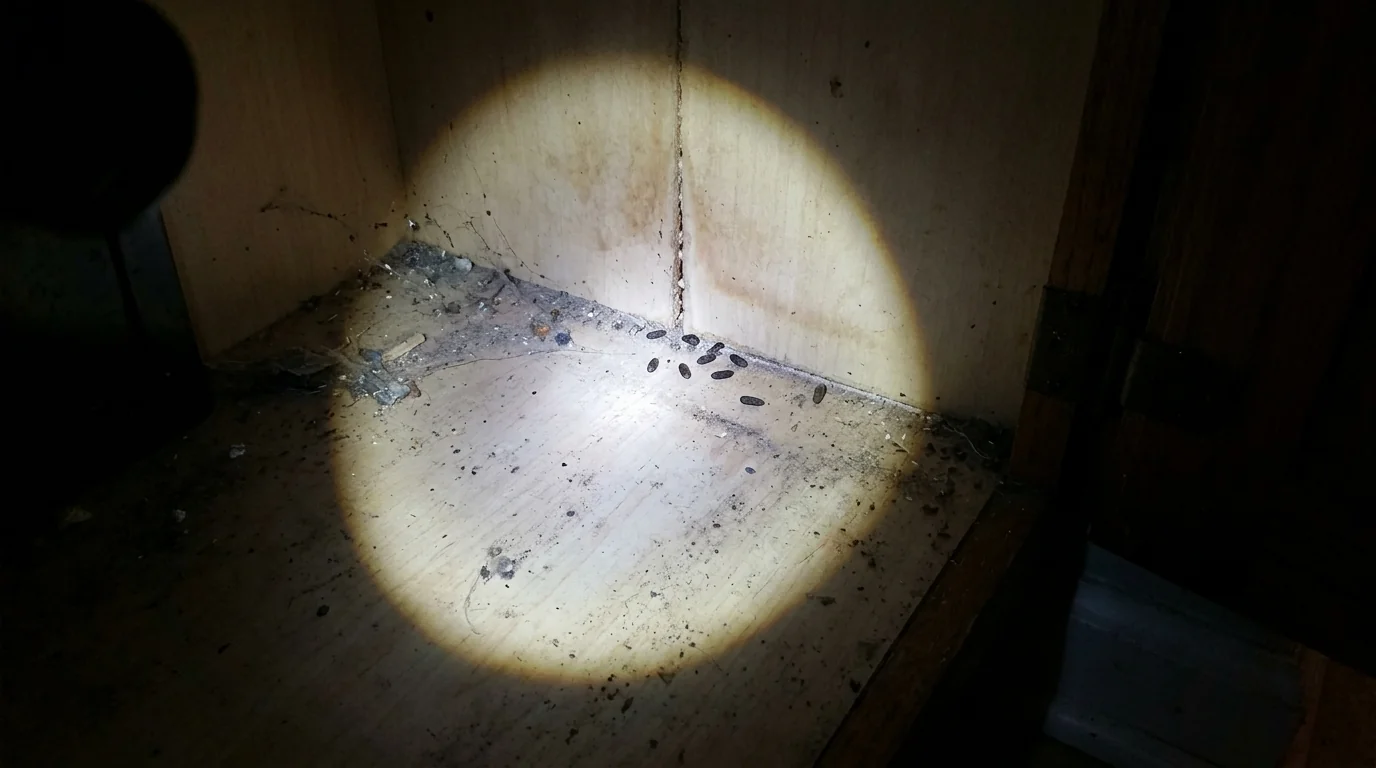
Mouse droppings are about the size of a grain of rice with pointed ends; rat droppings are closer to a raisin or larger with blunter ends. Fresh droppings are dark, soft and slightly shiny, while old ones are dry, gray and crumble. Droppings concentrated in one area mark feeding or nesting, scattered ones along walls mark travel routes, and fresh droppings in several rooms usually mean an established population rather than a single mouse.
Size and shape: mouse or rat
House mice leave droppings roughly an eighth to a quarter inch long, slim, with pointed ends. A single mouse can leave dozens a day, so even a small number of animals produces a lot. Norway rat droppings are several times larger, around half an inch or more, thicker and blunt-ended, often found in fewer, heavier deposits near foundations, garages and basements. If the droppings are in the attic and the noise runs at dawn and dusk, squirrels are also a possibility, and their droppings are larger and rounder still.
| Clue | House mouse | Norway rat |
|---|---|---|
| Length | About 1/8 to 1/4 inch | About 1/2 inch or more |
| Shape | Slim, pointed ends | Thick, blunt ends |
| Typical spots | Cabinets, drawers, along walls, attics | Basements, garages, foundations, crawl spaces |
| Quantity | Many small scattered pellets | Fewer, larger clusters |
Fresh or old
Fresh droppings are dark, moist-looking and soft enough to smear. Within a few days they dry, harden and lose their shine, and over weeks they turn gray and crumbly. A simple test: clean an area thoroughly, then check it again in two or three days. New droppings in a cleaned spot settle whether you have current activity, which matters when you are deciding whether old evidence from last winter is today's problem.
Where they cluster
Rodents run edges, so droppings along a wall line or behind appliances mark a runway, the path a trap should sit on. A heavy concentration in a drawer, a pantry corner or behind the range marks a feeding site. Droppings mixed with shredded paper, insulation or fabric mark a nest nearby. Fresh evidence in more than one room, or on more than one floor, usually means more than a couple of mice and an entry point that is still open.
- Along walls: travel routes
- Behind appliances and in pantries: feeding sites
- With shredded material: nest nearby
- Several rooms or floors: established population
Cleaning up safely
Rodent droppings and urine can carry disease, and the risk comes mainly from breathing dust when dried material is disturbed. Do not sweep or vacuum dry droppings. Ventilate the area, wear gloves, spray the droppings and surrounding area with a disinfectant or a diluted bleach solution until soaked, wait several minutes, then wipe up with paper towels and bag everything. Large accumulations, attic insulation and crawl spaces are better handled with proper protective gear, which is part of our service.
- Never sweep or vacuum dry droppings
- Ventilate, glove up, wet everything first
- Wipe, bag and seal the waste
- Wash hands thoroughly afterward
- Leave heavy contamination to professionals
When to call
Services that fit this problem
Before you call
Common follow-up questions
Droppings alone cannot give a precise number, but fresh evidence in several rooms, daytime sightings, or droppings on multiple floors usually mean more than one or two animals.
For a single mouse in a garage, often yes. For established activity, trapping without sealing the entry points keeps refilling the house.
We prefer trapping inside living space. Poisoned rodents can die in walls, which creates odor and fly problems.
Darlene Pemberton is the pest control guides editor at Belleville Pest Control. She writes and maintains these homeowner guides from the field notes our technicians bring back from jobs across Belleville and the Metro East, and every guide is checked against what the crews actually see in local homes.
Keep reading
Related homeowner guides
One call does it
Rather just ask someone?
Call and describe what you found. A technician will tell you what it is and whether it needs a visit.
(217) 207-0945Answered 24/7, every day