- Home
- Pest Guides
- Noises in the attic: a homeowner's guide to figuring out what moved in
Rodents & wildlife
Noises in the attic: a homeowner's guide to figuring out what moved in
The time of day and the weight of the sound narrow it down fast. Each animal that moves into an attic keeps its own schedule and makes its own kind of noise. Write down when you hear it and what it sounds like, and you can usually name the animal before anyone climbs a ladder.
Call (217) 207-0945 Browse our services
- Written by Darlene Pemberton
- Updated October 1, 2026
- 7 minute read
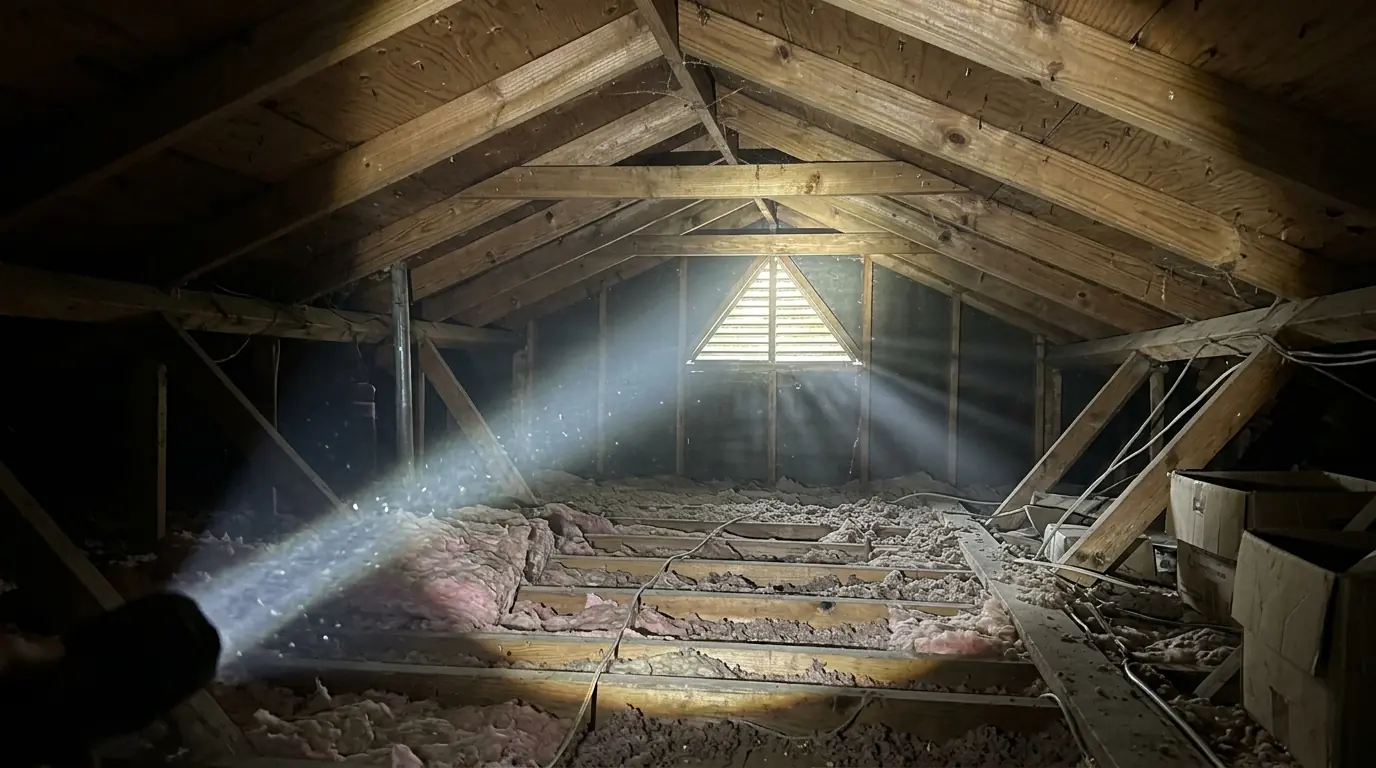
Light scratching and scurrying at night usually means mice; heavier running at night suggests rats. Scampering and rolling sounds at dawn and dusk point to squirrels. Heavy, slow thumping at night, especially in spring, is often a raccoon. High-pitched chirping or rustling at dusk from a wall or gable suggests bats, and fluttering and chirping in a vent in the morning usually means birds. Droppings, entry holes and the timing confirm it.
Listen to the clock
Timing is the best single clue. Squirrels are active by day, so attic noise that starts at first light and again in late afternoon is a strong squirrel sign. Mice, rats and raccoons are nocturnal, so noise after dark points to them. Bats leave at dusk and return before dawn, so brief activity at those hours, often with faint chirping, suggests a roost. Birds in vents are noisiest in the morning.
| Sound | When | Most likely |
|---|---|---|
| Light scratching, scurrying | Night | Mice |
| Heavier running, gnawing | Night | Rats |
| Scampering, rolling, chewing | Dawn and dusk | Squirrels |
| Heavy thumps, walking | Night | Raccoons |
| Chirping, rustling in a wall | Dusk and before dawn | Bats |
| Fluttering, chirping in a vent | Morning | Birds |
Listen to the weight
Mice sound like light, quick scratching that moves along the edges of the ceiling. Rats are heavier and often noisier, with gnawing that can be loud. Squirrels run and stop, and sometimes roll nuts. Raccoons sound like a person walking slowly, with heavy thumps, and in spring you may hear young chittering. If it sounds too big to be a rodent, it probably is.
Look for the evidence
From outside, walk the roofline with binoculars. Chewed holes at the fascia or soffit corners suggest squirrels; torn vents, bent screens or displaced shingles suggest raccoons; staining around a small gap suggests bats; and nesting material in a vent means birds. Inside, droppings near the attic hatch, chewed wiring insulation, or flattened insulation trails tell the same story. Rodent and bat droppings differ: bat droppings crumble into shiny insect fragments, mouse droppings do not.
- Chewed holes at roof corners: squirrels
- Torn vents or displaced shingles: raccoons
- Staining at small gaps: bats
- Nest material in vents: birds
- Droppings at the hatch: rodents or bats
Why it is worth acting on
Animals in the attic chew wiring, soil insulation and can open the roof to water. Rodents and raccoons leave droppings that carry health risks, and bat guano accumulates over time. Spring also matters: raccoons, squirrels and bats may have young, which changes how removal has to be done and is a reason not to seal holes on your own before you know what is up there.
- Do not seal entry holes until you know what is inside
- Keep the attic hatch closed
- Note the times you hear activity
- Photograph damage from outside
- Call before nesting season if you can
When to call
Services that fit this problem
Before you call
Common follow-up questions
They rarely solve an established problem. Removal plus sealing the entry points is what works.
Look carefully from the hatch with a flashlight, wear a mask, and avoid disturbing droppings or nesting. Never corner a wild animal.
Older homes often have open wall cavities connected to the attic, so animals travel between them.
Darlene Pemberton is the pest control guides editor at Belleville Pest Control. She writes and maintains these homeowner guides from the field notes our technicians bring back from jobs across Belleville and the Metro East, and every guide is checked against what the crews actually see in local homes.
Keep reading
Related homeowner guides
One call does it
Rather just ask someone?
Call and describe what you found. A technician will tell you what it is and whether it needs a visit.
(217) 207-0945Answered 24/7, every day