- Home
- Pest Control
- Restaurant & Food Service Pest Control
Restaurants, kitchens and food service
Pest control that passes the health inspection with you
In food service, pest control is a compliance document as much as a treatment. The St. Clair County Health Department can ask for your program at any inspection, and one roach sighting in a dining room travels faster on a review site than any ad. We build the program, keep the records, and answer at 2 a.m. when something moves in the kitchen.
Call (217) 207-0945 Browse our services
- Monthly audit-ready service
- Drain, fly and heat-zone programs
- Inspector-ready documentation
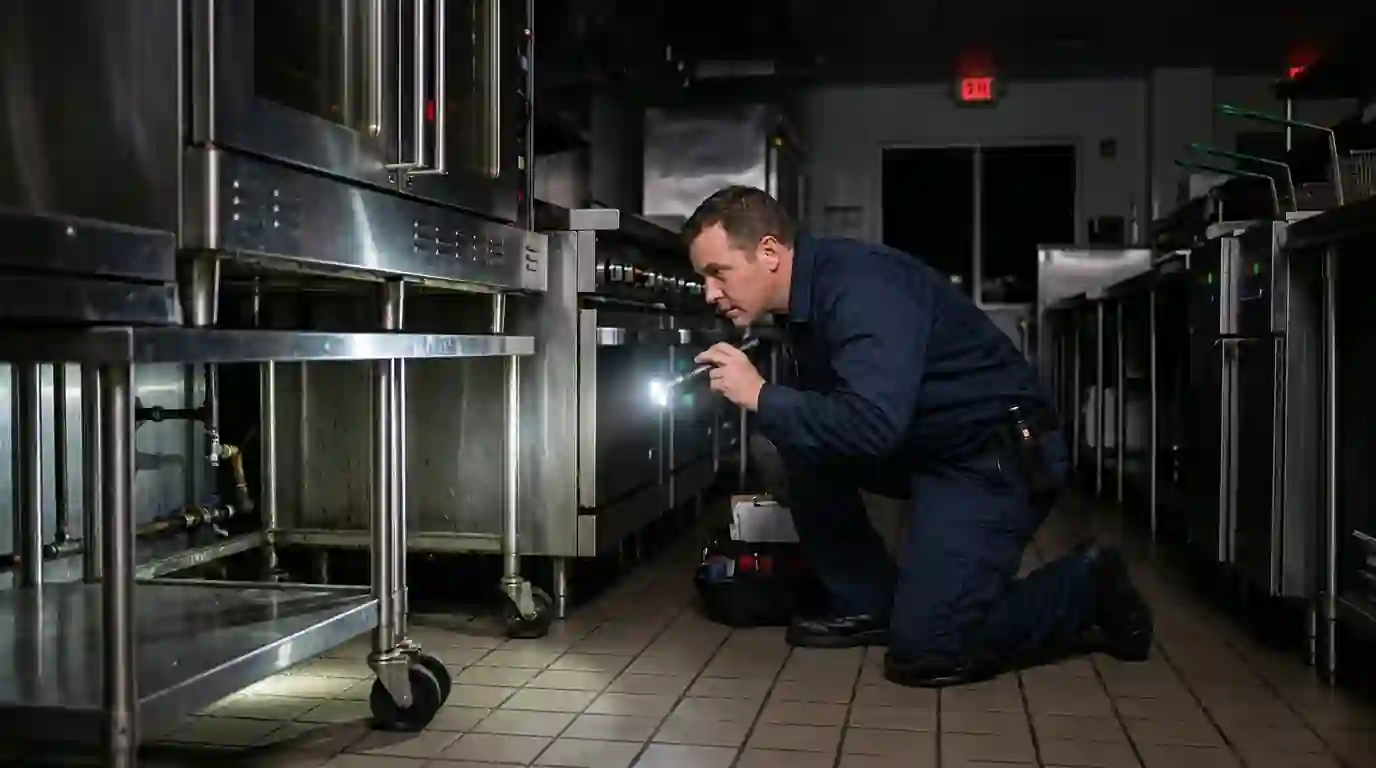
Restaurant pest control is a monthly documented program covering the three pressures every kitchen faces: German roaches in the warm voids around the line, small flies breeding in drains, and rodents working the receiving door and dry storage. Service happens after close, every visit is logged for inspectors, and active sightings get same-day response on the 24/7 line.
What this covers
The three fronts of every kitchen
German cockroaches live where food service equipment makes heat and moisture: motor housings, the gaps behind the line, under the dish machine. Our kitchen program works these zones with gel baits and insect growth regulators on every visit, placed where they work and where inspectors expect to see a managed program rather than spray residue near food contact surfaces.
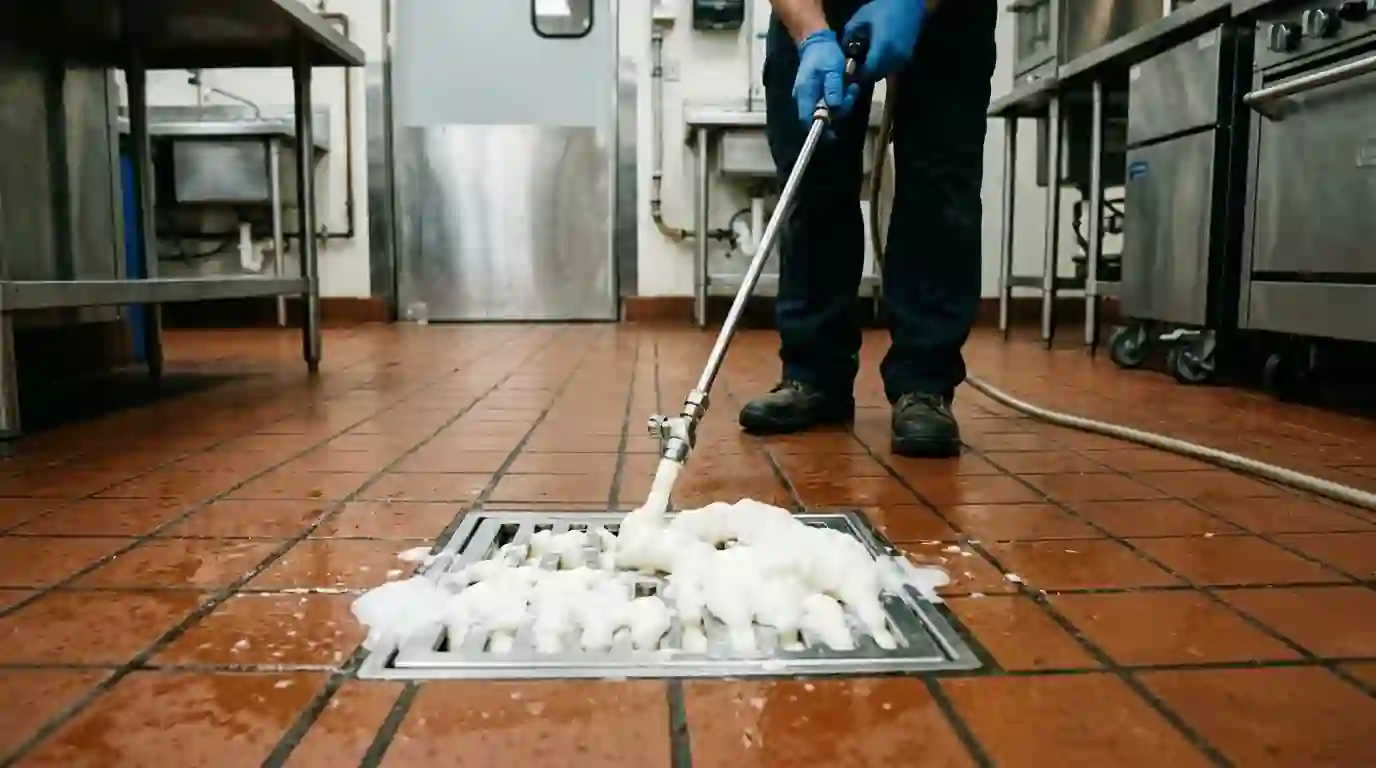
Drains and flies are the second front; fruit and drain flies breed in the organic film inside floor drains and under failing coving, and no amount of surface spraying touches them. Bio-remediation of the drains is written into the monthly service. The third front is the back door: receiving, dry storage and the dumpster line, where rodent stations and door-sweep discipline decide whether mice ever reach the kitchen.
Pricing, plainly
What moves the price
Food service programs are quoted per kitchen after a walkthrough. The drivers:
- Kitchen size and the number of heat-and-moisture zones on the line
- Drain count, since each floor drain is a standing fly breeding site
- Monthly against twice-monthly cadence for heavy-pressure kitchens
- Shared walls and basements with neighboring tenants
- Receiving volume and dumpster corridor condition
- Whether an active infestation needs knockdown service before the program starts
- Bar and floor-sink count for fly bio-remediation
Figures referenced are published national ranges for context, not our quote. We price your job on the phone and confirm on site before any work starts.
How we match the job
Programs by operation
- 01
Full-service restaurants
Monthly after-close service across line, dish, storage and bar, with drain treatment on every visit.
- 02
Fast food and counter service
High-turnover kitchens with tight closes; compact visits focused on the line, drains and the drive-through trash corridor.
- 03
Bars and taverns
Fruit fly pressure from the rail and drain network drives the program; beer line closets and floor sinks get specific attention.
- 04
Bakeries and food production
Stored-product pest monitoring joins the standard program: pheromone traps for flour moths and beetles in dry storage.
- 05
Cafeterias and institutional kitchens
School, church and care-facility kitchens with occupancy-driven product rules and administrator-ready records.
Local conditions
Why this matters in Belleville
Belleville's restaurant rows have restaurant-row problems. The blocks around the Main Street square put kitchens into century-old buildings with shared basements and brick party walls, so a roach problem two doors down is on its way to you. Newer pads out along Route 15 and Carlyle Avenue fight rodent pressure off the field edges and retention ponds behind them instead. Either way the county health department inspects on its own schedule, and the operators who do well keep a logbook that answers questions before they are asked.
How a visit runs
How the program runs
- After-close walkthrough
We survey the kitchen the way an inspector does: line, dish, drains, storage, receiving, dumpster.
- Written program
Cadence, methods and pricing in writing, built to the county inspection standard.
- Knockdown phase
Active roach or fly populations get intensive service first; maintenance starts clean.
- Monthly service
Gel bait and IGR rotation, drain bio-remediation, station checks, all logged before we lock up.
- Inspection support
Your binder stays current, and if an inspector raises a finding, we answer it with you.
Worth catching early
Findings that cost points on an inspection
Live roaches at the line
Even one live German roach sighted during an inspection is a priority finding in a food establishment.
Fruit flies at the bar
Small flies are an inspector's shortcut to checking your drains, and the drains do not lie.
Droppings in dry storage
Rodent evidence near food triggers the most serious category of violation and follow-up inspection.
Gnawed packaging
Damaged stock is discarded product plus a documented pest finding in the same moment.
Gaps under the back door
A quarter-inch gap under a receiving door is a written conducive-condition finding before a single mouse is seen.
No pest program on file
Having no documented program is itself the finding; the binder is the fix.
Timeline
Starting from an active problem
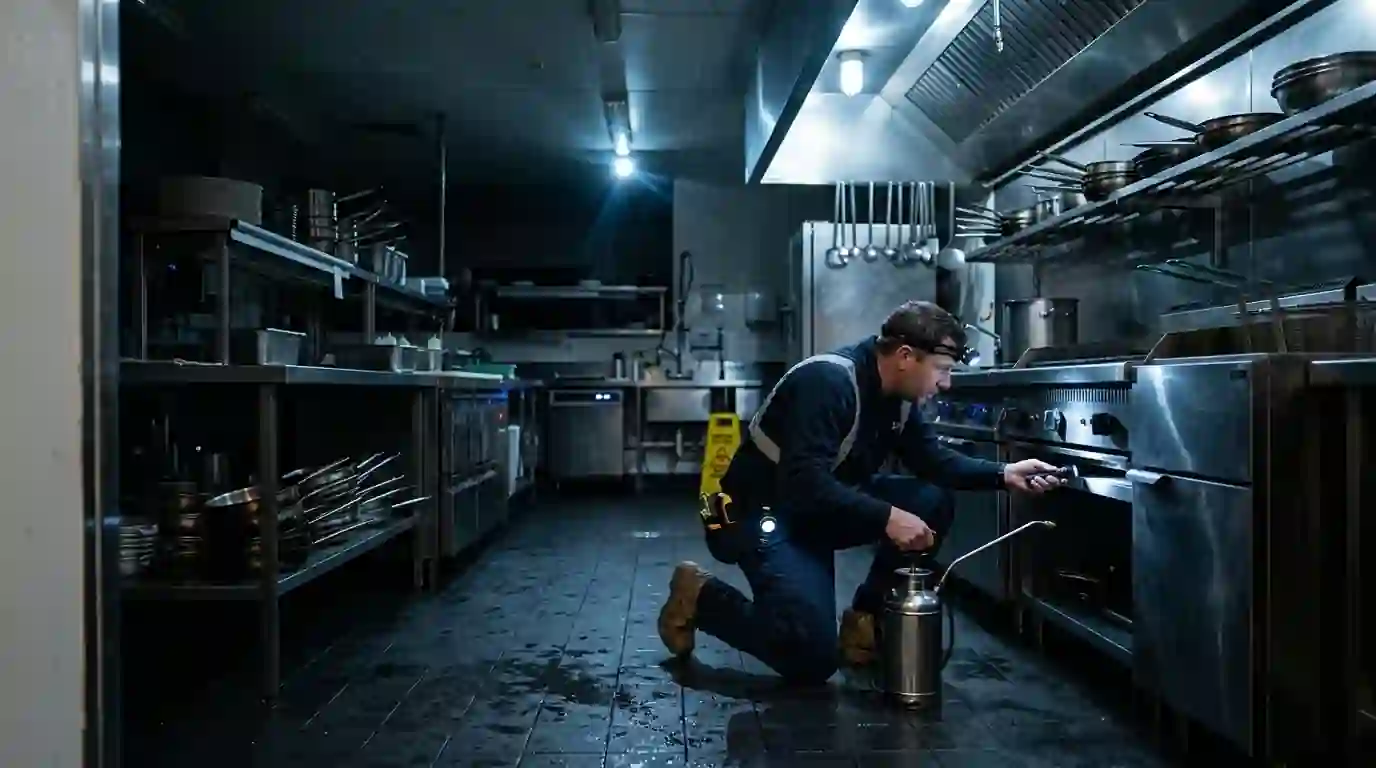
A kitchen with active German roaches typically needs an intensive knockdown phase of two to three visits across the first month before the maintenance cadence takes over; populations drop sharply after the first baiting but eggs already laid keep hatching for weeks. Fly programs show results in days once the drains are treated. The documentation binder exists from visit one, which is what matters if an inspection lands mid-cleanup.
Before you call
Questions we hear about this work
Yes. Food service routes run nights by design, and product placements are chosen so the kitchen opens normally the next morning.
The program is built to the inspection standard the county applies: managed bait placements, drain remediation, exclusion and current records. Inspectors want to see a working program, and that is what the binder shows.
Same day on the 24/7 line for active accounts. A roach seen Friday night does not wait for a Monday route.
No broadcast spraying in food areas. Kitchen work is gel baits, growth regulators, targeted void treatments and drain bio-remediation, applied per label away from food contact.
Dining areas are covered, discreetly; the kitchen program is what keeps them clean, since front-of-house sightings are back-of-house populations overflowing.
Yes, and in the old downtown blocks it is often the only real fix; we document what is crossing the party wall so the building owner can act.
Commissary kitchens run on the standard program; trucks get serviced at the commissary where they park and load.
Nearby problems
Jobs that often ride along
Read first: What mouse droppings tell you about the size of the problem.
Booked most weeks in: East Belleville, Dutch Hollow, Royal Heights, O'Fallon, and the rest of our six-county area.
One call does it
Get the kitchen on a program
Describe the operation and what you are seeing; the walkthrough books after your close, and the number comes before any work.
(217) 207-0945Answered 24/7, every day