- Home
- Pest Control
- Pantry Pest Control
Indian meal moths and the flour-bin beetles
Pantry pest control that finds the infested package
The moths at your ceiling hatched inside a package on your shelf. Pantry pests arrive in purchased dry goods, breed inside the packaging, and spread to the rest of the cabinet from there. Spraying the kitchen without finding the source package treats the symptom and reseeds the problem.
Call (217) 207-0945 Browse our services
- Source package found, not guessed
- Pheromone trapping included
- Food-safe methods around your shelves
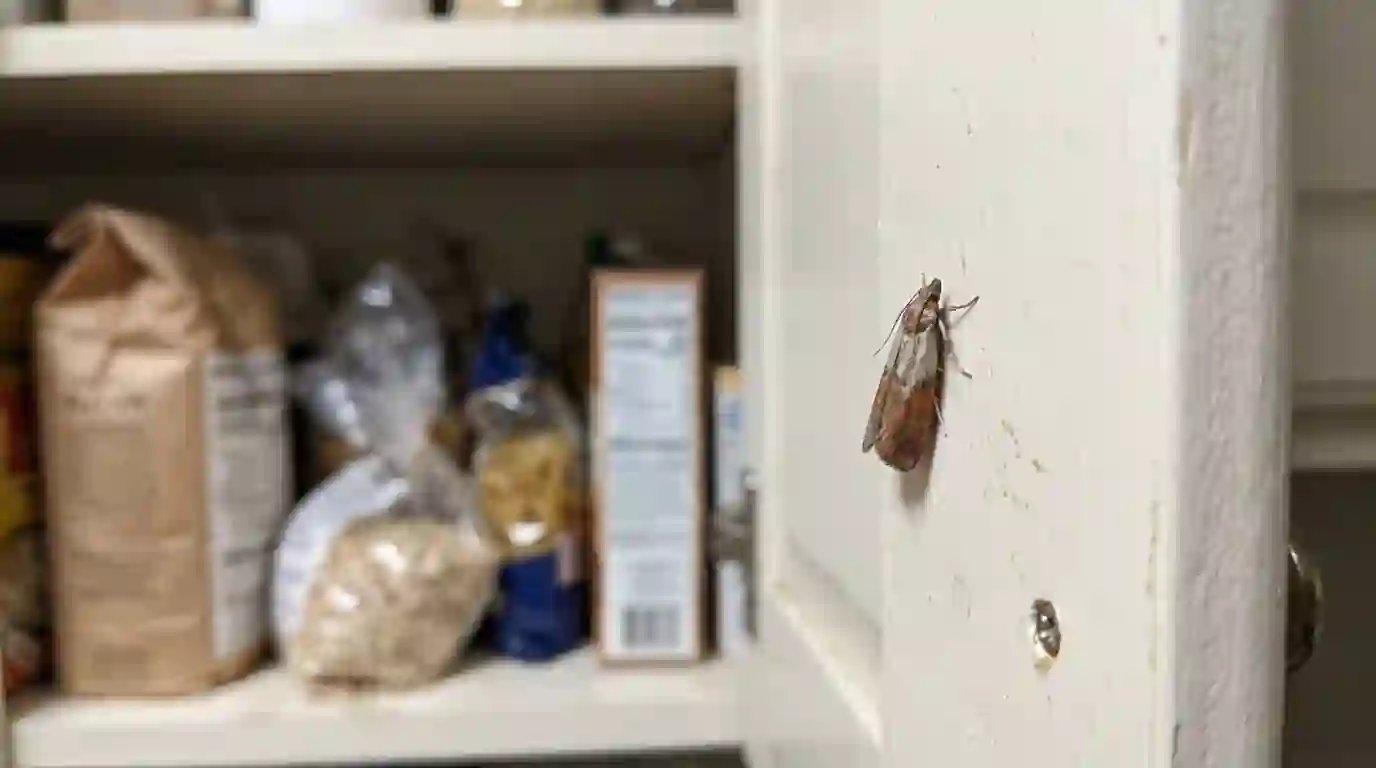
Pantry pest control handles the insects that live in stored food: Indian meal moths webbing up grains and pet food, flour and sawtoothed grain beetles in baking supplies, and weevils in rice and beans. The job is source-driven: inspect the pantry item by item, find and discard every infested package, treat the empty shelving cracks where larvae pupate, and set pheromone traps to confirm the kill and catch stragglers. Done in that order it ends; skipping the inspection step is why it otherwise drags on for months.
What this covers
The infestation lives in the food, not the walls
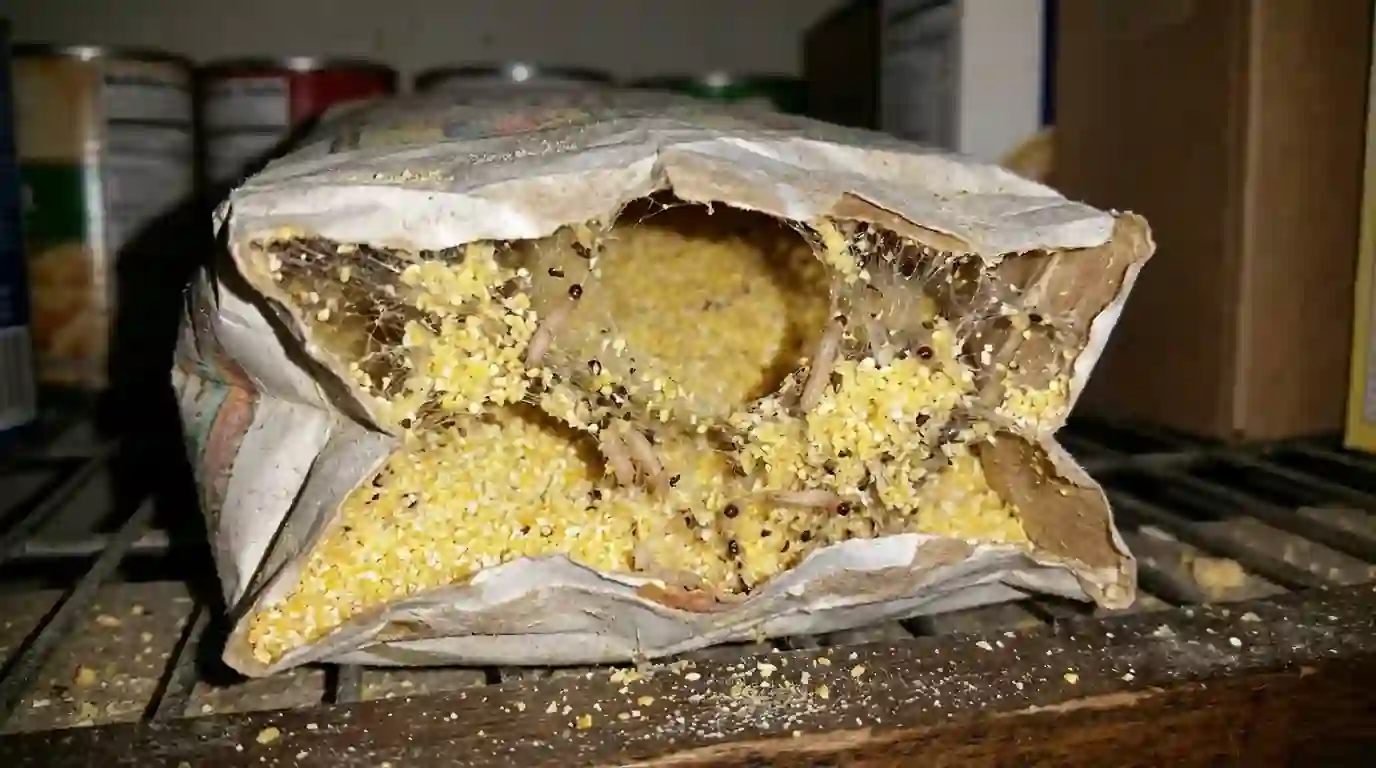
Every pantry infestation traces to packages: the flour, cereal, birdseed, pet food or spice jar where eggs arrived from the supply chain and bred. Larvae crawl out of the source to pupate in shelf cracks and cabinet-door hinges, which is why you find webbing in corners and cocoons under shelf lips far from any food. The inspection goes item by item, and the webbed bag of cornmeal in the back corner is almost always the answer.
Treatment then plays a supporting role by design, because this happens where food lives. Infested goods are bagged and removed, shelving is vacuumed and crack-treated while empty, and pheromone traps go up to intercept adult males and break the breeding cycle. The traps double as the scoreboard: when the weekly catch reaches zero, the infestation is genuinely over.
On your side
What keeps the pantry clean after
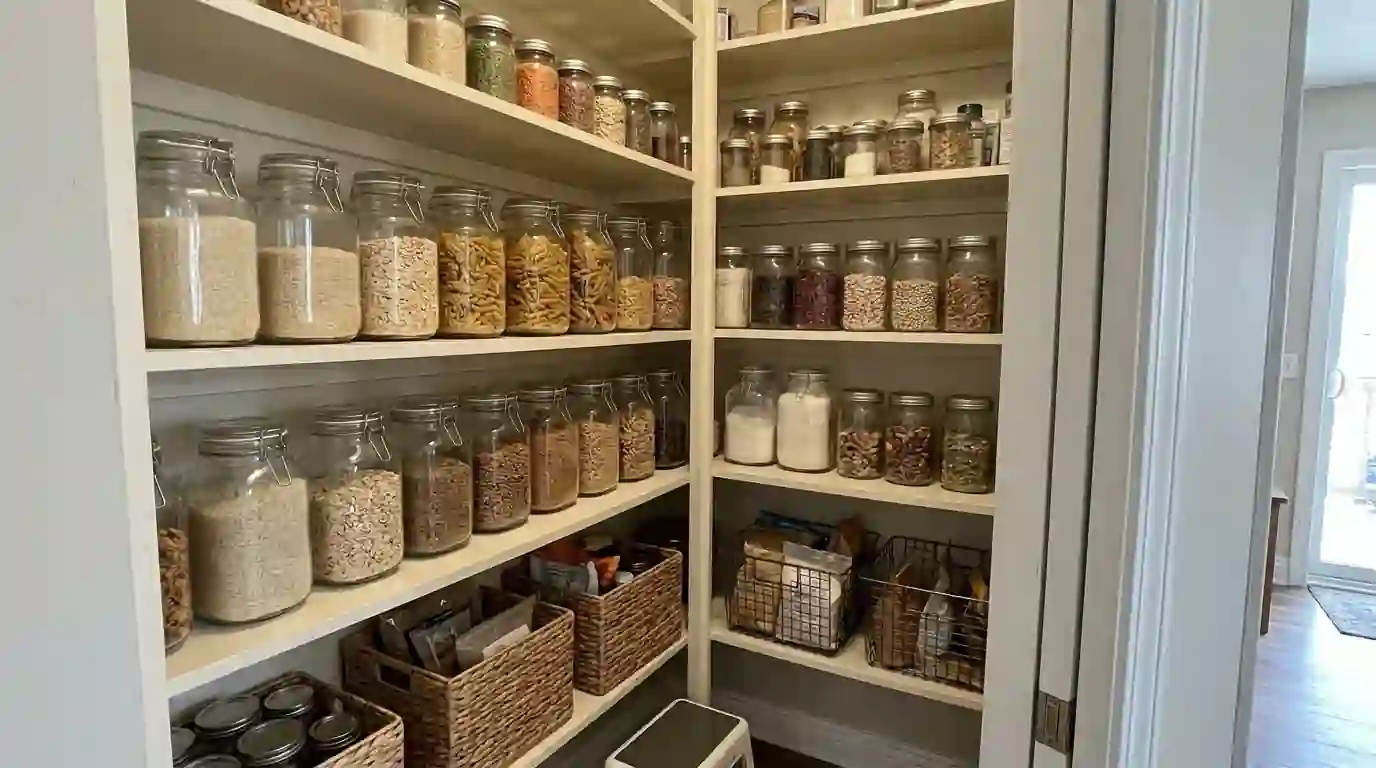
- Decant flour, grains, cereal and pet food into sealed glass or heavy plastic
- Check date-forgotten packages in the back row monthly
- Freeze new bulk flour and birdseed for four days before storing
- Keep birdseed and pet food in lidded bins, never open bags
- Wipe shelf corners and door hinges where webbing collected
- Inspect bargain and bulk-bin purchases before they go in
- Leave the traps up a month past the last catch
How we match the job
What the calls turn out to be
- 01
Indian meal moth outbreaks
The classic: small moths at ceilings and cabinet doors, webbing in grain products, solved at the source package.
- 02
Flour and grain beetle work
Tiny brown beetles in baking supplies and cereals, traced through the cabinet and ended with the same source method.
- 03
Weevils in rice and beans
Snout beetles that arrived inside the grains themselves; inspection-heavy, treatment-light.
- 04
Pet food and birdseed infestations
The most common hidden source, often in a garage bag feeding the kitchen moths upstairs.
- 05
Holiday baking resets
Pre-season pantry clearances for serious bakers, run before the flour stockpile goes in.
Local conditions
Why this matters in Belleville
Nothing about Belleville spares a pantry, and two local habits feed this pest: garage and basement storage of birdseed and bulk pet food through the winter, where meal moths breed unseen for months, and the deep pantry stock older households keep. Humid summers accelerate the breeding cycle, so an infestation discovered in July is usually three generations old. The fix is identical on every street: find the package, clear the shelf, trap the stragglers, and store the next round sealed.
How a visit runs
How the job runs
- Item-by-item inspection
Every package checked; the sources bagged and out of the house the same visit.
- Shelf strip and treat
Emptied shelving vacuumed and crack-treated where larvae pupate.
- Pheromone trapping
Traps placed to intercept adults and measure the decline weekly.
- Storage reset
Sealed containers for the restock, and the garage birdseed moved to a bin.
- Trap-count verification
Zero on the traps is the finish line, confirmed rather than assumed.
Pricing, plainly
What moves the price
Most pantry jobs quote flat on the phone. What moves it:
- Cabinet and pantry volume to inspect item by item
- Secondary storage sites: garage, basement and laundry-room food stocks
- How many generations in, read from webbing spread and adult counts
- Trap coverage across kitchen and storage zones
- A follow-up visit where trap counts warrant one
- Pet food and birdseed sources outside the kitchen
- Whether the kitchen joins a broader plan afterward
Figures referenced are published national ranges for context, not our quote. We price your job on the phone and confirm on site before any work starts.
Before you call
Questions we hear about this work
No; only infested and suspect open packages go. Sealed cans, jars and unopened airtight goods stay, and the inspection sorts it in one pass rather than by panic.
The supply chain. Eggs arrive inside commercial packaging from mills and warehouses, and cleanliness has nothing to do with it; sealed storage is the defense.
Usually the same one; meal moth adults wander the whole house to find mates. Clothes moths are smaller and shun light, and we distinguish them on the first call.
Pupae in shelf cracks and ceiling corners hatch on their own schedule, and one missed package restarts everything. Traps plus the crack treatment close those two gaps.
The method is built for kitchens: removal and vacuuming do the heavy work, crack treatments happen on emptied shelving, and pheromone traps are non-toxic by nature.
Please do not; foggers contaminate food surfaces and cannot reach eggs inside packaging. They are the wrong tool in the one room they are most often used.
Larvae chew through paper and thin plastic, in either direction. It is why the restock goes into glass and heavy containers, and why freezing new bulk goods pays off.
Nearby problems
Jobs that often ride along
Ant Control
Cockroach Control
Silverfish & Occasional Invader Control
Residential Pest Control
Fly Control
Read first: Pantry moths: how an infestation starts and how it ends.
Booked most weeks in: Columbia, Alton, Shiloh, Glen Carbon, and the rest of our six-county area.
One call does it
Describe the moths or beetles and where
Which cabinet, what they look like, how long; the inspection usually ends the mystery in a single visit.
(217) 207-0945Answered 24/7, every day