- Home
- Pest Guides
- Pest entry points in pre-1940 brick homes
Rodents & wildlife
Pest entry points in pre-1940 brick homes
More than a quarter of Belleville's homes were built before 1940, and they were built with gaps a modern house does not have. Old masonry, open wall cavities and retired utilities create routes that mice, insects and wildlife learn quickly. Knowing where to look is most of the job.
Call (217) 207-0945 Browse our services
- Written by Darlene Pemberton
- Updated October 1, 2026
- 7 minute read
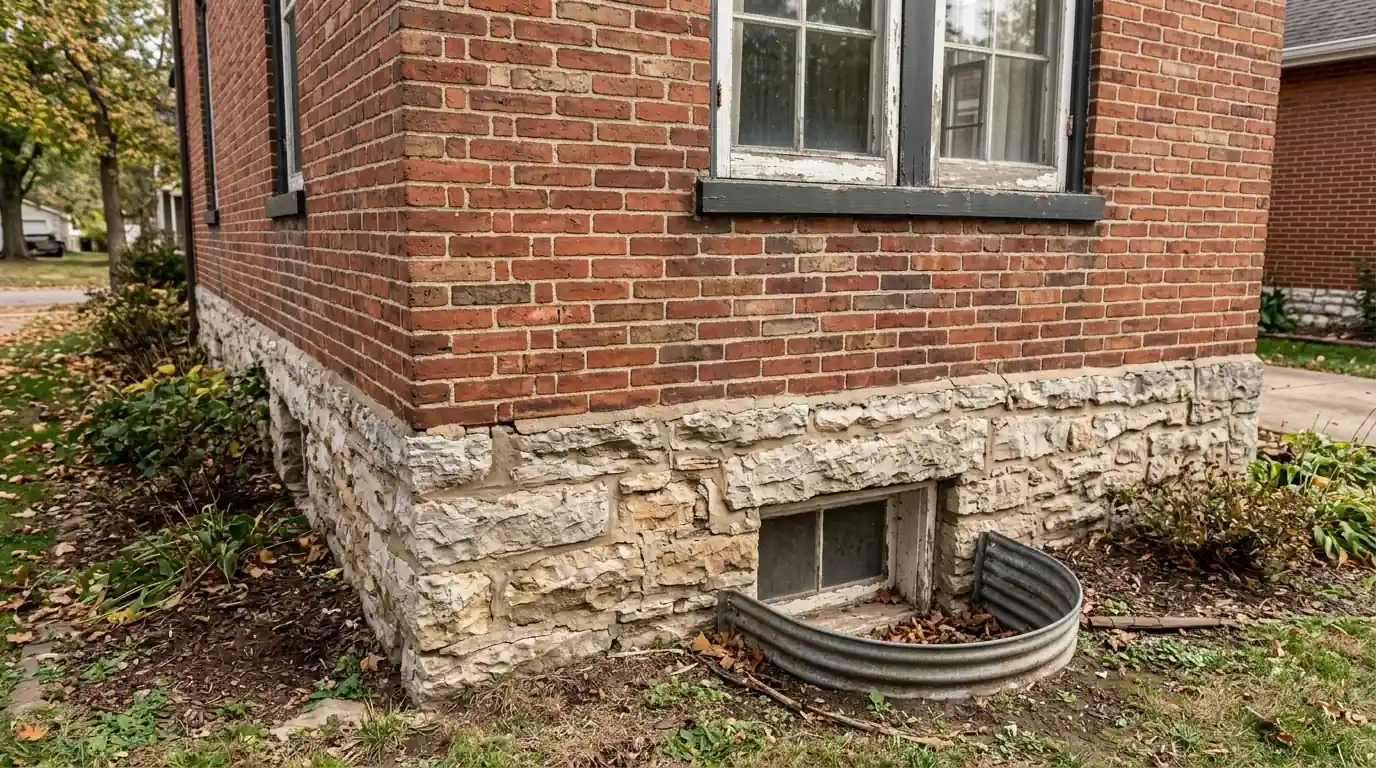
In pre-1940 brick homes, the usual entry points are settled mortar joints and gaps where the brick meets the stone foundation, old coal chutes and abandoned utility openings, basement window wells and original wood windows, cellar doors, open framing cavities that run from basement to attic, chimney gaps, and unscreened attic vents. Mice need only a dime-width gap, so a fall walk of the foundation and roofline catches most problems before they start.
At the foundation
Many older Belleville homes sit on stone or early poured foundations that have settled for a century. Mortar erodes, joints open, and the line where the brick wall meets the foundation develops gaps that mice and insects use. Old pipe and gas line penetrations were often packed with mortar or rags that are long gone. Basement window wells collect leaves and moisture against the sash, and the original wood frames shrink away from the masonry.
- Open mortar joints and settled cracks
- Gaps where brick meets the foundation
- Old pipe, gas and cable penetrations
- Window wells and basement window frames
- Coal chutes and bulkhead cellar doors
Inside the walls
Many houses from this era were framed in a way that leaves wall cavities open from the basement all the way to the attic, without the fire blocking modern codes require. That gives mice and other animals a vertical highway: a gap in the basement can lead straight to scratching in the bedroom ceiling. It is also why rodent problems in old houses often seem to move around: they are using one continuous system of voids.
At the roofline
Older rooflines carry aging flashing around chimneys, gable vents that were never screened or have rusted screens, gaps where porch roofs meet the main wall, and soffit and fascia wood that has softened. These are the entry points for bats, squirrels, raccoons, birds and fall invaders like stink bugs and boxelder bugs. Mature trees with limbs over the roof make all of them easier to reach.
- Chimney flashing and crown gaps
- Gable and attic vents
- Porch roof junctions
- Soft or gnawed fascia and soffit
- Tree limbs touching the roof
Retired utilities and old additions
A century of updates leaves behind abandoned openings: an old dryer vent, a removed window air conditioner sleeve, a disconnected gas line, a cable drilled through and pulled out. Additions built decades apart often meet the original house with a seam that shifts over time. Each of these is worth checking because nobody has looked at them in years.
A fall walk-around
Early fall, before the cold pushes mice indoors, is the best time to check. Walk the foundation with a flashlight, look up at the roofline from the yard, check the garage door corners, and note anything that light or a pencil could pass through. Gaps should be closed with metal mesh, hardware cloth or mortar, not foam alone, which rodents chew through.
- Walk the full foundation with a flashlight
- Check garage door corners and thresholds
- Look up at vents, chimney and porch roof seams
- Note abandoned openings from old utilities
- Seal with metal and mortar, not foam alone
When to call
Services that fit this problem
Before you call
Common follow-up questions
Many older homes have wall cavities that run from basement to attic, so mice travel vertically inside the walls.
Not on its own. Rodents chew through cured foam quickly; use metal mesh or hardware cloth with sealant over it.
Most pre-1940 brick homes are solid masonry rather than brick veneer, so they usually do not have the weep holes newer veneer houses do. Their gaps come from settling and old penetrations instead.
Darlene Pemberton is the pest control guides editor at Belleville Pest Control. She writes and maintains these homeowner guides from the field notes our technicians bring back from jobs across Belleville and the Metro East, and every guide is checked against what the crews actually see in local homes.
Keep reading
Related homeowner guides
One call does it
Rather just ask someone?
Call and describe what you found. A technician will tell you what it is and whether it needs a visit.
(217) 207-0945Answered 24/7, every day