- Home
- Pest Control
- Wasp & Hornet Removal
Soffit nests, ground nests and the ones in the wall
Wasp and hornet nest removal, scheduled like the emergency it feels like
A wasp nest by the door is the one pest problem nobody wants to wait on. Paper wasps on the soffit, yellow jackets pouring from a ground hole, bald-faced hornets in the hedge: each needs its own approach, all of them get priority scheduling, and none of them are a good evening project with a can from the hardware store.
Call (217) 207-0945 Browse our services
- Priority same-day scheduling
- Ground, aerial and void nests all handled
- Protective-gear removal, not a spray can
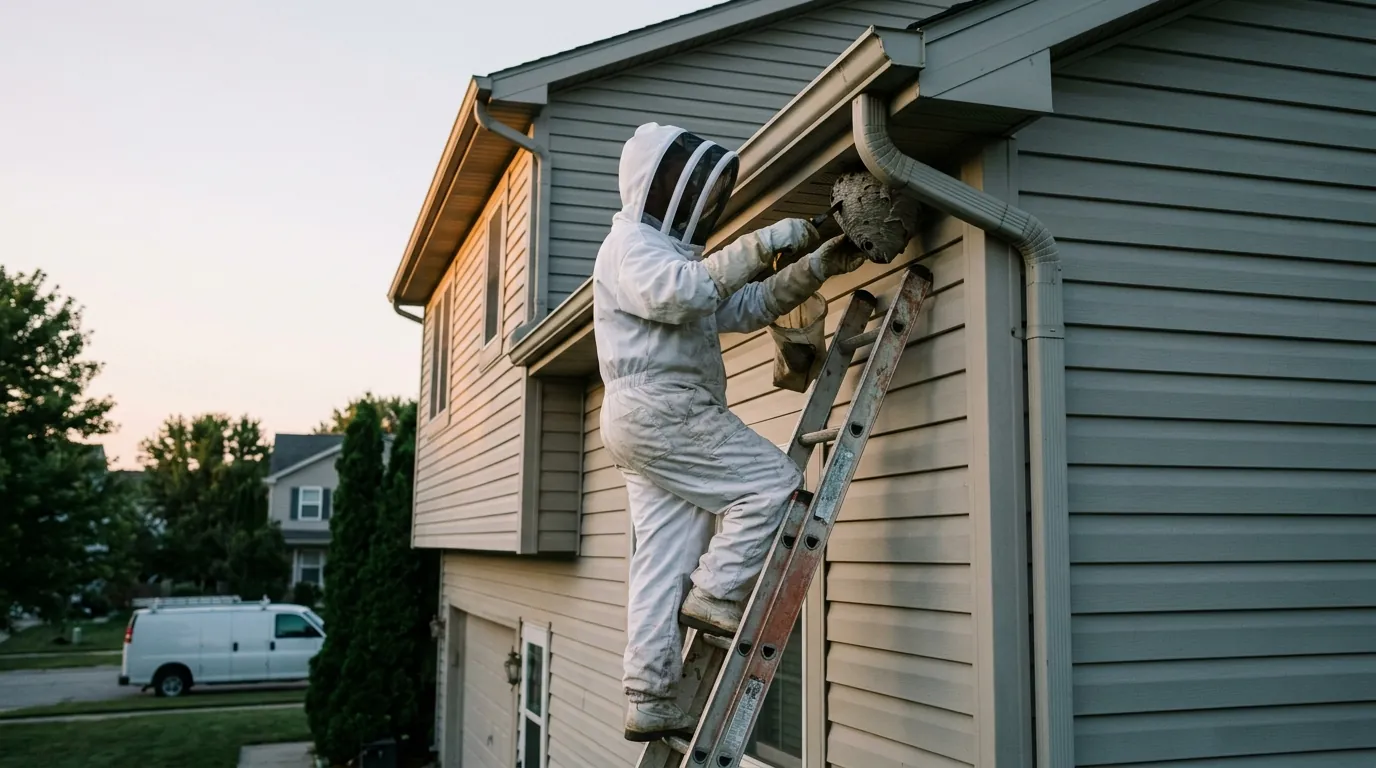
Wasp and hornet removal covers the stinging insects that nest on and around Belleville homes: paper wasps under eaves and railings, yellow jackets in ground holes and wall voids, bald-faced hornets in their gray footballs in trees and shrubs, and mud daubers on the brick. Nests are treated and removed with proper gear, usually in one visit, with stinging-insect calls scheduled ahead of routine work. Wall-void yellow jacket nests are the specialist case, and sealing the hole before the colony is dead is the one mistake we most often get called to fix.
What this covers
Species decides the approach
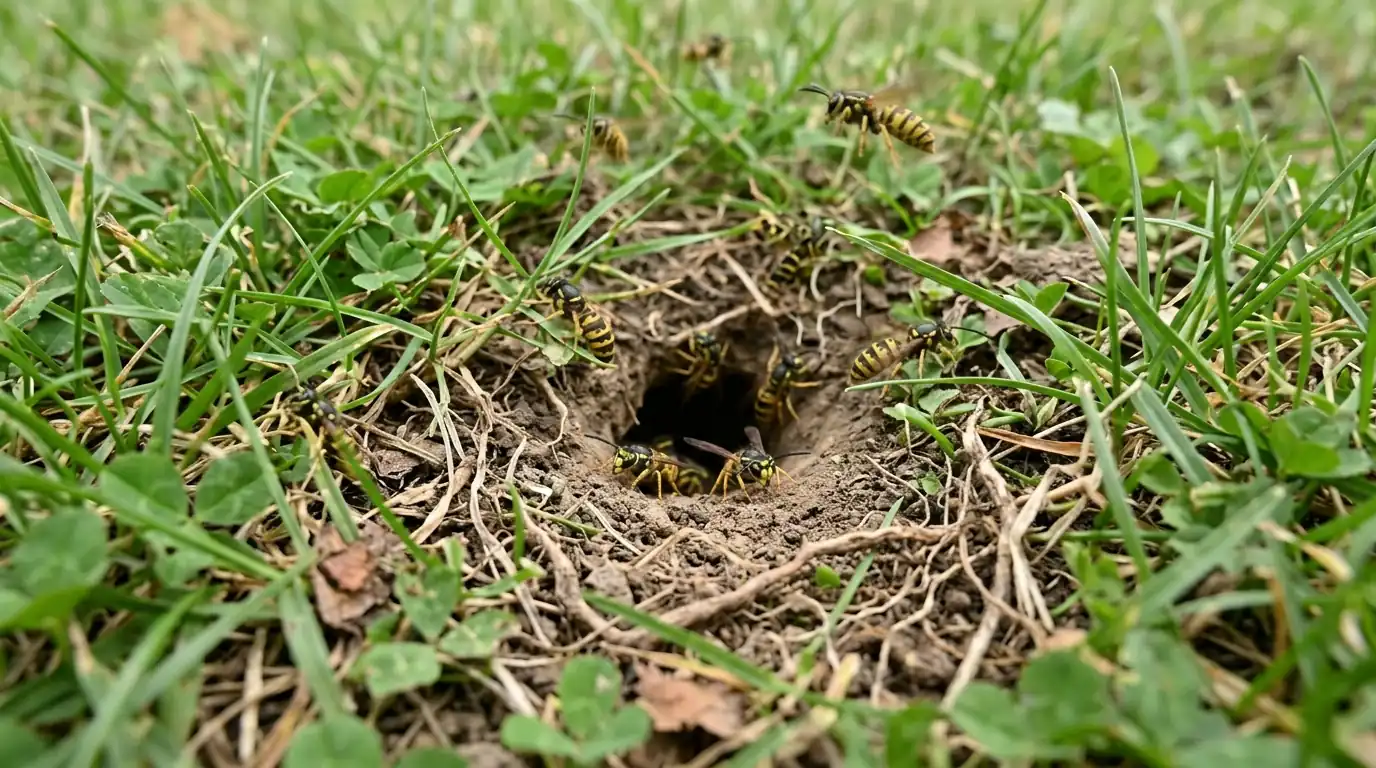
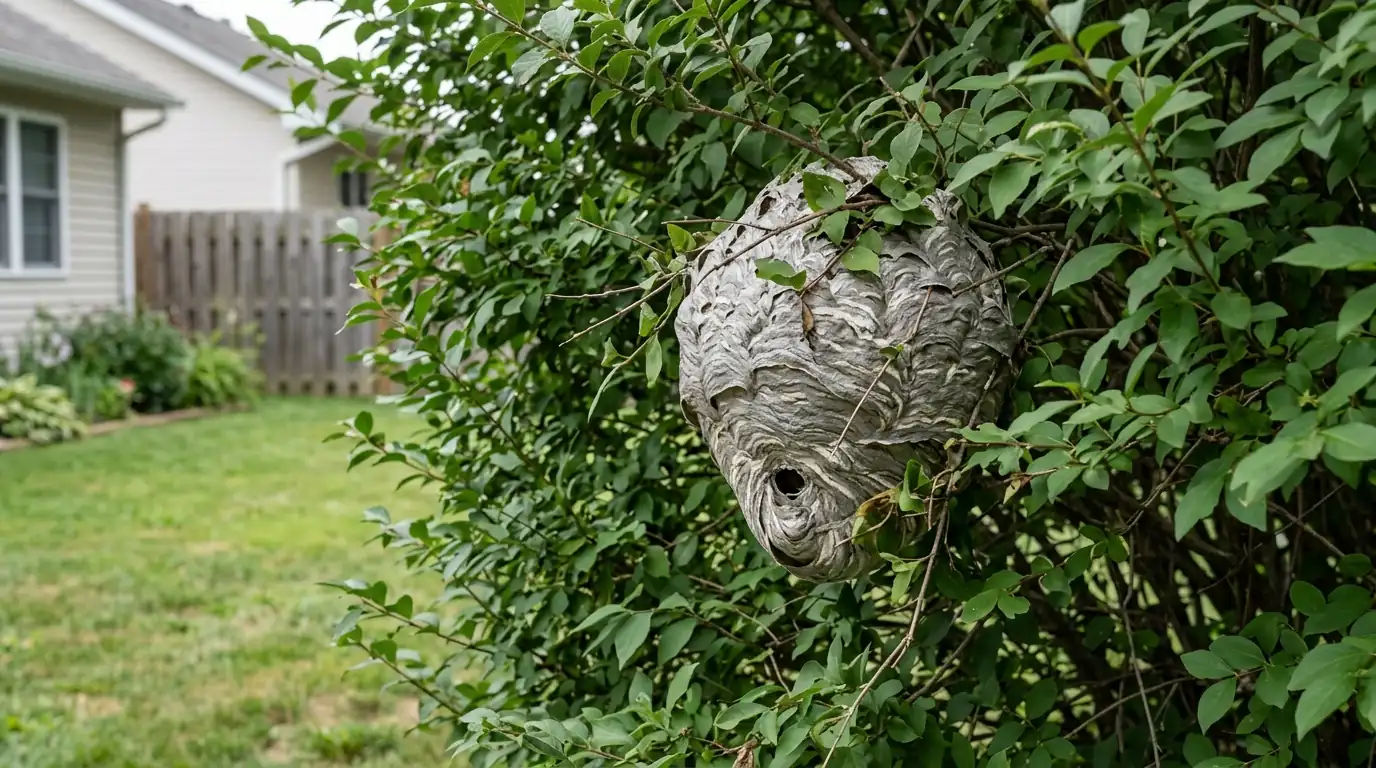
Open-comb paper wasps on the soffit are the straightforward end: treated and removed, often same visit, with the scraped anchor point treated so the spot is not rebuilt. Bald-faced hornets in enclosed aerial nests defend harder and get the full-suit treatment at the right time of day. Ground-nesting yellow jackets, the late-summer picnic menace, are treated at the burrow entrance at dusk when the colony is home, and the hole is left open until activity stops.
The wall-void yellow jacket nest is its own category. Workers trafficking a gap in the brick or siding mean a colony inside the structure, and sealing that entrance in fear drives thousands of wasps to chew inward toward interior light, a genuinely bad week we are called to twice every August. Void nests get injected treatment through the entrance, patience while the colony dies, and only then the sealing and, where the nest was large, the conversation about removal to prevent secondary pests.
Worth catching early
Situations that deserve the priority slot
Traffic at one gap in the wall
A steady wasp stream at a brick or siding gap is a void colony; do not plug it, call.
A ground hole that erupts
Yellow jackets boiling from a lawn or bed hole, usually met by a mower; stay clear and mark it from a distance.
Gray football in a shrub or tree
Bald-faced hornet nests defend a wide radius and are nothing to test with a garden hose.
Nests at doors and play areas
Location, not size, makes small paper-wasp nests urgent; traffic paths get same-day treatment.
Wasps indoors repeatedly
Several wasps inside over days means a void nest venting into the house, a trace-and-treat call.
Anyone allergic on site
A known sting allergy in the household turns every nest into the first appointment of the day.
How we match the job
The nests we remove
- 01
Paper wasps on structures
Eaves, soffits, railings, shutters and grills: treated, removed and the anchor point discouraged.
- 02
Yellow jacket ground nests
Dusk treatment at the burrow when the colony is in, the standard for the late-summer lawn nest.
- 03
Wall and void colonies
Injected treatment through the entrance, the no-seal discipline, and the post-kill closure done right.
- 04
Bald-faced hornet nests
The enclosed gray aerial nests, handled in full gear at low-activity hours and removed whole.
- 05
Mud daubers and solitaries
The low-aggression tube builders on brick, cleaned off with honest advice that they barely warranted the call.
How a visit runs
How a nest call runs
- Phone triage
Species and location from your description; allergy and doorway cases take the first slot.
- Timed approach
Dusk for ground nests, early light for hornets, the hours the colony is home and calm.
- Suited treatment
The nest treated directly with proper gear; the can-and-run method stays retired.
- Die-off discipline
Void and ground entrances left open until traffic stops; sealing early is the classic mistake.
- Removal and prevention
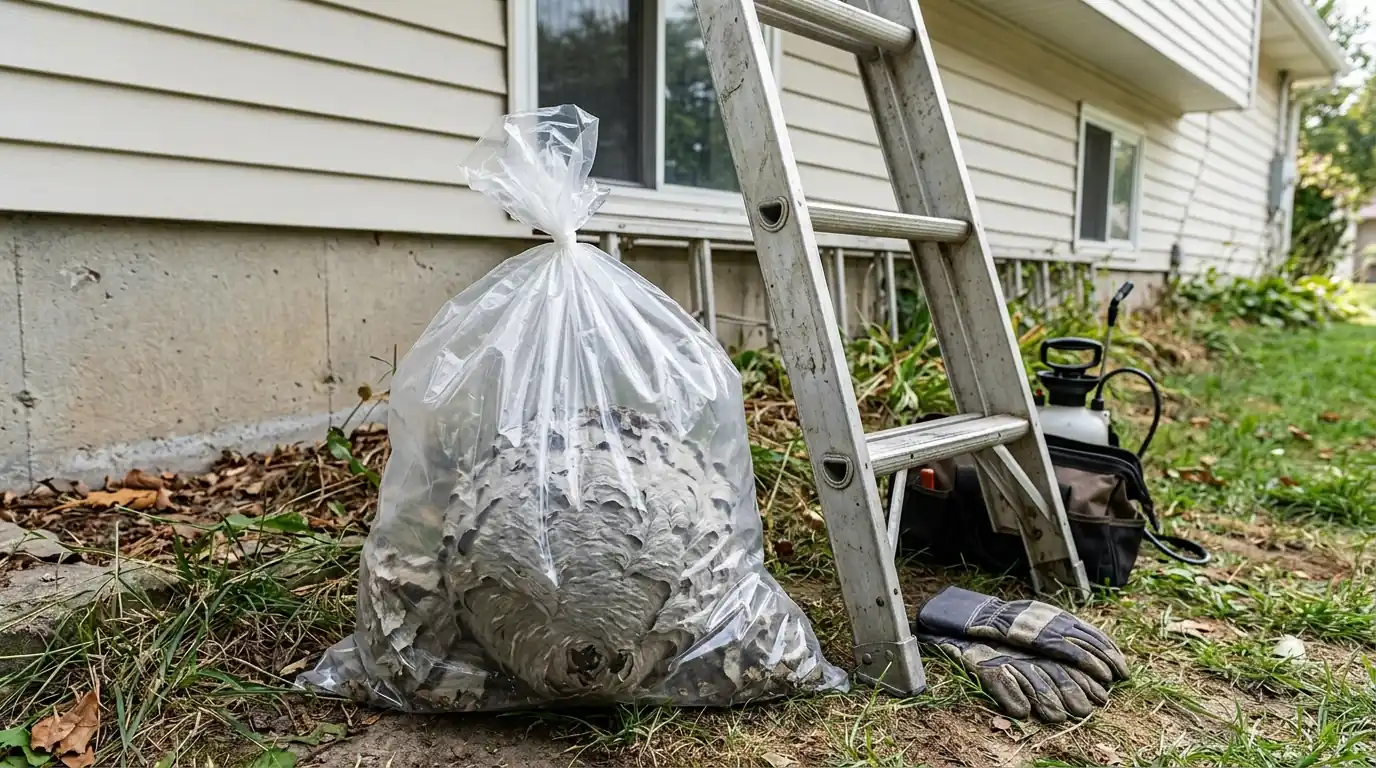
Nest down, anchor treated, the gap sealed after, and the spring walk-around offered.
Timeline
How fast, honestly
Stinging-insect calls get priority: most Belleville-area nests are treated same-day or next-morning, with allergy households and doorway nests scheduled first. Treatment itself is quick; colony death at void and ground nests takes hours to a couple of days of declining traffic, and the entrance stays open through it. Nest removal happens at treatment for aerial and surface nests, and after confirmation for voids. Early-season founder nests are five-minute jobs, which is the strongest argument for the May phone call.
Local conditions
Why this matters in Belleville
Belleville's housing stock is wasp architecture: deep eaves and open soffits on the pre-war homes, uncapped fence posts and railing voids, mature shrubs for hornet nests, and lawns that host ground colonies every late summer. The season builds all year, small spring founder nests becoming August colonies in the thousands, which is why the cheap removal is the early one. Fall adds the second act, as cooling weather makes yellow jackets bold at trash cans and patios through October; the nests behind that boldness are at their yearly maximum, not their end.
Pricing, plainly
What moves the price
Nest work quotes flat on the phone from your description. What moves it:
- Nest type: surface paper wasp, aerial hornet, ground burrow or wall void
- Height and access, since peak soffit and tree work is ladder work
- Void complexity when the colony sits deep in the structure
- Nest count; late summer properties often carry several
- Removal and anchor-point treatment after the kill
- Post-kill sealing and, for large void nests, removal against secondary pests
- Timing, since the same nest costs less in June than in September
Figures referenced are published national ranges for context, not our quote. We price your job on the phone and confirm on site before any work starts.
Before you call
Questions we hear about this work
Small, low, open paper-wasp nests, sometimes, if you accept the risk. Ground nests, hornet footballs and anything in a wall are where the emergency-room stories come from, and the professional price is cheaper than one urgent-care visit.
Stings are medical events for allergic people and miserable for everyone else, and yellow jackets and hornets sting in numbers when defending. Respecting a defended nest is not cowardice; it is arithmetic.
The colony chews toward light, which is frequently your living room. It is the single most common self-inflicted wasp disaster we fix; leave it open and call.
Old nests are not reused, but good anchor points are re-chosen by new queens. Treating the spot at removal and the spring walk-around keep the soffit from being prime real estate again.
Colonies peak as natural food declines, pushing thousands of workers toward your trash, soda and patio. The fix is the nest, not the picnic; find the traffic line and we will follow it home.
It will die with hard frost, but a season beside a defended football on a traffic path is a long bet. Location decides: back-fence nests can wait, doorway nests cannot.
Honey bee colonies get referred to local keepers for collection when at all possible; they are the one stinging tenant we try to evict alive, and we will tell you straight when that is what you have.
Nearby problems
Jobs that often ride along
Carpenter Bee Control
Mosquito Control
Stink Bug & Boxelder Bug Control
Residential Pest Control
Quarterly Protection Plans
Read first: A wasp nest in the soffit: what to do and what to skip.
Booked most weeks in: O'Fallon, Fairview Heights, Swansea, Collinsville, and the rest of our six-county area.
One call does it
Describe the nest and where it hangs
What it looks like, where it is, who is allergic; triage happens on the call and stinging work schedules first.
(217) 207-0945Answered 24/7, every day