- Home
- Pest Guides
- Early signs of bed bugs most people miss
Insects & spiders
Early signs of bed bugs most people miss
Bed bugs are far easier and cheaper to deal with in the first few weeks. Early on there are no swarms and no obvious bugs, just small marks in specific places. Knowing where to look turns a vague worry into a clear yes or no.
Call (217) 207-0945 Browse our services
- Written by Darlene Pemberton
- Updated October 1, 2026
- 6 minute read
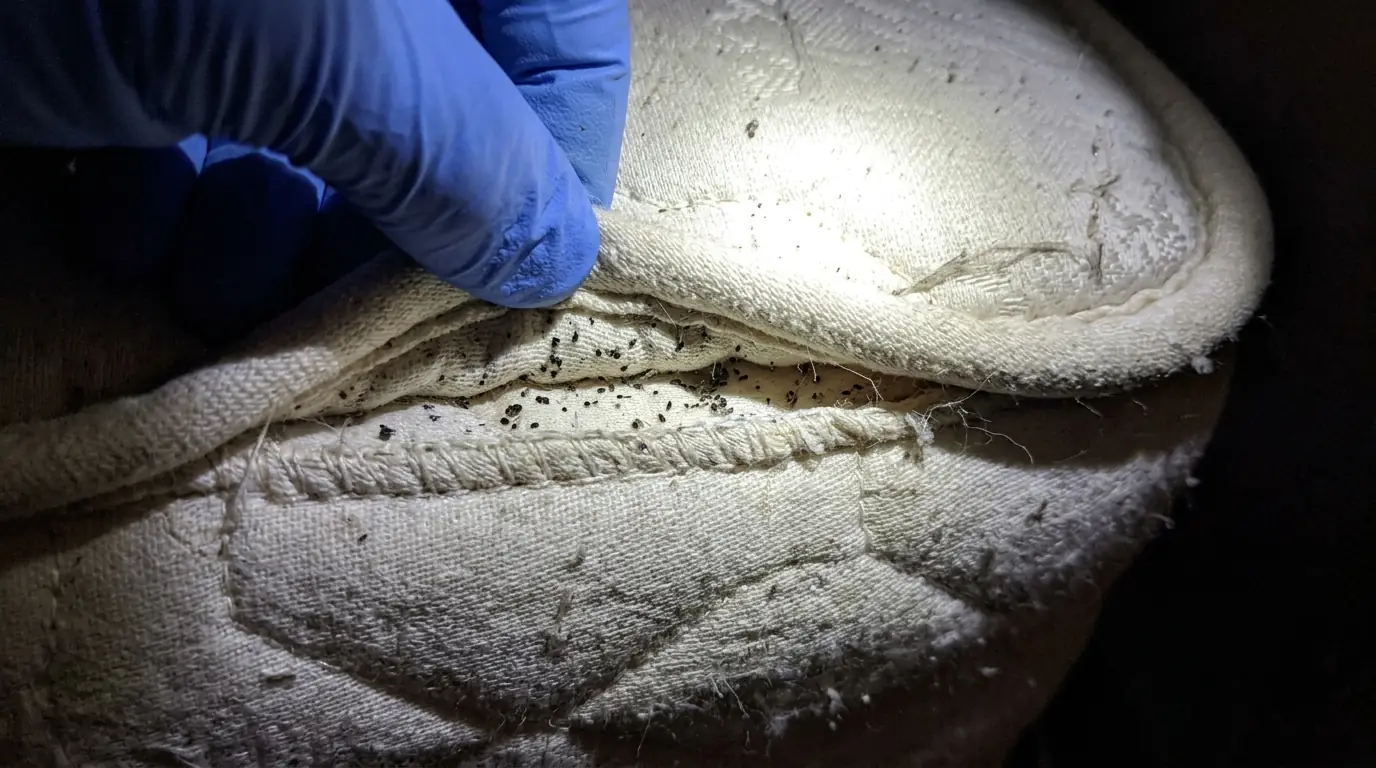
The earliest signs are tiny black or rust-colored spots along mattress seams, box spring corners and headboard joints, pale shed skins in those same crevices, and small white eggs about the size of a pinhead. Bites are the least reliable sign because many people do not react to them. A five-minute check of seams, corners and headboard screw holes with a flashlight finds most early infestations.
The spots
Bed bug droppings are digested blood, and they show up as small dark dots, like a fine-tip marker touched to fabric, that bleed slightly into the material. Early on there may be only a few, concentrated along the piping of the mattress, the corners of the box spring, and the joints of the bed frame and headboard, because that is where bed bugs hide closest to where you sleep. Rusty smears on sheets can come from crushed bugs after feeding.
Shed skins and eggs
Bed bugs molt five times before adulthood, leaving pale, translucent shells shaped like the bug. Finding a few in a seam or crevice means nymphs are growing. Eggs are about a millimeter long, pearly white and glued into cracks and fabric folds; they are hard to see without a flashlight and a magnifier, but they cluster in the same hiding places.
Why bites mislead
Many people show no reaction to bed bug bites, and those who do may react days later, so bites can appear long after the first feeding or never. Bite patterns also overlap with mosquitoes, fleas, other insects and skin conditions. Bites are a reason to check, never proof on their own, which is why confirmation comes from physical evidence.
A five-minute check
Strip the bed and use a bright flashlight. Run along every seam and the piping of the mattress, lifting the edge. Check the box spring corners and the fabric underneath if it is accessible. Look into headboard screw holes, frame joints and the gap where the headboard meets the wall. Check the nightstand drawers and any upholstered chair near the bed. Photograph anything suspicious and keep a sample on clear tape.
- Mattress seams and piping
- Box spring corners and underside
- Headboard joints and screw holes
- Bed frame crevices
- Nightstand and nearby upholstered furniture
If you find something
Do not move to another room to sleep; that spreads the infestation. Do not throw out the mattress yet; encasements are cheaper and tossing it can spread bugs. Skip foggers entirely. Bag and dry bedding and nearby clothing on high heat, then call to confirm, since carpet beetle larvae and other insects are commonly mistaken for bed bugs.
- Stay in your usual bed
- Hot-dry bedding and nearby clothing
- No foggers or store sprays
- Keep any specimen on tape
- Get it confirmed before paying for treatment
When to call
Services that fit this problem
Before you call
Common follow-up questions
They hitchhike in luggage, used furniture, boxes and through shared walls. Cleanliness has nothing to do with where they show up.
Adults are about the size of an apple seed and visible. Young nymphs and eggs are tiny and pale, which is why a flashlight inspection matters.
Carpet beetle larvae, bat bugs, spider beetles and booklice are common mix-ups, which is why confirmation comes before treatment.
Darlene Pemberton is the pest control guides editor at Belleville Pest Control. She writes and maintains these homeowner guides from the field notes our technicians bring back from jobs across Belleville and the Metro East, and every guide is checked against what the crews actually see in local homes.
Keep reading
Related homeowner guides
One call does it
Rather just ask someone?
Call and describe what you found. A technician will tell you what it is and whether it needs a visit.
(217) 207-0945Answered 24/7, every day