- Home
- Pest Control
- Chipmunk Removal
The small digger under the steps
Chipmunk removal before the burrows undermine the patio
Chipmunks look harmless until the patio pavers start sinking. They dig long burrow systems under steps, retaining walls and foundation plantings, carry the soil away so there is no mound, and chew bulbs and garden plants on the side. Removal is trapping at the active burrows plus exclusion where they keep digging.
Call (217) 207-0945 Browse our services
- Trapping at active burrow entrances
- Exclusion under patios, steps and walls
- Attractant fixes that keep them away
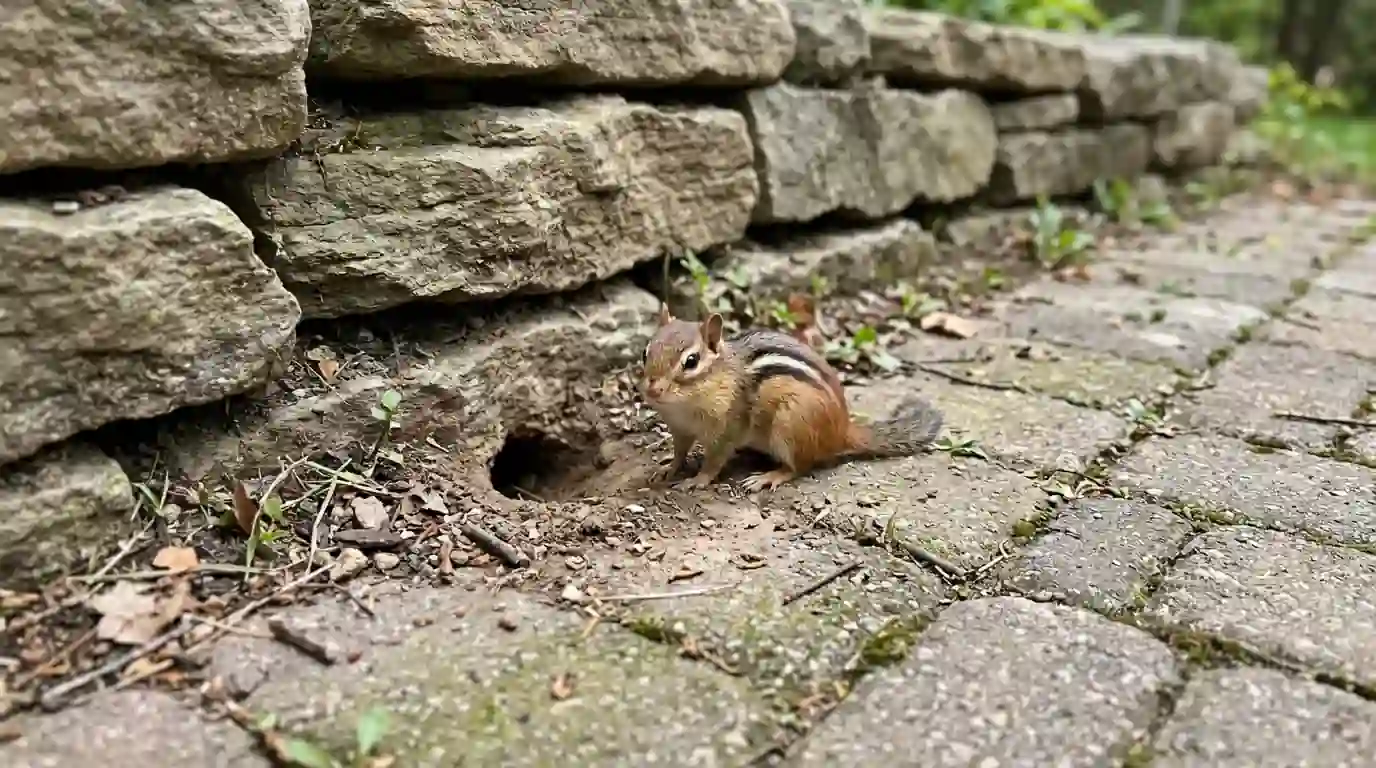
Chipmunk removal targets the active burrows: traps go at the entrances the animals are using, with checks until the activity stops, and the spots they favor, under patios, stoops, retaining walls and foundation beds, get hardware-cloth barriers or gravel buffers so new chipmunks cannot reuse them. Because spilled birdseed is usually what drew them, attractant changes are part of the job. Illinois wildlife rules govern how trapped animals are handled, and we work within them.
What this covers
Why chipmunks are more than a nuisance
Eastern chipmunks are native across Illinois and dig burrow systems that can run many feet, with tunnels and chambers under whatever gives them cover. The entrances are small, clean holes about two inches across with no dirt pile, because chipmunks carry excavated soil away in their cheek pouches. That is why the first sign is often a settling paver, a cracked step or a retaining wall that has started to lean rather than a visible mound.
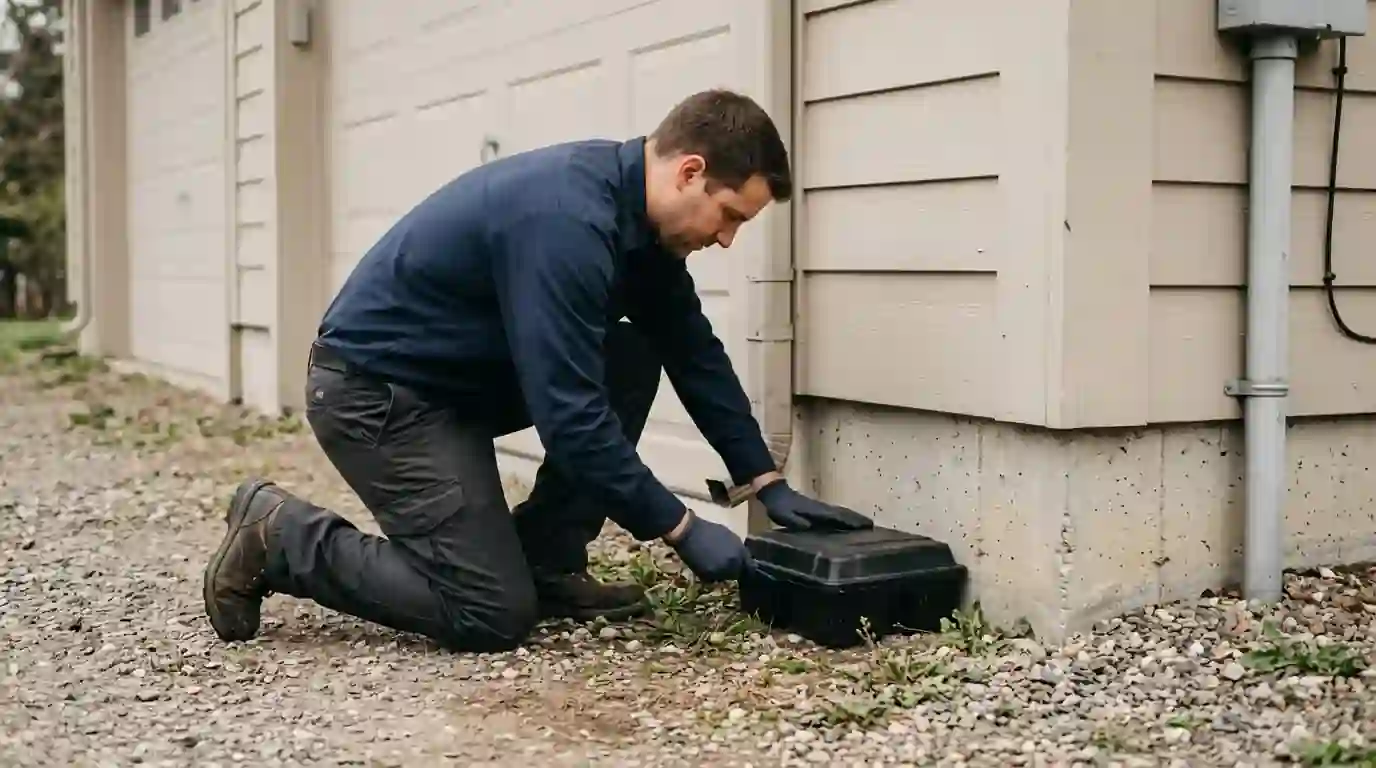
The work has two halves. Trapping at the active entrances clears the resident animals, usually within days. Exclusion keeps the next ones out: hardware cloth set in an L along patio and step edges, gravel bands along the foundation in place of mulch, and moving bird feeders away from the house or adding trays so seed does not pile up on the ground.
Pricing, plainly
What moves the price
Chipmunk jobs are quoted from your description. What moves the price:
- Number of active burrow areas on the property
- Trap-check visits until activity stops
- Exclusion footage along patios, steps and walls
- Gravel buffer or barrier installation
- Garage or crawl space entries to seal
- Attractant corrections such as feeder relocation
- Pairing with mole, vole or groundhog work on the same lot
Figures referenced are published national ranges for context, not our quote. We price your job on the phone and confirm on site before any work starts.
Choosing between them
Trapping alone or trapping plus exclusion
| Trapping only | Trapping plus exclusion | |
|---|---|---|
| Clears current chipmunks | Yes | Yes |
| Stops new ones using the same burrows | No | Yes |
| Best for | One-off visitor | Repeat activity, structural digging |
| Long-term result | Often back next season | Lasting, especially with feeder changes |
On your side
What helps the job stick
- Move bird feeders away from the house or add seed trays
- Clean up spilled seed under feeders
- Pull mulch back from the foundation; gravel discourages digging
- Store pet food and birdseed in sealed bins
- Keep garage doors closed when not in use
- Note which holes are active so we start there
How we match the job
Where chipmunks dig in
- 01
Under patios and pavers
Burrows that hollow out the base and cause settling.
- 02
Under steps and stoops
Tunnels beside concrete that can crack or shift it over time.
- 03
Along retaining walls
Digging behind walls that weakens the backfill.
- 04
Foundation beds
Burrows in mulch against the house, sometimes leading to gaps in the foundation.
- 05
Gardens and bulbs
Feeding damage traced back to nearby burrows.
Local conditions
Why this matters in Belleville
Chipmunks are at home in Belleville's mature neighborhoods: oak and hickory trees for nuts, deep mulch beds against older foundations, stone and block retaining walls, and plenty of bird feeders. The older homes on brick and stone foundations are the ones where burrows near the walls are worth taking seriously, since settled gaps in old masonry can give chipmunks a route inside. Activity peaks from spring through fall, with a busy caching season in late summer and autumn.
How a visit runs
How the job runs
- Burrow survey
Active entrances found and separated from old, abandoned holes.
- Trap placement
Traps set at the active entrances and travel paths.
- Checks until quiet
The line run until activity stops.
- Exclusion
Barriers and gravel buffers along the patio, step and wall edges.
- Attractant fixes
Feeder and seed changes left in writing so the yard stops inviting them.
Worth catching early
Signs of a chipmunk problem
Clean two-inch holes
Small round holes with no dirt pile near patios, steps or walls.
Settling pavers or steps
Sinking or tilting hardscape near active holes.
Dug-up bulbs
Tulip and crocus bulbs disappearing over winter or spring.
Chewed garden produce
Tomatoes, strawberries and seedlings nibbled at ground level.
Activity in the garage
Chipmunks running into an open garage or nesting in stored items.
Bird feeder traffic
Constant chipmunk visits under feeders, a sign burrows are close.
Timeline
How long it takes
Trapping typically clears active chipmunks within a few days to a week. Exclusion is usually installed in one visit once trapping is done. Late summer and fall are the busiest times because chipmunks are caching food for winter.
Before you call
Questions we hear about this work
Their burrows can undermine patios, steps and retaining walls over time, and they eat bulbs and garden plants. One chipmunk is minor; several burrow systems near hardscape are worth dealing with.
Like other rodents they can carry parasites and diseases, though contact is rare. Avoid handling them and keep pets from cornering them.
Results are inconsistent. Trapping plus exclusion and removing food sources works more reliably.
Illinois wildlife rules govern handling, and we follow them. We will explain the specifics for your situation on the call.
They spend much of the winter in their burrows living off stored food, waking periodically, so activity drops sharply in cold months and picks up in spring.
Occasionally, through gaps near the foundation or an open garage. Exclusion along the foundation helps prevent that.
Chipmunks are striped, active by day and dig clean round holes; voles are small brown rodents that make surface runways in the grass.
Nearby problems
Jobs that often ride along
Read first: Pest entry points in pre-1940 brick homes.
Booked most weeks in: St. Clair County, Madison County, Monroe County, Clinton County, and the rest of our six-county area.
One call does it
Describe the holes and where they are
Tell us where the burrows are and what they are near, and we will tell you what the job involves and what it costs.
(217) 207-0945Answered 24/7, every day