- Home
- Pest Control
- Attic Cleanup & Insulation Replacement
The follow-through after wildlife and rodent jobs
Attic cleanup and insulation replacement after the animals are gone
Removing the animal ends the noise; it does not end the mess. Months of droppings, urine and nesting soak into attic insulation, carry real health risks, and keep pulling the next animal toward the same smell. Cleanup removes the contaminated material, sanitizes the space and puts fresh insulation back in.
Call (217) 207-0945 Browse our services
- Contaminated insulation removed safely
- Sanitized and deodorized, not just vacuumed
- New insulation installed to modern levels
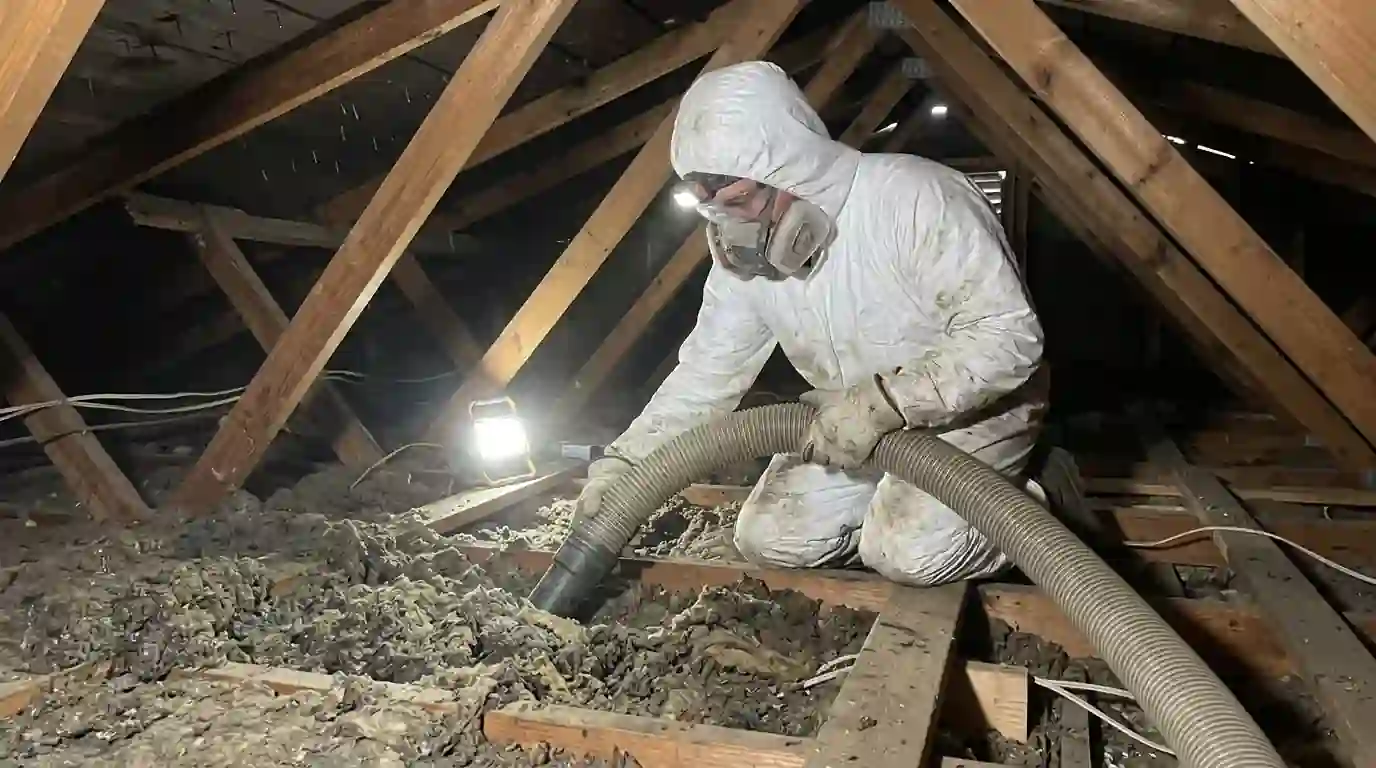
Attic cleanup is the restoration phase after a wildlife or rodent problem: soiled insulation and nesting are removed under protective protocols, droppings and latrines are cleared, every surface is sanitized with enzyme-based treatment, and fresh insulation is installed. It matters because raccoon latrines, bat guano and rodent waste carry health risks, and because the scent left behind invites the next animal. We quote it after an inspection, since the job depends on how much of the attic is affected.
What this covers
What the cleanup actually involves
The job starts with confirming the animals are out and the entries are sealed, because cleaning an attic that is still occupied is wasted money. Then the affected insulation comes out: loose-fill is vacuumed through a commercial removal hose straight into sealed bags outside, and batts are bagged by hand. Latrines, guano piles and nesting material go with it, under respirators and protective suits, because dried waste disturbed carelessly is the main way people get exposed.
With the floor of the attic bare, every surface gets cleaned and treated with enzymatic sanitizer that breaks down odor and organic residue rather than masking it. Damaged ductwork, chewed wiring and torn vapor barrier are noted in writing for repair. Finally, new insulation is blown in, typically to around R-49, the level energy guidance commonly points to for attics in this part of Illinois, so the cleanup also leaves the house better insulated than before the animals moved in.
Pricing, plainly
What moves the price
Cleanup is quoted after we see the attic, since contamination is rarely uniform. What moves the price:
- Square footage of attic affected, partial or whole
- Depth and type of existing insulation to remove
- Waste volume: a single rodent nest against years of guano or a raccoon latrine
- Access, from walk-up attic to tight scuttle hole
- Sanitizing and deodorizing scope
- Replacement insulation type and target depth
- Repairs noted to ductwork, vapor barrier or soffit vents
Figures referenced are published national ranges for context, not our quote. We price your job on the phone and confirm on site before any work starts.
Choosing between them
Spot cleanup or full removal
| Spot cleanup | Full removal and replace | |
|---|---|---|
| Best for | One contained nest or latrine area | Widespread droppings or urine, long occupancy |
| Insulation | Affected section replaced | All insulation removed and reinstalled |
| Odor result | Good where contamination was local | Complete, since nothing soiled remains |
| Cost | Lower | Higher, priced by square footage |
On your side
Before the cleanup crew arrives
- Confirm the wildlife or rodent removal is finished and entries are sealed
- Clear a path to the attic access and protect the floor below it
- Move stored items out of the attic if possible, or tell us what must stay
- Keep pets and kids away from the access during the work
- Plan for a day without attic storage access
- Mention any history of roof leaks; wet insulation changes the plan
How we match the job
Cleanups we run most
- 01
Raccoon latrine removal
Concentrated raccoon waste removed under roundworm-safe protocol, with the surrounding insulation replaced.
- 02
Bat guano cleanup
Guano accumulations cleared after exclusion with respirators and containment, then sanitized.
- 03
Rodent nest and dropping removal
Mouse and rat contamination cleared from insulation, ducts and storage areas.
- 04
Squirrel nest cleanup
Leaf nests, shells and soiled insulation removed after the attic is verified empty.
- 05
Full insulation replacement
Whole-attic removal and new blown-in insulation for heavily contaminated spaces.
Local conditions
Why this matters in Belleville
Belleville's older housing makes this service more common here than in newer suburbs. Pre-war homes around the historic districts have large, quiet attics, aging soffits and unscreened gable vents that raccoons, squirrels and bats have used for years before anyone notices, and some still hold insulation that has been topped up rather than replaced for decades. When an animal has lived over a bedroom through a winter, cleanup is usually the difference between a solved problem and a lingering smell that draws the next tenant.
How a visit runs
How the job runs
- Inspection
Contamination mapped, insulation depth measured, entries confirmed sealed.
- Containment
Work area sealed and protective gear on before anything is disturbed.
- Removal
Soiled insulation, waste and nesting bagged out through sealed lines.
- Sanitizing
Every surface treated with enzymatic sanitizer and deodorizer.
- Reinsulation
Fresh insulation installed to the target depth and the space photographed.
Worth catching early
Signs the attic needs more than removal
Odor after the animals left
A lingering ammonia or musky smell means soaked insulation is still up there.
Visible droppings across the floor
Widespread pellets or guano mean contamination is not limited to a nest.
Flattened trails in insulation
Packed runways reduce insulation value and mark where waste concentrates.
Stains on the ceiling below
Urine soaking through to drywall means the insulation above is saturated.
Flies or beetles in the attic
Insects feeding on waste or remains point to organic material that needs removing.
A raccoon latrine
Concentrated raccoon droppings need protective handling; do not sweep or vacuum them yourself.
Timeline
How long it takes
Most single-family attics are cleaned in one to two days: removal and sanitizing on the first day, new insulation on the same or following day depending on size. Heavily contaminated or very large attics can take longer, and the quote says so upfront. The household can stay in the home throughout; we contain the work area and keep the access sealed while we are in it.
Before you call
Questions we hear about this work
If contamination is light and local, sometimes a spot cleanup is enough. Soaked or widely soiled insulation keeps smelling, loses insulating value and attracts new animals, so it is usually worth replacing.
Raccoon latrines can carry roundworm eggs, bat guano can carry the fungus behind histoplasmosis, and rodent droppings can carry disease. The risk comes from disturbing dried material, which is why we use respirators and containment.
Some policies cover animal damage and some exclude it. We document the work with photos and a written summary you can submit; the coverage decision is the insurer's.
Often, especially in older homes where insulation was thin or compressed. Replacing it to modern depth is a genuine side benefit of the cleanup.
Sealing is part of the removal job that comes first. Cleanup only makes sense once the animals are out and the attic is closed.
Once the soiled material is out and the space is treated, the odor drops sharply within a day or two.
Yes, when the contamination is limited to one area. The inspection tells us whether that is the case.
Nearby problems
Jobs that often ride along
Read first: Noises in the attic: a homeowner's guide to figuring out what moved in; What mouse droppings tell you about the size of the problem.
Booked most weeks in: St. Clair County, Madison County, Monroe County, Clinton County, and the rest of our six-county area.
One call does it
Tell us what lived up there and for how long
The animal, how long it stayed and how big the attic is; from that we can scope the cleanup and quote it after a look.
(217) 207-0945Answered 24/7, every day