- Home
- Pest Control
- Carpet Beetle & Clothes Moth Control
The fabric pests behind the holes in your sweaters
Carpet beetle and clothes moth control for wool, rugs and stored textiles
The small holes in a wool sweater or bare patches in a rug are larval damage, not the adults you see. Carpet beetle and clothes moth larvae feed on wool, silk, fur, feathers and leather in dark, undisturbed places, and carpet beetles also feed on dead insects hidden in walls, vents and attics. Control means finding the source and cutting off the food.
Call (217) 207-0945 Browse our services
- Source found, not just sprayed
- Rugs, closets and storage treated
- Textile protection advice that works
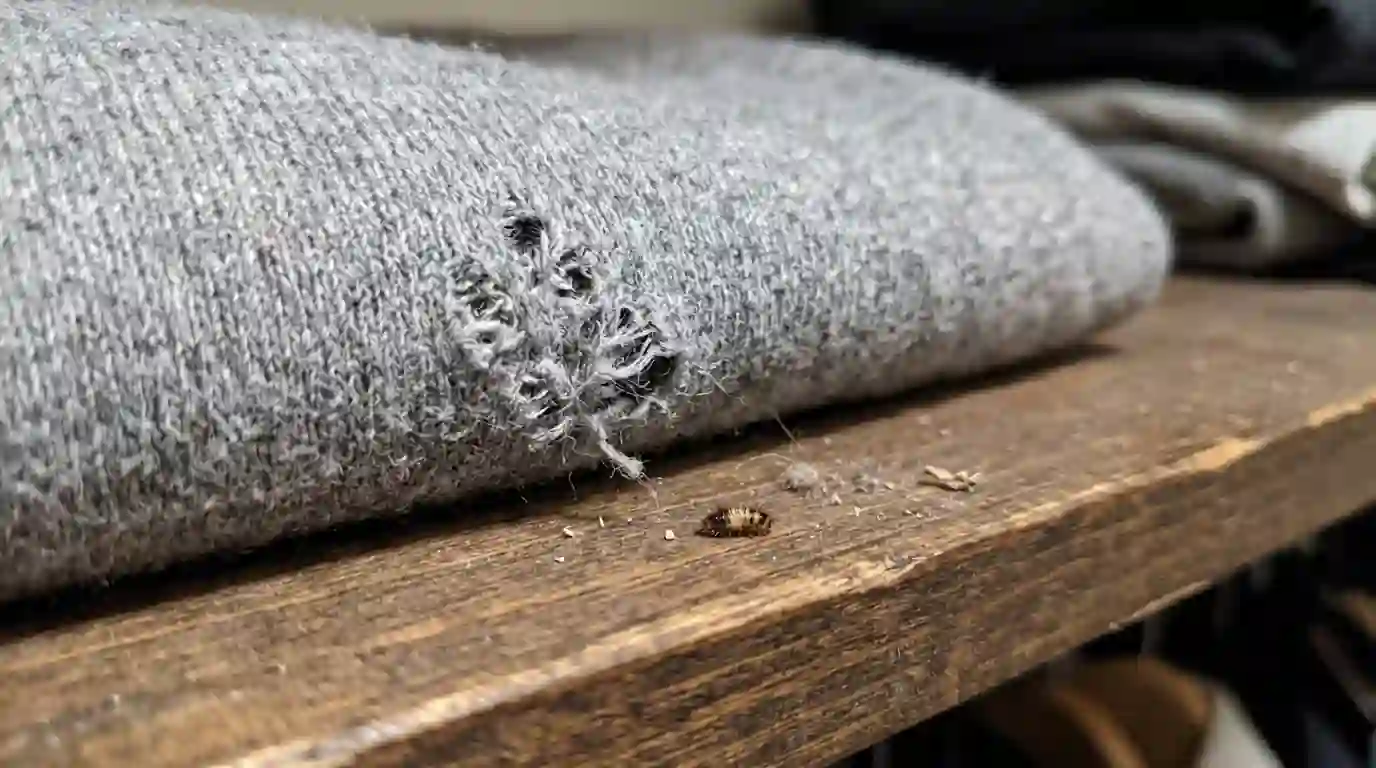
Carpet beetle and clothes moth control works backward from the damage: an inspection finds where larvae are feeding, often in closets, under furniture, along rug edges, in stored textiles, or on dead insects and old nests in walls, vents and attics. Infested items are cleaned or frozen, the source areas are vacuumed and treated, and clothes moths are monitored with pheromone traps. The goal is to remove the food supply so the infestation does not restart.
What this covers
Two pests, one kind of damage
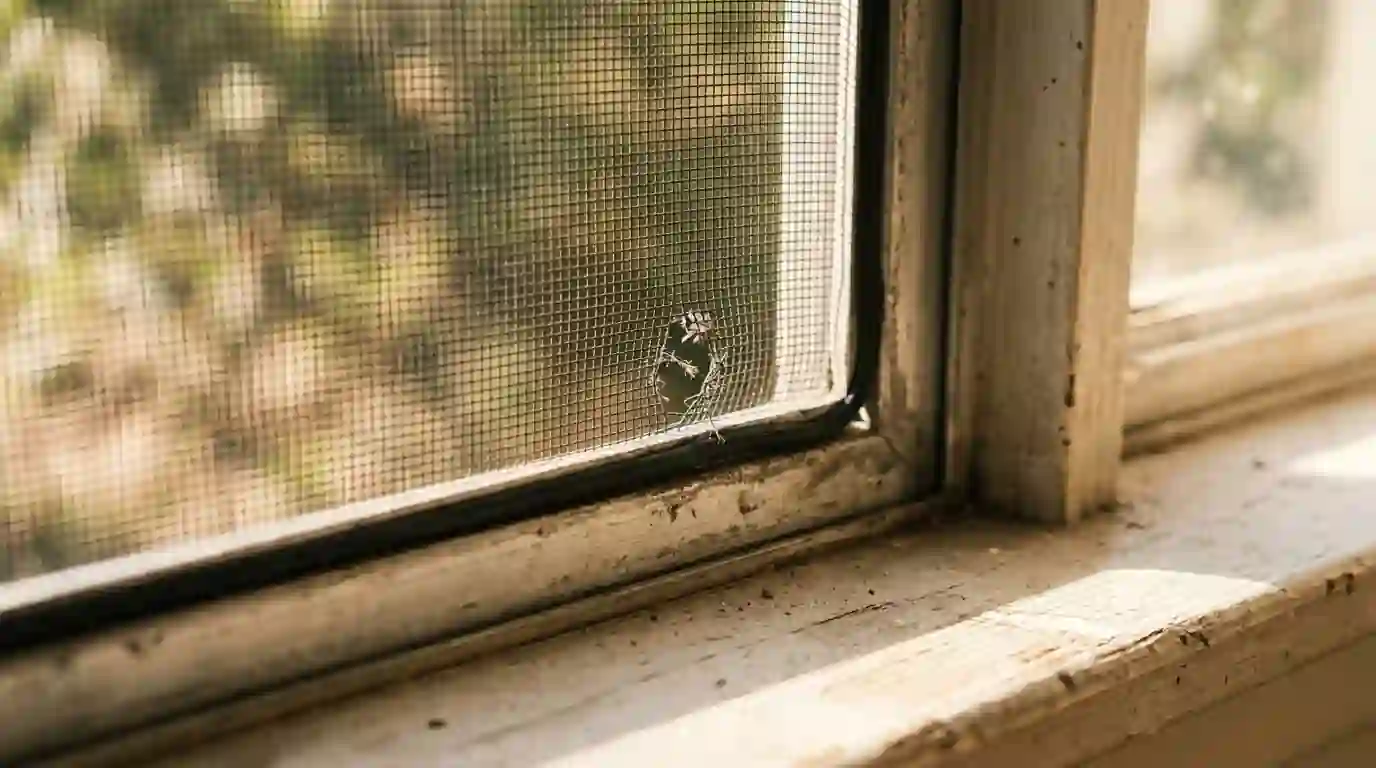
Carpet beetles are tiny rounded beetles that often show up on windowsills in spring, because the adults feed on pollen and are drawn to light. The damage comes from their larvae: small, bristly and slow-moving, they feed on wool, silk, feathers, fur, leather and the dead insects that collect in wall voids, light fixtures and attics. Clothes moth larvae feed on the same animal fibers but stay hidden in dark, undisturbed fabric, leaving silk webbing, feeding tubes or cases behind.
Because the food source is often hidden, spraying a closet rarely solves it. The inspection looks at the obvious places, closets, rugs, upholstery, stored clothing and blankets, and at the less obvious ones: bird and wasp nests in vents and eaves, dead insects in light fixtures and attics, and old pet hair along baseboards. Infested textiles are washed, dry-cleaned or frozen; the source areas get thorough vacuuming and targeted treatment; and clothes moth activity is tracked with pheromone traps until it stops.
On your side
What helps before and after treatment
- Pull out stored wool, silk and fur items so we can see what is affected
- Wash, dry-clean or freeze infested items before returning them
- Vacuum rug edges, under furniture and closet floors thoroughly, then empty the vacuum outside
- Store clean textiles in sealed containers or garment bags
- Clear dead insects from light fixtures and windowsills
- Point out any bird or wasp nests near vents or eaves
How we match the job
Where the jobs come from
- 01
Closets and stored clothing
Wool, cashmere and silk damage traced to the closet or storage tote it started in.
- 02
Rugs and carpet edges
Wool rugs and the dark strip under furniture where larvae feed undisturbed.
- 03
Attics and wall voids
Carpet beetles feeding on insect die-offs, old nests or stored items upstairs.
- 04
Upholstery and heirlooms
Antique furniture, quilts and textiles that need careful handling.
- 05
Recurring spring sightings
Adults on windowsills every spring, traced back to the hidden source.
Local conditions
Why this matters in Belleville
Older Belleville homes give these pests plenty to work with. Attics and wall voids in pre-war houses collect dead insects from the fall invader season, and the same stink bugs, boxelder bugs and cluster flies that overwinter in walls become carpet beetle food when they die there. Bird nests in old vents and eaves are another common source. Add wool rugs, stored heirloom textiles and closets that go undisturbed for months, and a small infestation can run for a long time before anyone notices the holes.
How a visit runs
How the job runs
- Damage review
The holes, patches and larvae identified to the right pest.
- Source search
Closets, rugs, storage, vents, nests and voids checked for the food supply.
- Textile triage
Infested items separated for washing, dry cleaning or freezing.
- Treatment
Source areas vacuumed and treated, with care around valuable textiles.
- Monitoring
Traps placed to confirm activity stops, and prevention steps left in writing.
Pricing, plainly
What moves the price
Fabric pest work is quoted after the inspection. What moves the price:
- Number of rooms, closets and storage areas involved
- Rug and upholstery treatment
- Attic, vent or wall-void sources
- Nest removal where birds or wasps were the source
- Monitoring and follow-up visits
- Volume of stored textiles to inspect
- Pairing with fall invader or bird work that removes the food supply
Figures referenced are published national ranges for context, not our quote. We price your job on the phone and confirm on site before any work starts.
Before you call
Questions we hear about this work
No. Carpet beetle larvae are bristly and slow and do not bite, though their hairs can irritate some people's skin. Bed bugs are flat, reddish and feed on blood.
Adult carpet beetles fly toward light, especially in spring. Seeing them means larvae are developing somewhere inside.
Mothballs only work in tightly sealed containers and the fumes are not pleasant to live with. Cleaning, freezing and sealed storage are better long-term protection.
Freezing infested items for several days at a sustained cold temperature is a common, effective way to kill larvae and eggs in textiles that cannot be washed.
We take extra care and will tell you when a specialist cleaner is the better option for a delicate item.
Usually because a hidden food source remains, such as dead insects in a wall, an old nest in a vent, or stored items that were never checked.
Clothes moths avoid light and are rarely seen flying in the open. Small moths flying around lights are more often pantry moths.
Nearby problems
Jobs that often ride along
Pantry Pest Control
Stink Bug & Boxelder Bug Control
Bird Control
Silverfish & Occasional Invader Control
Residential Pest Control
Read first: Pantry moths: how an infestation starts and how it ends.
Booked most weeks in: Mascoutah, Waterloo, Highland, St. Clair County, and the rest of our six-county area.
One call does it
Describe the damage and where you found it
Tell us what was damaged and where it was stored; that usually narrows down the pest and the source before we arrive.
(217) 207-0945Answered 24/7, every day